 Save
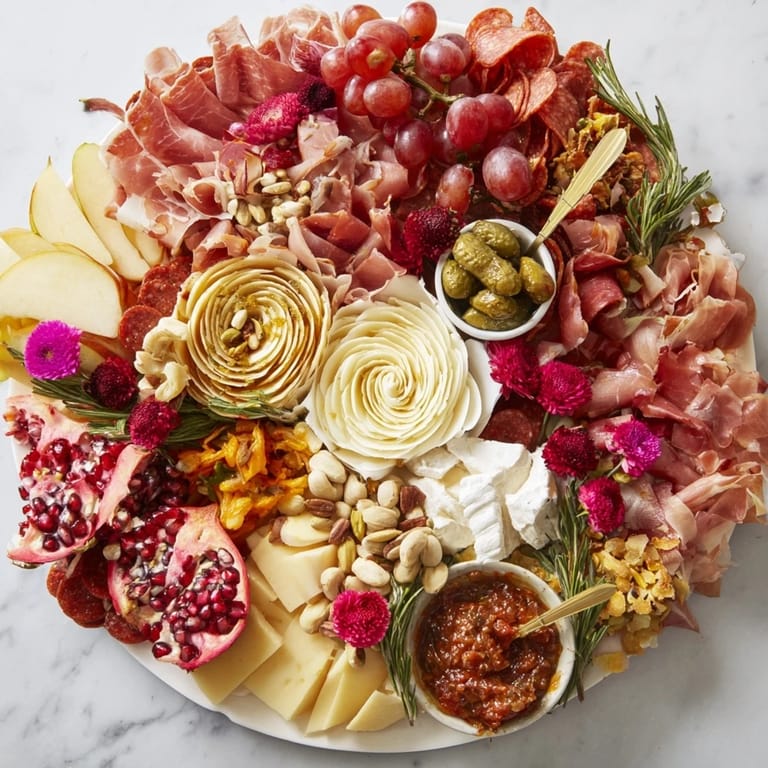
Save I still remember the first time I attempted an elaborate charcuterie board at a dinner party—it was chaos. Meat scattered randomly, cheese chunks piled haphazardly, and absolutely no finesse. But that night taught me something magical: when you slow down and treat a charcuterie board like edible art, something extraordinary happens. The Advanced Artisan Array is that lesson transformed into a showstopper that makes your guests pause before eating, camera-ready and absolutely worth the hour of careful assembly.
I made this board for my sister's engagement party, and watching her face light up when she walked into the room—that's when I realized a charcuterie board isn't just food, it's hospitality made visible. The meat folds caught the light, the cheese roses looked almost too beautiful to eat, and for those few hours, the board became the centerpiece of every story and celebration.
Ingredients
- Prosciutto, soppressata, capicola, chorizo, and mortadella: Each brings its own voice—the delicate sweetness of prosciutto, the robust spice of chorizo. Slice them paper-thin and they become almost translucent, perfect for folding into those dramatic ribbons that catch the light
- Five varieties of cheese (brie, manchego, aged cheddar, goat cheese, gouda, and provolone): This is where texture and temperature play. Some soft, some aged, some pliable for sculpting. The provolone becomes your canvas for those showstopping cheese roses
- Fresh grapes, figs, pomegranate seeds, apple, and pear: These are your color palette and brightness—they cut through the richness and remind your palate that you're eating something alive and fresh
- Dried apricots, cherries, and figs with Marcona almonds and pistachios: These add that luxe touch and chewiness that keeps people reaching back
- Cornichons, mixed olives, roasted red peppers, and artichoke hearts: The briny, tangy elements that balance the salt and fat of the cured meats and cheese
- Whole grain mustard, fig jam, and honey: Your flavor bridges—these three jars become the secret weapons that make each bite taste like something you've never experienced
- Baguette, assorted crackers, and grissini: These are the structure, the vehicle. Toast them lightly if you want them to hold up better under the weight of toppings
- Fresh rosemary, thyme, edible flowers, microgreens, and radish roses: These final garnishes are what separate a nice board from an Advanced Artisan Array—they're the jewelry
Tired of Takeout? 🥡
Get 10 meals you can make faster than delivery arrives. Seriously.
One email. No spam. Unsubscribe anytime.
Instructions
- Prepare Your Canvas:
- Start with a clean, dry wooden or marble board—this is your stage. Place three small bowls or ramekins at strategic points for your mustard, fig jam, and honey. These bowls will anchor your design and give guests a clear invitation to use them
- Sculpt Your Cheese Roses:
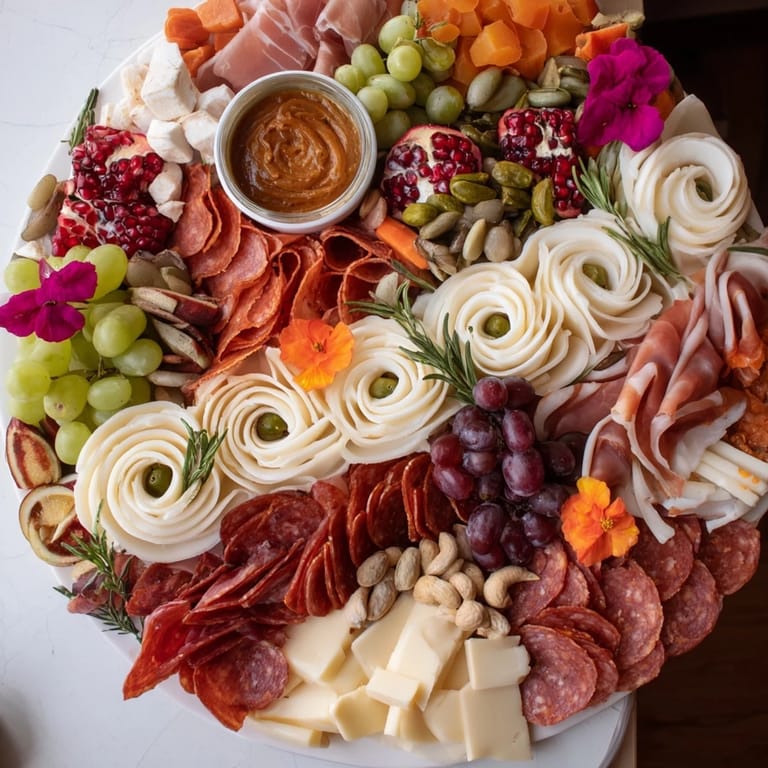
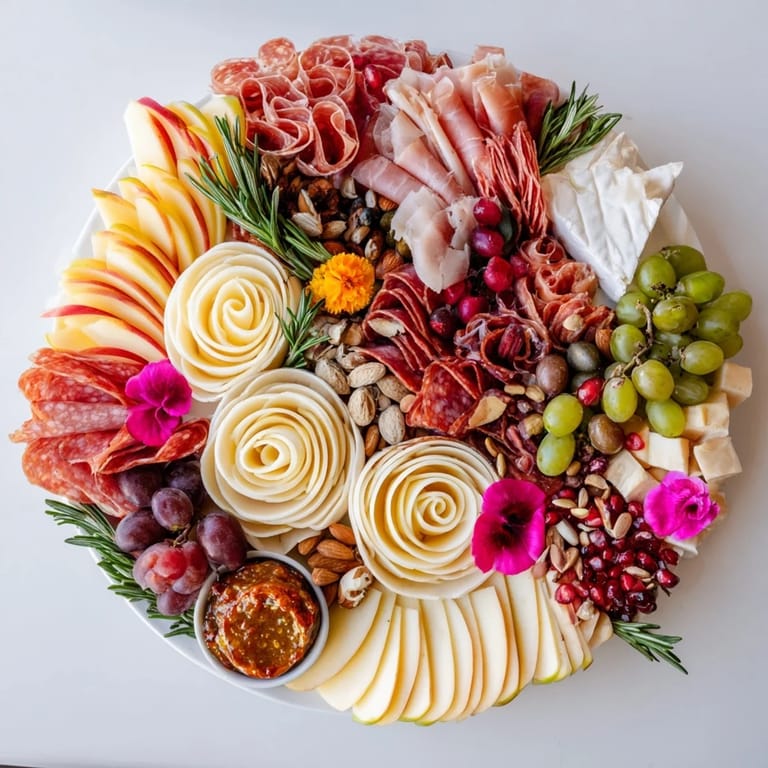
- This is where patience becomes an art form. Take your chilled provolone or a soft cheese and slice it into paper-thin ribbons with a vegetable peeler or cheese slicer. Roll the first slice into a tight spiral, like you're creating the heart of a rose. Add each subsequent slice around it, slightly overlapping, and gently fan out the outer edges to resemble petals unfurling. Don't worry if the first one looks imperfect—by the third or fourth, your hands will understand the motion. Repeat until you have at least three to four cheese roses
- Create Meat Roses and Folds:
- Take those paper-thin slices of prosciutto and soppressata and repeat the rose technique with smaller, more delicate scrolls. For the dramatic effect, crumple and fold larger pieces into soft, organic shapes—imagine fabric bunched up—and arrange them so they catch light and create shadow. This is where the board starts to look three-dimensional
- Layer Your Cured Meats:
- This is an accordion effect. Take your sliced meats and fold them back and forth, creating standing peaks that add height and drama. Nestle these folded ribbons throughout the board, leaving intentional gaps that you'll fill with other ingredients. The key is to layer generously—a cramped, full board is the Advanced Artisan Array
- Cut and Place Your Cheeses:
- Wedges of manchego, shards of aged cheddar, cubes of brie, crumbles of goat cheese. Each cut should be different. Scatter them throughout, letting some lean against the meat folds, others stand independently. Place your cheese roses proudly—they're your stars
- Cluster Your Fruits:
- Fresh and dried fruits should live in small neighborhoods. A pile of pomegranate seeds here, a fan of apple slices there, a handful of dried apricots in another corner. Use the natural colors—the deep reds against golden aged cheddar, bright green grapes beside dark olives. This is your color theory moment
- Scatter Nuts, Olives, and Pickles:
- Marcona almonds in one small pile, pistachios in another. Olives in their own bowl or scattered in strategic pockets. Cornichons fanned out like a deck of cards. Roasted red peppers arranged in a loose line. Each element needs just enough presence to be found but not so much that it overwhelms
- Arrange Your Bread and Crackers:
- Fan your baguette slices in overlapping lines. Lean grissini breadsticks against the board edges or stand them up in small bundles. Fill remaining gaps with crackers, varying the angles so they look casually placed rather than gridded. This is the final structural foundation
- Crown with Garnishes:
- Fresh rosemary sprigs, thyme branches, and edible flowers should be scattered across the board like you're decorating with intention but not rigidity. Microgreens add delicate height. Radish roses (thinly sliced radishes fanned and iced in water until they curl) become tiny architectural details. These garnishes transform a board into an Advanced Artisan Array
- Final Presentation:
- Step back. Look at your board in natural light and artificial light. Adjust anything that feels sparse or crowded. The goal is abundant, organized chaos—every inch should invite exploration, but with a clear sense of intention. Serve immediately for maximum visual impact, or cover loosely with plastic wrap and refrigerate until your guests arrive
 Save
Save There's a moment right before you serve a board like this when you realize you've created something that bridges the gap between sustenance and art. I watched a dear friend stand in front of the Advanced Artisan Array for a full minute before touching it—not because she was unsure what to eat, but because she was simply absorbing the beauty of it. That pause, that moment of appreciation, is exactly what this board is designed to create.
The Architecture of Abundance
Building an Advanced Artisan Array is fundamentally about understanding negative space and how to fill it with intention. Every gap matters. Unlike a casually assembled board, this one requires you to think three-dimensionally—varying heights with meat folds and cheese roses, creating visual lines with crackers and breadsticks, using color blocks of fruit and nuts to guide the eye across the board. The moment you start seeing it as landscape design rather than just ingredient placement, everything clicks into place.
Wine Pairings and the Journey They Create
A bold Syrah becomes the perfect companion to the richness of aged cheddar and soppressata—the wine's tannins cut through the fat like a knife, resetting your palate between bites. Sparkling wine takes a different approach, adding celebration and lightness, pairing beautifully with the briny olives and fig jam. The moment you start thinking about this board as a wine journey rather than just food, you understand why people linger over it. Each bite tells a story when it's accompanied by the right glass.
Mastering the Fold, the Rose, and the Ribbon
The techniques that make this board Advanced rather than Casual take practice, but once your hands learn them, you'll execute them almost without thinking. Sculpting cheese roses teaches your fingers the right pressure—too much and the cheese tears, too little and it won't hold its shape. Folding meats into dramatic ribbons requires understanding that thinner slices are more cooperative, that temperature matters, and that sometimes letting the ingredient guide you yields better results than forcing a vision. These aren't skills you master once; they're small discoveries that compound over time, making each board you create more sophisticated than the last.
- Always slice your cheese and meat on the thinnest setting if using a slicer, or ask your butcher and cheesemonger to do it for you—the difference between thick and thin slices is the difference between amateur and artisan
- Keep a damp towel nearby while you work; occasionally dampening your hands helps you shape cheese and meat without it sticking or tearing
- If a cheese rose falls apart mid-creation, use those pieces as components of the board rather than throwing them away—broken pieces actually add charm to a maximalist design
 Save
Save The Advanced Artisan Array is proof that sometimes the most impressive things you can create in a kitchen don't require cooking at all—just intention, thoughtfulness, and a willingness to slow down. Every time you make one, you're not just feeding people; you're creating a moment they'll remember.
Recipe FAQs
- → How do you sculpt cheese roses?
Use pliable cheeses like provolone thinly sliced, then roll tightly and fan out edges to mimic petals.
- → What meats work best for folding?
Thinly sliced cured meats such as prosciutto, soppressata, capicola, and mortadella fold well to create intricate layers.
- → Which garnishes enhance the board's appearance?
Fresh herbs like rosemary and thyme, edible flowers, microgreens, and radish roses provide vibrant color and texture.
- → How to balance flavors on the board?
Combine salty cured meats, creamy cheeses, sweet fruits, crunchy nuts, and tangy pickles for dynamic taste variety.
- → Can this board accommodate dietary preferences?
Yes, by substituting gluten-free crackers or plant-based options, it can suit diverse dietary needs.