 Save
Save I discovered this dish at a gallery opening where a friend arranged appetizers on white platters like they were miniature art installations. Watching guests pause to admire the geometric blocks of red, yellow, and blue before eating them made me realize food could be as much about visual rhythm as taste. That night, I went home determined to create something with the same bold simplicity, and this arrangement was born from sketching color combinations on napkins at my kitchen table.
The first time I made this for a potluck, I arranged it on an old rectangular platter my grandmother had given me, and somehow the whole thing felt like a conversation between her love of entertaining and my need to make something unexpected. A woman at the party asked if it was edible, and when I said yes, she laughed and took three pieces.
Ingredients
- Red bell pepper: Choose one that feels heavy and firm, with smooth skin and no soft spots—this is where your main color block comes from, so pick a vibrant, jewel-toned red.
- Yellow cheddar or Gouda: The cheese needs to be firm enough to cut cleanly into blocks without crumbling, and the golden color is non-negotiable for the Bauhaus palette.
- Blue or black seedless grapes: These provide the third color and a slight sweetness that balances the savory cheese and pepper.
- Extra-virgin olive oil: A light brush adds subtle shine and helps the salt and pepper cling to the pepper squares.
- Sea salt and freshly ground black pepper: These finishing touches taste fresher than pre-ground versions and make each bite feel intentional.
Tired of Takeout? 🥡
Get 10 meals you can make faster than delivery arrives. Seriously.
One email. No spam. Unsubscribe anytime.
Instructions
- Prepare the pepper:
- Wash and thoroughly dry the red bell pepper, then carefully slice it into half-inch-thick strips by cutting from top to bottom around the pepper. Cut each strip into roughly one-inch squares, and you'll feel the pepper release a subtle perfume as the knife moves through it.
- Cut the cheese into blocks:
- Working with a sharp knife on a clean cutting board, slice the cheese into one-inch-thick planks, then cut those planks into rectangular blocks about one inch wide. The cheese should feel almost buttery to cut if it's the right temperature.
- Rinse and dry the grapes:
- Gently rinse each grape and dry them thoroughly on a paper towel—any moisture will make them slip around on the platter.
- Arrange on the platter:
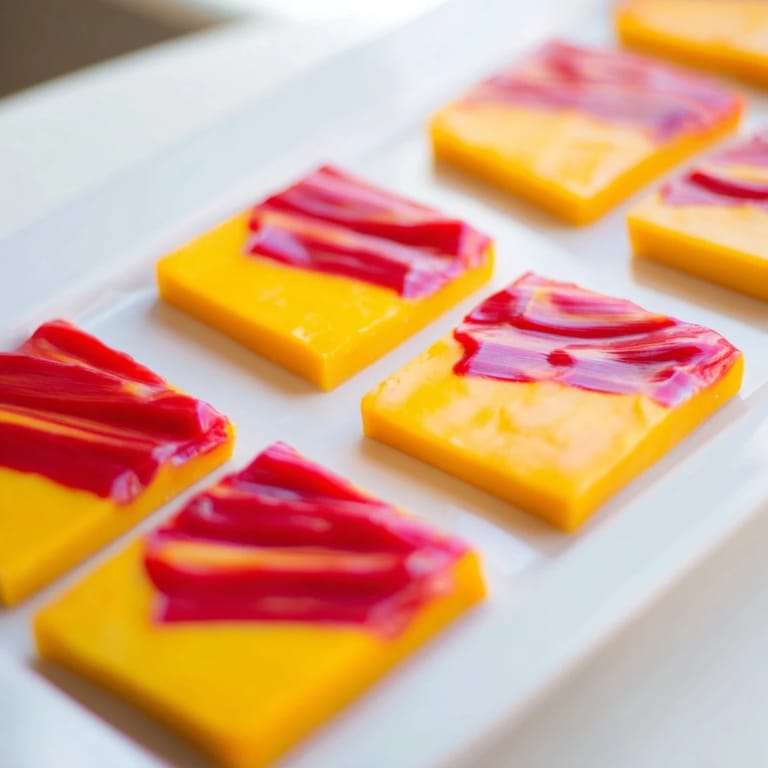
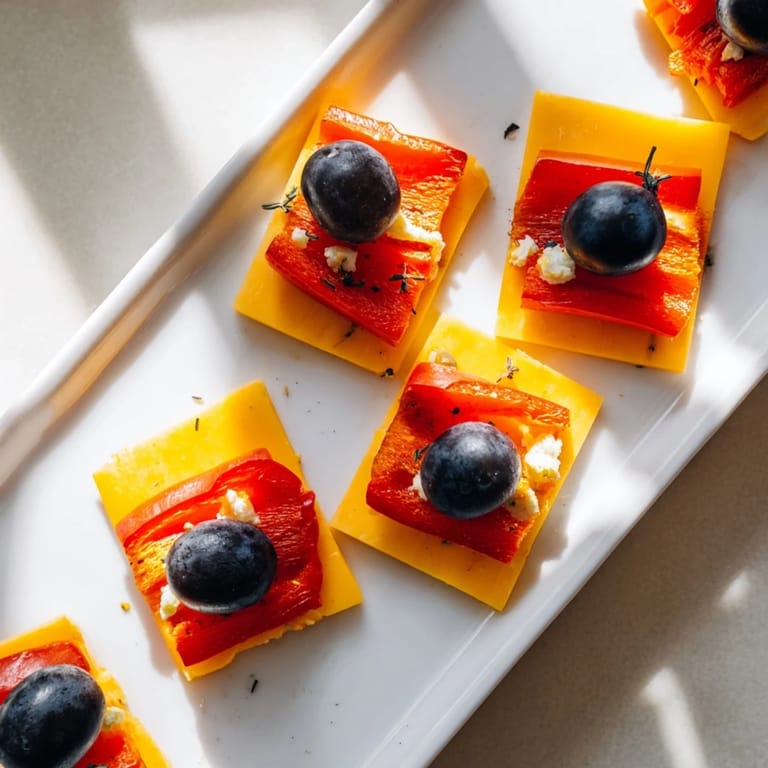
- Start laying out your blocks on a rectangular serving platter, thinking of it like a grid or checkerboard, alternating red pepper, yellow cheese, and blue grapes in a pattern that pleases your eye. The asymmetry matters more than perfect geometry—step back occasionally to see how the colors catch the light.
- Season and finish:
- Lightly brush the pepper squares with olive oil and sprinkle a tiny pinch of sea salt and freshly ground black pepper over them. Serve right away or chill for up to thirty minutes if you want everything crisp and cold.
 Save
Save My neighbor brought her daughter over and the child spent five minutes studying the arrangement before eating anything, asking why I'd made it look like a drawing on a plate. That's when I understood the real magic wasn't in the individual flavors but in how they made you slow down and look first.
The Beauty of Simple Arrangements
There's something deeply satisfying about taking raw ingredients and organizing them according to color and shape rather than tradition. The Bauhaus movement understood that clean lines and primary colors have a calming effect on the eye, and when you apply that thinking to food, it becomes a moment of visual clarity before the first bite. This dish proves you don't need heat or complexity to create something memorable.
Wine and Pairing Ideas
A crisp Sauvignon Blanc cuts through the richness of the cheese while letting the grape's subtle sweetness shine, and the wine's acidity brightens the pepper's soft earthiness. If you're serving this before a larger meal, choose a wine light enough that it won't overshadow what comes next, or go sparkling if you want the whole experience to feel celebratory.
Playing with Variations
Once you understand the formula—three colors, geometric arrangement, minimal prep—you can rearrange it endlessly depending on what's in season or what speaks to you that day. I've made versions with yellow bell peppers, white mozzarella, and black olives that felt completely different but equally striking.
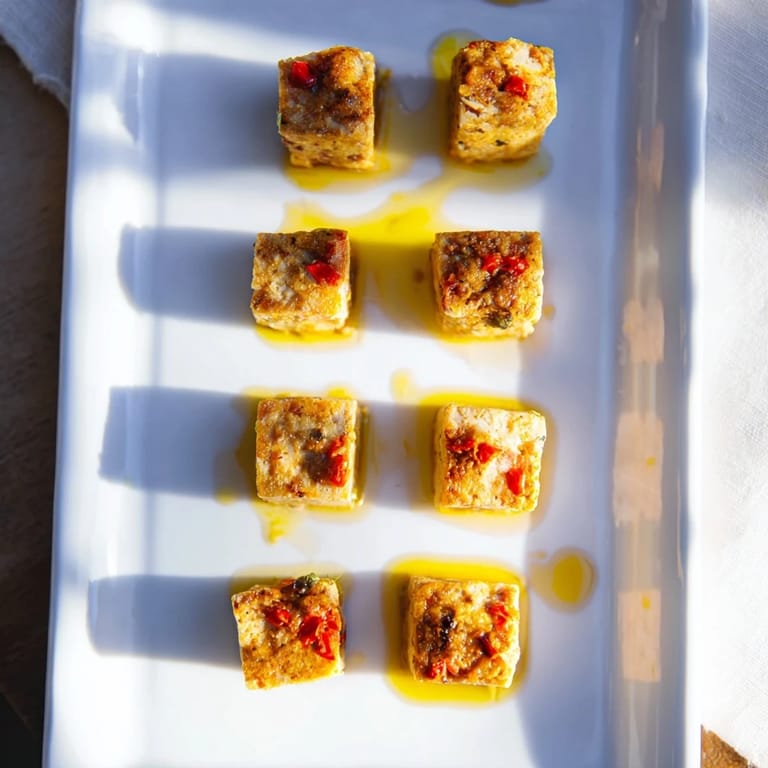
- For a vegan version, swap the cheese for yellow tofu blocks or firm cashew cheese cut to size.
- Serve alongside thin crackers or crisps so guests can build small bites if they prefer.
- A drizzle of aged balsamic on the side adds a touch of elegance without overwhelming the delicate balance.
 Save
Save This dish reminds me that the most impressive appetizers aren't always the most complicated—sometimes they're just the ones brave enough to be honest about their ingredients. Serve it with confidence and watch people eat with their eyes first.
Recipe FAQs
- → What types of cheese work best for this dish?
Yellow cheddar or Gouda are ideal choices, cut into uniform blocks to complement the visual and flavor balance.
- → How should the vegetables and fruit be prepared?
Cut the red bell pepper into 1-inch squares and use seedless blue or black grapes rinsed and dried for ease of arrangement.
- → Can this dish be made vegan-friendly?
Yes, substitute the cheese with plant-based yellow cheese alternatives while maintaining the same block shapes.
- → Is any cooking required for this appetizer?
No cooking is needed; it is assembled fresh, preserving the crispness of the ingredients.
- → What serving suggestions enhance the flavors?
Optionally brush the peppers with extra-virgin olive oil and season lightly with sea salt and black pepper; pairing with dry white wine like Sauvignon Blanc is recommended.