 Save
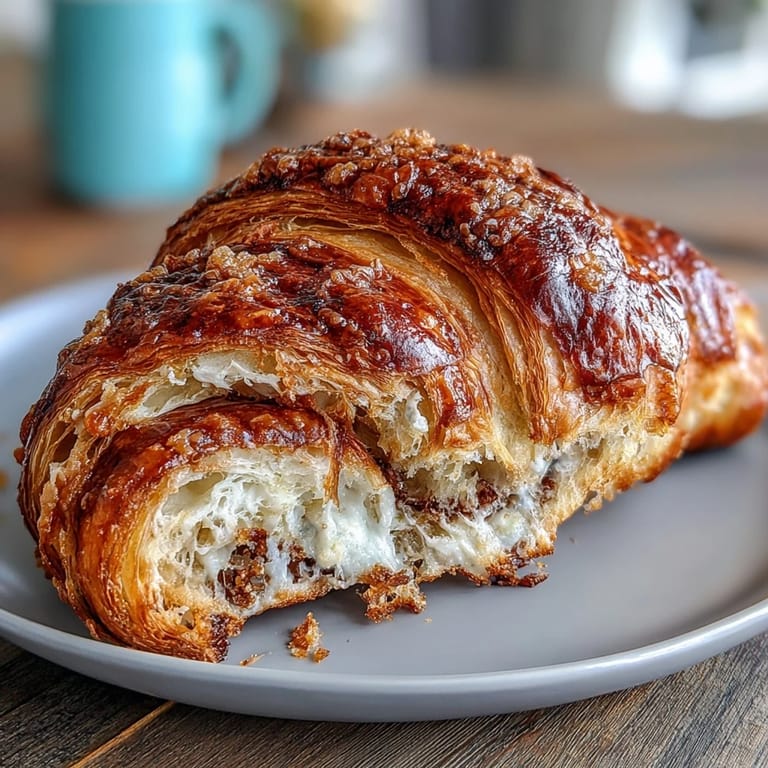
Save There's something almost magical about the moment when you realize sourdough and croissants belong together. I was standing in my kitchen on a quiet Sunday morning, holding a jar of starter that had been bubbling away for weeks, when it hit me—why not fold that tangy complexity into laminated dough? The result was this recipe, which turned what could be an intimidating French pastry into something deeply personal and absolutely worth the wait.
I'll never forget making these for my neighbors during a particularly brutal winter month. As golden croissants came out of the oven, the smell drifted across the hallway, and suddenly I had four people at my door asking what was happening. We ended up having an impromptu breakfast, and watching someone bite into one of these—that moment when the butter and tang hit at once—made every fold and chill time absolutely worth it.
Ingredients
- Bread flour: The higher protein content creates structure that holds all those buttery layers without tearing when you fold and roll.
- Granulated sugar: Just enough to feed the starter and create a delicate crumb without sweetness that masks the sourdough tang.
- Fine sea salt: Use fine salt, not coarse, so it dissolves evenly and strengthens the gluten network rather than punching holes in it.
- Cold whole milk: Keep it cold straight from the fridge—warm milk will make the dough sticky and defeat the whole laminating process.
- Active sourdough starter at 100% hydration: This is the heart of the flavor; if your starter isn't bubbly and doubling in size regularly, feed it at least 4 hours before using.
- Unsalted butter for dough: The small amount here just helps the dough develop smoothness without interfering with the butter block's lamination.
- Cold unsalted butter block: Keeping it cold is absolutely critical—room temperature butter will slip right through the dough instead of creating layers.
- Egg and milk for wash: This simple mixture creates that signature golden, glossy finish that makes croissants irresistible.
Tired of Takeout? 🥡
Get 10 meals you can make faster than delivery arrives. Seriously.
One email. No spam. Unsubscribe anytime.
Instructions
- Mix the dough base:
- Combine flour, sugar, and salt in a large bowl, then add cold milk, active starter, and softened butter. Mix until shaggy, then knead for about 8 minutes until the dough becomes smooth and elastic with a slight bounce when poked. You should feel the gluten developing under your hands, and the dough should start pulling away from the bowl sides.
- First chill and rest:
- Shape the dough into a rough rectangle, wrap it tightly in plastic, and refrigerate for at least 2 hours—this relaxes the gluten and makes rolling easier later. You can actually leave it overnight here if your schedule demands it.
- Prepare the butter block:
- Place 250 g of cold butter between two sheets of parchment paper and pound it gently with a rolling pin until it forms a rectangle about 20 x 15 cm. The butter should be cold enough to hold its shape but soft enough to bend without cracking, which means it needs about 30 minutes at room temperature if it came straight from the fridge.
- Incorporate the butter block:
- Roll your chilled dough into a 40 x 20 cm rectangle on a lightly floured surface. Place your butter block on one half, fold the dough over to enclose it completely, and press the edges firmly to seal—any gaps and the butter will leak out during folding.
- First turn and fold:
- Turn the dough 90 degrees so the folded edge faces you, then roll it into a 60 x 20 cm rectangle. Fold it like a letter—bring the bottom third up, then the top third down—and wrap it well before chilling for 1 hour.
- Complete the lamination:
- Repeat the rolling and folding process two more times, always chilling for 1 hour between turns. Each fold multiplies the layers, and by the final fold you'll have created an astonishing number of butter-flour layers that steam and puff into flakiness.
- Long overnight chill:
- After your third and final fold, wrap the dough and refrigerate for 8 to 12 hours—this long chill develops flavor and makes the dough much easier to cut cleanly. You can actually leave it up to 24 hours without problems.
- Shape the croissants:
- The next morning, roll the dough into a 60 x 30 cm rectangle about 5 mm thick and cut it into 12 long triangles using a sharp knife or pizza cutter. Each triangle should have a wide base and a point, which you'll roll from the wide end to create that classic crescent shape.
- Roll and shape:
- Starting from the wide end of each triangle, roll it tightly toward the point, then curve the ends slightly to form a crescent, tucking the tip underneath to keep it secure. Place each one seam-side down on parchment-lined baking sheets, leaving about 5 cm between them since they'll puff up.
- Proof until puffy:
- Cover the baking sheets loosely with plastic wrap and let them sit at room temperature for 2 to 3 hours until they've roughly doubled in size. They should look pillowy and feel light when you gently poke one.
- Prepare for baking:
- Preheat your oven to 200°C (400°F) about 30 minutes before baking. Whisk together 1 egg and 1 tablespoon of milk, then brush it lightly over each croissant just before they go in—not too much, or you'll glue down all those precious layers.
- Bake until golden:
- Bake for 18 to 22 minutes until the croissants are deep golden brown and visibly crisp. The bottoms should sound hollow when tapped, which means the interior steam has cooked everything through.
 Save
Save These croissants became the reason my Saturday mornings shifted entirely. What started as an ambitious project turned into a ritual—something about the rhythm of folding, the chill time for coffee, the transformation overnight—it all felt less like cooking and more like a conversation with the dough itself.
Why Sourdough Changes Everything
The beauty of sourdough croissants is that the starter adds complexity without being obvious. Most people taste them and sense something special, something alive in the flavor, but they can't quite put a name to it. That's the wild fermentation doing its work—the lactic acids and subtle funk create depth that commercial yeast simply can't match. What you get is a croissant that tastes like it has a story, because it does.
The Lamination Dance
Laminating dough might sound intimidating, but it's really just a pattern you repeat three times. The first time your hands are shaky and you're worried about everything, but by the second fold you start feeling the rhythm. By the third, you understand why bakers love this process—there's something deeply satisfying about watching an ordinary block of dough transform into something capable of shattering into a thousand flakes.
Storage, Freezing, and Variations
Fresh croissants are incomparably best within hours of baking, while they're still warm and the butter is at its fluffiest. If you've made a batch and life gets in the way, freeze them unbaked right after shaping—they'll keep for up to 3 weeks, and you can proof and bake straight from frozen, just adding 5 extra minutes to the bake time. The real magic is in how flexible this dough becomes once you've mastered it.
- A teaspoon of vanilla extract folded into the initial dough adds a subtle warmth that people notice but can't identify.
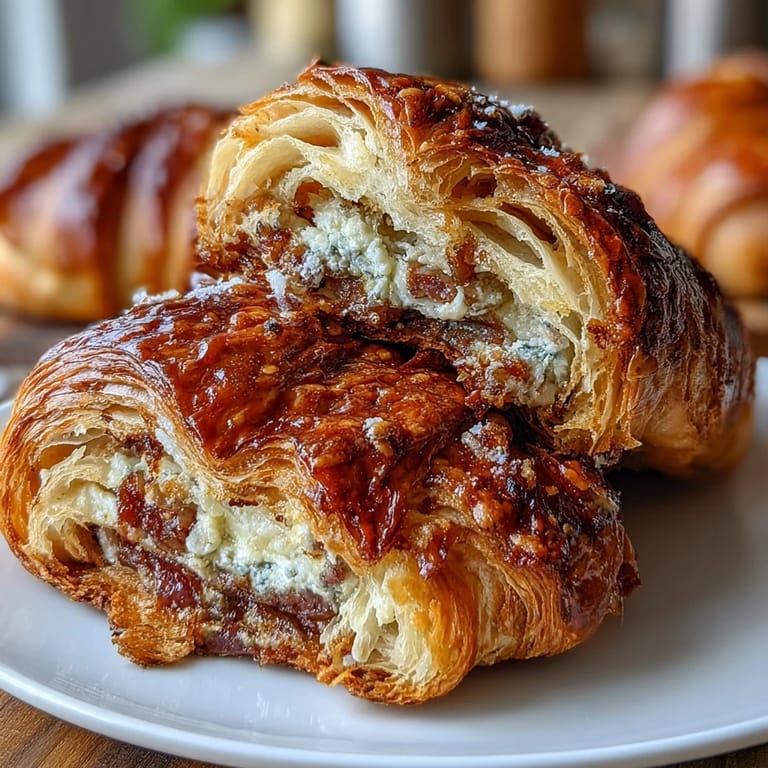
- For a savory direction, fill the wide end of each triangle with a small piece of good cheese or ham before rolling for croissants that work at lunch.
- Pair these with strong coffee, hot chocolate, or even a small spoonful of fruit jam for that classic French breakfast moment.
 Save
Save Making sourdough croissants is less about following perfection and more about understanding your dough, your kitchen, and your starter. Once you've done it once, you'll do it again.
Recipe FAQs
- → What is the purpose of the overnight rest?
Allowing the dough to rest overnight in the refrigerator develops deeper flavors and improves the dough’s texture for flakier layers.
- → How does the sourdough starter affect the flavor?
The sourdough starter adds a subtle tang and complexity that enhances the buttery richness of the croissants.
- → Why is the dough folded multiple times?
Folding the dough incorporates butter in layers, creating the flaky, delicate texture characteristic of croissants.
- → Can the croissants be frozen before baking?
Yes, after shaping and proofing, croissants can be frozen and later baked directly from frozen, though rising time may vary.
- → What is the ideal baking temperature?
Bake at 200°C (400°F) to achieve a golden, crisp crust while ensuring the interior remains soft and layered.
- → How do I achieve a shiny crust?
Brushing each piece with an egg and milk mixture before baking gives the croissants a beautiful golden shine.