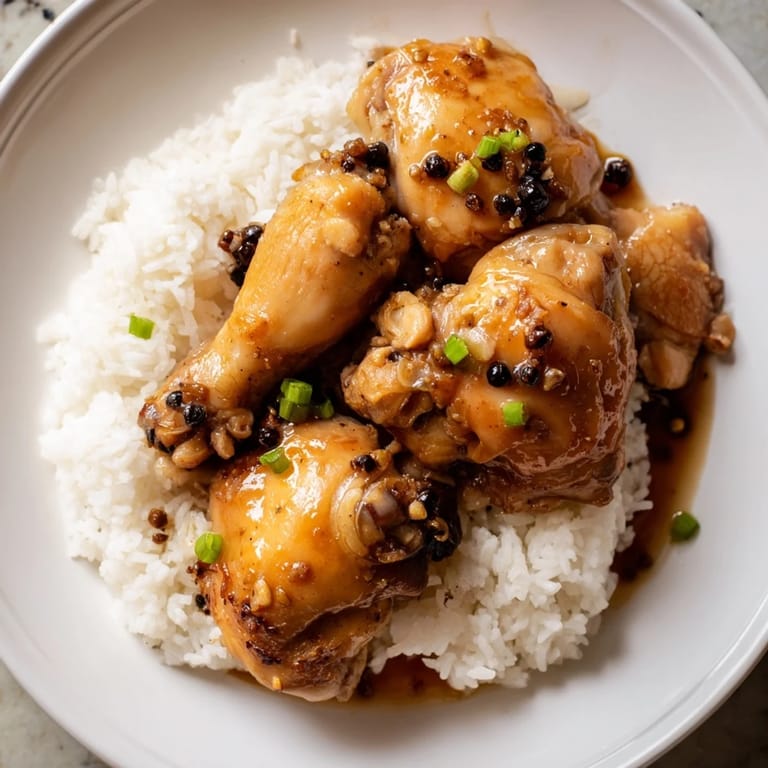
 Save
Save My tita taught me chicken adobo on a humid afternoon in her kitchen, the smell of vinegar and soy sauce filling the air as she explained how this dish sustained her through everything—celebrations, tough weeks, ordinary Sundays. She made it look effortless, the way the chicken surrendered to the dark, glossy sauce, and I realized that adobo isn't just a recipe; it's how Filipino families say "I'm taking care of you." Years later, I find myself making it the same way, muscle memory and heart guiding my hands through each step.
I remember serving this to my partner's skeptical family, watching their faces change with that first spoonful. The vinegar seemed too bold at first, but then the soy sauce's umami and garlic's warmth made sense together, and suddenly everyone was asking for seconds. That meal shifted something—it became our comfort food, the dish we reach for when we want to feel like home.
Ingredients
- Bone-in, skin-on chicken thighs and drumsticks (1.5 lbs): These cuts have fat and connective tissue that breaks down into gelatin, creating a silky sauce that boneless breasts never achieve. Don't skip the skin.
- Soy sauce (1/3 cup): Use good quality if you can—it's the backbone of the flavor. If you need gluten-free, check the label carefully.
- Cane vinegar or white vinegar (1/3 cup): The vinegar is what makes adobo adobo. Cane vinegar is traditional and slightly milder, but white vinegar works beautifully too.
- Garlic (6 cloves): Smash it rather than mince it so it releases its essence into the sauce slowly as everything braises together.
- Bay leaves (2): These add a subtle earthiness that ties the whole dish together—don't skip them, and don't forget to remove them before serving.
- Whole black peppercorns (1 teaspoon): The whole peppercorns stay in the sauce and give you little bursts of sharp flavor. If you only have ground pepper, use half a teaspoon.
- Brown sugar (1 tablespoon, optional): This isn't traditional, but a tiny bit balances the vinegar's sharpness without making it sweet—add it if your vinegar tastes particularly aggressive.
- Water (1/2 cup): This keeps the sauce from reducing too quickly and lets everything braise gently.
- Cooking oil (2 tablespoons): Any neutral oil works; this just gets the chicken skin golden and crispy before the braise.
Tired of Takeout? 🥡
Get 10 meals you can make faster than delivery arrives. Seriously.
One email. No spam. Unsubscribe anytime.
Instructions
- Marinate the chicken:
- Combine chicken with soy sauce, vinegar, garlic, bay leaves, peppercorns, and brown sugar in a large bowl, making sure every piece gets coated. Let it sit for at least 30 minutes, though overnight in the fridge makes the flavors deeper and more complex.
- Dry and brown the chicken:
- Lift the chicken from its marinade—reserve that liquid—and pat it completely dry with paper towels. This dryness is what lets the skin get golden and slightly crispy when it hits the hot oil, creating texture against the tender meat inside.
- Get the pan hot:
- Heat oil in a large, deep skillet or Dutch oven over medium-high heat until it shimmers. Working in batches if needed, place chicken skin-side down and let it brown for 3–4 minutes without moving it around.
- Brown all sides:
- Flip each piece and brown the other side for another 3–4 minutes. This isn't about cooking the chicken through; it's about building flavor on the surface.
- Add the braising liquid:
- Pour in the reserved marinade and water, which should bubble slightly as it hits the hot pan. Bring everything to a boil, then lower the heat to low and cover the pot.
- Braise low and slow:
- Let it simmer gently for 25 minutes with the lid on, then flip the chicken once. The steam and gentle heat work together to make the chicken incredibly tender while the sauce mellows and marries.
- Finish and reduce:
- Remove the lid and continue simmering for another 10–15 minutes, letting the sauce thicken and deepen in color. You'll see the oil beginning to separate on top—skim some of it off if you want, or leave it for extra richness.
- Taste and finish:
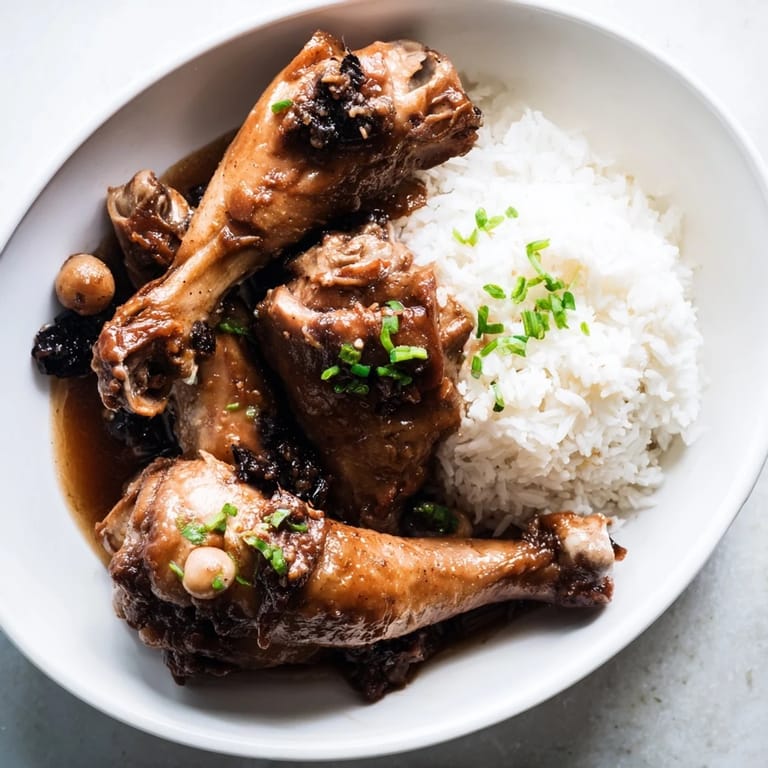
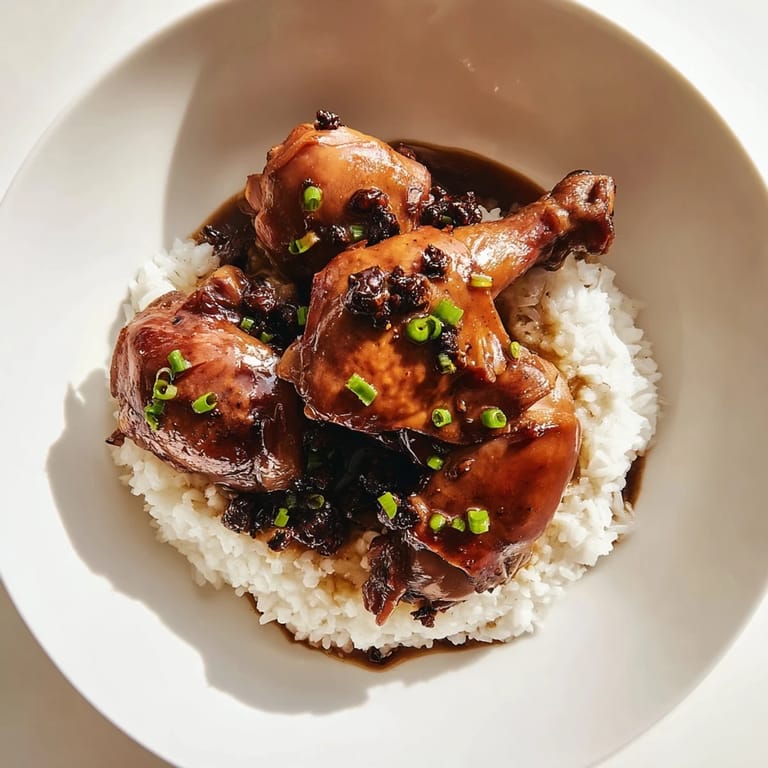
- Remove the bay leaves and taste the sauce. If it needs salt or brightness, adjust now. Serve immediately over hot steamed rice, scattered with fresh scallions if you have them.
 Save
Save There's a moment in every pot of adobo when the kitchen fills with this particular smell—vinegar and soy and garlic mingling with browning chicken fat—and that's when I know I've got it right. It's the smell of comfort, of someone caring enough to spend time making something worth eating.
Variations and Swaps
Pork adobo follows the same path—use shoulder or belly instead of chicken and extend the cooking time by 10–15 minutes so it gets melt-in-your-mouth tender. I've also made this with a splash of coconut milk stirred in at the very end, which softens the vinegar's edge without erasing it. A few dried chilies tossed in during the initial braise add a gentle heat that builds throughout the meal.
Serving and Storage
This tastes phenomenal fresh, but honestly, it's even better the next day after the flavors have settled and deepened in the fridge. Reheat gently on the stovetop with a splash of water if the sauce has thickened too much. It keeps beautifully for up to four days refrigerated, and freezes well for a month or more.
Why This Works
Adobo works because it's balanced—the soy sauce brings salt and depth, the vinegar adds brightness and tang, the garlic rounds everything out, and the chicken's fat becomes part of the sauce itself. Nothing fights; everything cooperates. It's a lesson in how simple ingredients, given time and heat, become something that tastes like someone spent all day on it.
- The ratio of soy to vinegar is key—equal parts means neither one overpowers, creating harmony instead of harshness.
- Bone-in, skin-on chicken truly makes the difference; the marrow and collagen dissolve into the sauce, thickening and enriching it naturally.
- This is a dish that rewards patience; rushing the reduction or cooking too hot will leave you with tough chicken and thin sauce.
 Save
Save Every time I make this, I'm grateful for my tita's patience and for a dish that bridges generations with just a few honest ingredients. This is the kind of meal that fills you and stays with you.
Recipe FAQs
- → What cut of chicken works best for this dish?
Bone-in, skin-on thighs and drumsticks are ideal as they remain juicy and absorb the marinade well during braising.
- → Can I prepare the marinade ahead of time?
Yes, marinating the chicken for at least 30 minutes improves flavor, but overnight refrigeration enhances tenderness and taste.
- → Is it necessary to brown the chicken before simmering?
Browning adds a layer of caramelized flavor and texture, enriching the final dish and sealing in juices.
- → How can I adjust the sauce's tanginess?
Modify the vinegar quantity or add a pinch of brown sugar to balance acidity and create a harmonious flavor.
- → What side pairs well with this dish?
Steamed white rice is traditional and helps soak up the flavorful braising liquid for a complete meal.