 Save
Save I'll never forget the afternoon I discovered that gluten-free entertaining didn't have to mean compromising on drama or elegance. A friend with celiac disease was coming to dinner, and I was determined to serve something that didn't feel like an afterthought. That's when I started stacking—layering gluten-free crackers, toasted bread, creamy spreads, and jewel-toned vegetables into these towering, architectural bites. The moment she saw them, her face lit up. It wasn't just about being inclusive; it was genuinely impressive, and I realized right then that some of the best dishes come from wanting to make everyone at the table feel celebrated.
I remember serving these towers at a casual dinner party where I had mixed guests—some with dietary restrictions, some without—and watching everyone reach for seconds. The conversation didn't pause to discuss who could eat what; the food just worked for everyone. That's when I understood that the best entertaining happens when the food adapts to your guests, not the other way around.
Ingredients
- Gluten-free crispbread crackers (12 crackers): These form your structural backbone, so choose ones with enough integrity to hold weight—seed or multigrain varieties add nutty flavor and don't crumble under pressure.
- Gluten-free bread, lightly toasted and cut into rounds (8 slices): Toasting is essential here; it adds sturdiness and prevents sogginess, and cutting them to match your crackers' size creates a unified, professional look.
- Whipped cream cheese (150 g): This acts as edible glue between layers and adds richness; whipping it first makes it easier to spread thinly and distributes it more evenly.
- Hummus (100 g): Beyond flavor, hummus provides moisture and helps bind layers together while keeping things light and plant-forward.
- Guacamole (100 g): Don't skip this—avocado adds a luxurious mouthfeel and beautiful green color that's visually essential for a tower.
- Cucumber, thinly sliced (1 small): The watery crispness prevents layers from feeling heavy; slice thin so each layer sits flat without tilting your tower.
- Tomato, thinly sliced (1 medium ripe): Ripe is crucial; underripe tomatoes turn your tower mushy and tasteless, so taste before you slice.
- Avocado, sliced (1 small): Add this last or toss gently with lemon juice to prevent browning—avocado oxidizes faster than you'd think.
- Microgreens or baby arugula (1/2 cup): These are your final flourish and should remain bright and fresh; add them just before serving to preserve their delicate texture.
- Radish, thinly sliced (1/4 cup): Radishes add a peppery snap and beautiful color; they're also sturdy and don't wilt, making them reliable structural players.
- Roasted red peppers, sliced (1/4 cup): Jarred is perfectly fine here and saves time; they add sweetness and visual drama without adding moisture that could destabilize your creation.
- Toasted pumpkin seeds (2 tbsp): These add a textural surprise on top and should be truly toasted to release their flavor—don't just scatter raw seeds.
- Chives, finely chopped (2 tbsp): A fresh finish that adds onion notes without overpowering; chop just before serving so they stay vibrant.
- Freshly cracked black pepper and sea salt, to taste: These finishes should be generous—they make the difference between good and memorable.
Tired of Takeout? 🥡
Get 10 meals you can make faster than delivery arrives. Seriously.
One email. No spam. Unsubscribe anytime.
Instructions
- Gather and prep everything:
- Arrange all your spreads in small bowls and all your sliced vegetables on a cutting board, organized by color. This mise en place step might feel fussy, but it's the difference between calm assembly and frantic scrambling when your tower starts getting tall.
- Toast and cut your bread:
- Lightly toast your gluten-free bread until it's just beginning to crisp at the edges but still has some give—you want it sturdy, not brittle. Cut into rounds or rectangles that roughly match your cracker size; uniformity isn't about perfection, it's about stability.
- Build your first layer:
- Start with a cracker as your base. Using a small offset spatula or butter knife, spread a thin, even layer of cream cheese or hummus. This is your foundation; don't be generous here or you'll create slip-sliding towers.
- Add your first bread layer:
- Place a piece of toasted bread on top of your spread. Press gently but firmly to create contact and stability. This bread layer is your first chance to add structural diversity.
- Layer your vegetables and spreads:
- Spread a thin layer of guacamole on the bread, then add a few overlapping slices of cucumber and tomato. These wet vegetables will want to slip, so keep slices thin and overlap them slightly so they support each other. Press gently as you go.
- Continue building with contrast and color:
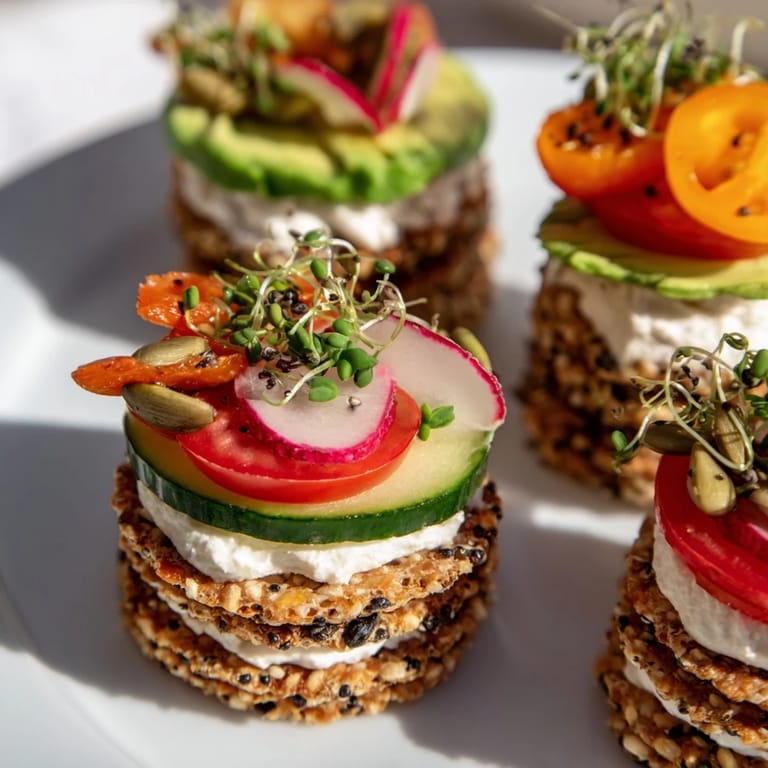
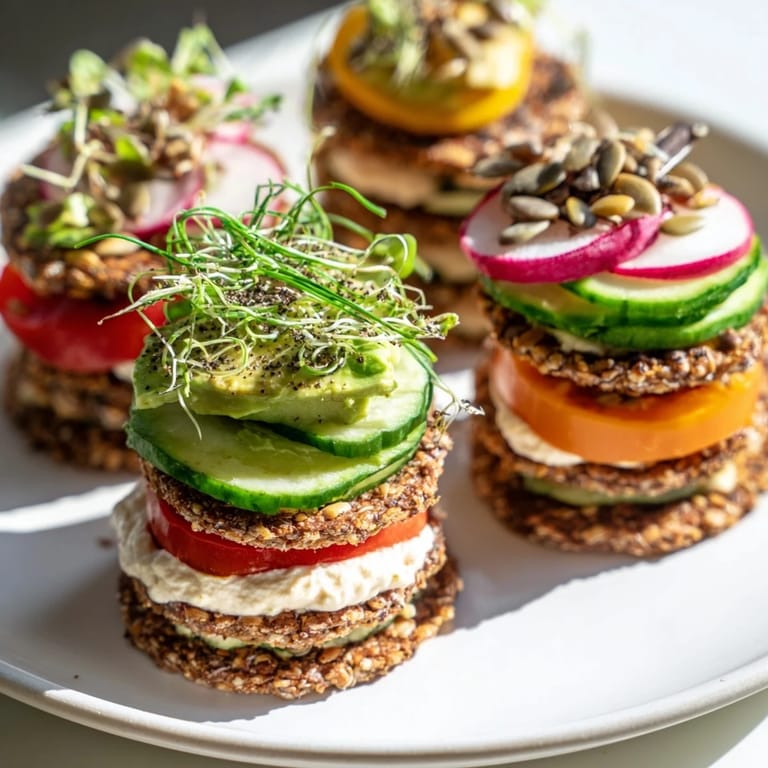
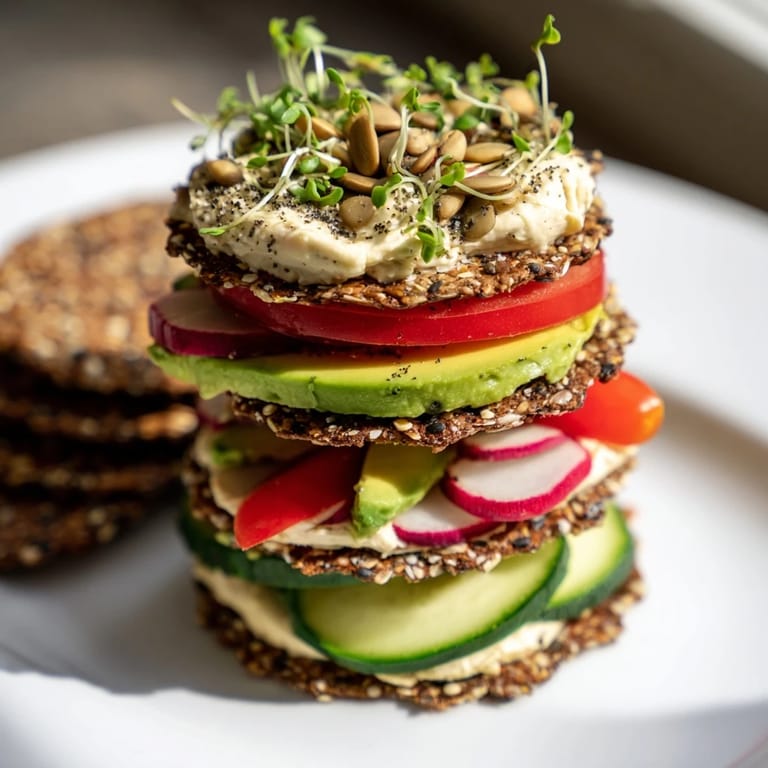
- Alternate between crackers and bread, switching your spread with each layer—if you used cream cheese on layer one, try hummus on layer two. Introduce different vegetables at each step: avocado here, then radish, then roasted pepper. This creates visual interest and prevents flavor fatigue. Your tower should look like a cross-section of a garden at this point.
- Stack up three to four layers:
- Build deliberately, pressing gently between each addition to lock everything together. You're creating a structure, not a precarious jenga tower. At the three-layer mark, assess your tower's tilt—if it's leaning, adjust with gentle pressure from the side.
- Crown your creation:
- Top with either a final cracker or bread slice, then add a small dollop of cream cheese, a pinch of bright microgreens, a scatter of toasted pumpkin seeds, and those fresh chives. The top is your showcase, so make it beautiful—think of it as the final word in the story your tower is telling.
- Transfer with care:
- Use a wide spatula underneath your tower, supporting it gently from all sides. Transfer slowly to your serving plate. If you're making multiple towers, work with one at a time—rushing here is where towers tumble.
- Season and serve immediately:
- Finish with a final crack of black pepper and a whisper of sea salt. Serve right away while the bread is still crisp and the vegetables are at their coolest.
 Save
Save The best part about these towers, I've learned, is that they're a conversation starter. People ask how you stacked it so high, and suddenly everyone's laughing while passing around plates and swapping vegetable preferences. It becomes this shared moment of play and appreciation, which is really what entertaining is about.
Choosing Your Crackers and Bread Wisely
Not all gluten-free bases are created equal, and I learned this lesson through a few wobbling disasters. Seed and multigrain crackers tend to be sturdier than plain varieties because the seeds add structural integrity, plus they taste better and feel more substantial. For bread, look for denser, chewier gluten-free loaves—the light, airy ones that taste like clouds are beautiful on their own but terrible for stacking. Toast matters more than you think; it's not about color, it's about creating a thin, crisp exterior that won't yield under pressure while the inside stays just slightly tender.
Making This Dish Work for Different Diets
The beauty of this tower is its adaptability. For vegan guests, swap cream cheese for a plant-based version and lean heavier on hummus and guacamole as your binding spreads. If you want to add protein, smoked salmon, turkey, or even grilled vegetables create beautiful layers and don't compromise the gluten-free nature of the dish. I once added thin slices of roasted eggplant for a vegetarian friend who was impressed by how luxe it felt, and nobody even noticed the absence of meat. The tower is a canvas—work with it.
Timing and Make-Ahead Strategy
Here's what I've discovered about managing this appetizer for entertaining: you can prep all your components hours in advance, but the stacking itself must happen within 30 minutes of serving. Cut your vegetables, whip your cheese, toast your bread, and arrange everything on boards, then do the actual assembly when your guests are arriving. This isn't because it's complicated—it's because the bread starts to soften and the vegetables begin releasing their juices, which means your tower needs to be eaten while it's still at its architectural and textural peak. If you're making individual towers, you can actually stack them up to an hour ahead and keep them in the refrigerator, but remove them 10 minutes before serving so the cream cheese softens just enough to taste creamy rather than stiff.
- Toast your bread just before guests arrive so it's still crisp and warm.
- Keep sliced vegetables between damp paper towels in the refrigerator until the last possible moment.
- Assemble your tower in the order you'll eat it—top layer last, so it hasn't had time to absorb moisture from lower layers.
 Save
Save These towers have become my go-to when I want to impress without stress. They're proof that gluten-free entertaining isn't about restriction—it's about creativity. Serve them with a crisp Sauvignon Blanc or sparkling water with lemon, and watch your guests' faces light up.
Recipe FAQs
- → How do I keep the tower stable when stacking?
Press layers gently as you stack and use spreads like cream cheese or hummus to help ingredients adhere, ensuring a stable assembly.
- → Can I prepare the components in advance?
Yes, preparing spreads and slicing toppings ahead makes assembly quick and smooth right before serving.
- → What can I substitute for cream cheese in a vegan version?
Use plant-based cream cheese or simply increase hummus and guacamole layers for a creamy texture without dairy.
- → Which breads work best for the base and layers?
Gluten-free crispbread crackers provide crunch, while toasted gluten-free bread rounds or rectangles offer a soft, sturdy contrast.
- → How should I serve the tower to guests?
Use a wide spatula to carefully transfer the stacked tower onto plates and serve immediately to maintain texture and appearance.
- → Can I add protein to the tower?
Yes, options like smoked salmon, turkey, or grilled vegetables can enhance protein content, but they may alter dietary suitability.