 Save
Save My kitchen fills with the smell of cinnamon and orange every spring, and it's always because I'm making hot cross buns. There's something about the way the spices bloom in warm dough that feels like a small act of celebration—no special occasion needed, just the urge to create something that tastes like comfort and citrus brightness at once. The first time I tried piping the cross on top, I made a complete mess, but somehow that imperfect bun tasted the best.
I made these for my neighbor last April when she was recovering from surgery, and watching her face light up when she bit into one was worth every minute of the rising time. She called me the next day just to ask if I could teach her, and now we make them together every spring, our kitchens smelling identical for a few hours. That's when I realized these buns had become more than just bread—they were an excuse to show up for someone.
Ingredients
- Bread flour (4 cups): Don't skip the bread flour here—the higher protein content gives the dough that tender-yet-chewy texture that makes hot cross buns special, not a dense brick.
- Instant yeast (2 1/4 tsp): Make sure yours isn't expired, or you'll be waiting forever for the dough to rise and might convince yourself something's wrong when really it's just sleepy yeast.
- Mixed spices (cinnamon, allspice, nutmeg): Toast them in a dry pan for 30 seconds before measuring if you want the flavor to sing—this small step transforms everything.
- Mixed dried fruit (3/4 cup): The mix of currants, raisins, and candied orange peel creates a complex sweetness, but don't be afraid to adjust based on what you love.
- Orange and lemon zest (1 of each): Zest these fresh right before adding—the oils are bright and alive, not the pale ghost that comes from a jar.
- Whole milk and water (1/2 cup each): Lukewarm is the key word—too hot kills the yeast, too cold and nothing happens, so aim for the temperature of a bath you'd actually want to take.
- Unsalted butter (1/4 cup, melted): This keeps the crumb tender without making it greasy, and the melted state means it distributes evenly through the dough.
- Eggs (2 large, room temperature): Cold eggs can shock the dough, so pull them out 15 minutes ahead if you remember—it makes a difference in how smoothly everything incorporates.
- Powdered sugar (1/2 cup) and citrus juices: Fresh juice over bottled, always—the difference between a glaze that tastes bright and one that tastes slightly artificial.
Tired of Takeout? 🥡
Get 10 meals you can make faster than delivery arrives. Seriously.
One email. No spam. Unsubscribe anytime.
Instructions
- Blend your dry ingredients:
- In a large bowl, whisk together bread flour, sugar, yeast, cinnamon, allspice, nutmeg, and salt. This even distribution matters more than you'd think—the spices won't find their way into every bite if you skip this step.
- Combine the wet mixture:
- In another bowl, whisk milk, water, melted butter, and eggs until they're well combined and the butter is no longer separating. This is your dough's personality base, so take a breath and do it properly.
- Bring it together:
- Pour the wet into the dry and mix with a wooden spoon until a shaggy dough forms—it'll look messier than you expect, but that's exactly right. Don't be alarmed at this stage; chaos becomes beauty in the next few minutes.
- Add fruit and zest:
- Fold in the dried fruit, orange zest, and lemon zest until they're distributed throughout. The candied orange peel will cling to your hands a bit, which is annoying but also proof it's real fruit in there.
- Knead until smooth:
- By hand or with a stand mixer, knead for 8 to 10 minutes until the dough becomes smooth, elastic, and only slightly sticky. You'll feel it transform under your hands—it goes from rough to almost silky, and that's your signal to stop.
- First rise:
- Place the dough in a greased bowl, cover with a damp cloth or plastic wrap, and let it rise in a warm spot until doubled in size, about 1 hour. Your kitchen should smell like spiced oranges at this point; if it doesn't, your yeast might have been tired.
- Shape the buns:
- Turn the dough out onto a lightly floured surface and divide into 12 equal pieces—using a kitchen scale makes this easier and less stressful. Shape each piece into a tight ball and place on a parchment-lined baking tray with a little breathing room between them.
- Second rise:
- Cover loosely and let rise for 30 minutes until the buns look puffy and soft. While they're rising, preheat your oven to 375°F (190°C).
- Make and pipe the cross:
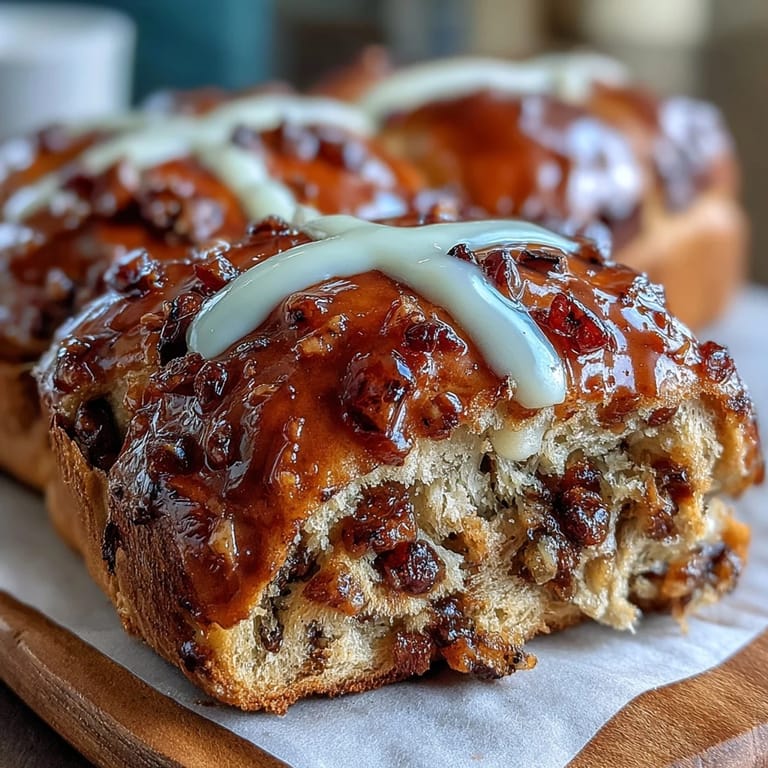
- Mix all-purpose flour with water to create a thick, pipeable paste—it should hold its shape when piped, not run. Transfer to a piping bag (or a small zip-top bag with the corner snipped) and pipe a cross over each bun, holding your hand steady and moving with confidence.
- Bake until golden:
- Bake for 20 to 25 minutes until the buns are golden brown and sound hollow when you tap them on the bottom. The kitchen will smell absolutely incredible, and you might find yourself hovering near the oven.
- Glaze while warm:
- While the buns bake, whisk together powdered sugar, orange juice, and lemon juice until smooth. Brush this glaze generously over each warm bun straight from the oven, and watch it soak in slightly while the buns are still steaming.
- Cool and serve:
- Transfer to a wire rack to cool—they're best eaten slightly warm, when the glaze is still tacky and the crumb is at its most tender.
 Save
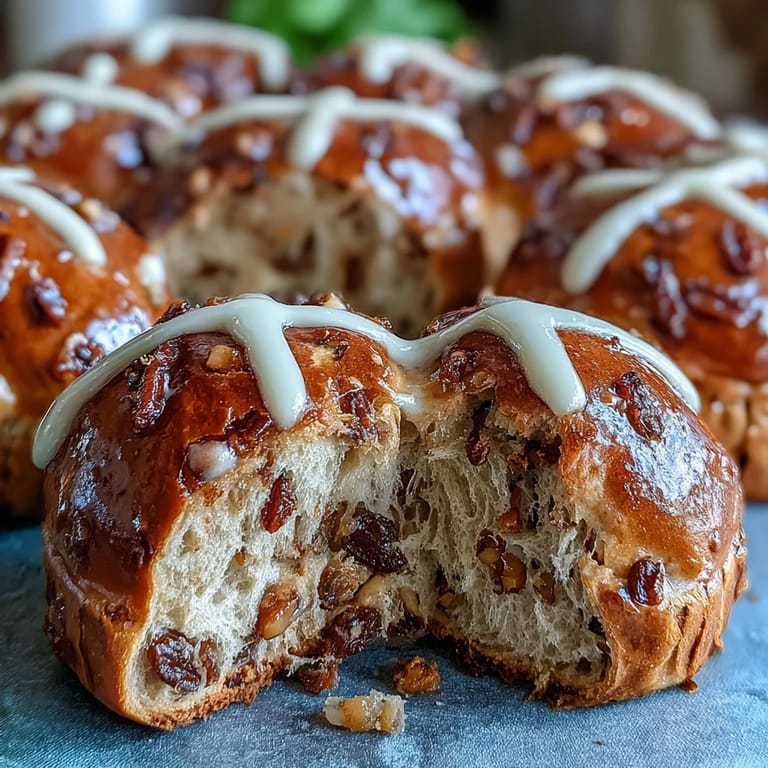
Save There's a moment, maybe 20 minutes into baking, when the spice-scent fills your entire house and you realize you've created something real. These buns taught me that patience has its own reward, and that sometimes the best gifts are the ones you make with your hands still dusted in flour.
Variations and Flavor Swaps
Once you understand the basic dough, you can play with the flavor profile without losing what makes these special. I've added a pinch of cardamom for extra warmth, substituted dried cranberries and chopped apricots for a lighter citrus twist, and even experimented with candied ginger for a spicier edge. The structure holds up beautifully, and you're not reinventing the wheel—just adding your own handwriting to something traditional.
Storage and Reheating
These buns stay soft for two days in an airtight container at room temperature, though honestly they rarely last that long. If you want to freeze them, wrap them individually in plastic wrap and store in a freezer bag for up to three weeks—thaw at room temperature and warm gently in a low oven before glazing again if you'd like. I've learned that a 10-second burst in the microwave with a slightly damp paper towel is the quickest way to revive a day-old bun without drying it out.
Why This Recipe Matters
Hot cross buns are steeped in history and tradition, but they're not fussy or pretentious—they're humble, generous, and meant to be shared. Making them from scratch feels like honoring something old while creating something entirely yours, and that intersection is where real kitchen magic happens.
- The combination of spices, citrus, and dried fruit works together in a way that feels both familiar and surprising with every bite.
- These buns prove that breakfast or afternoon tea can be an event, not just something you rush through before moving on.
- Once you've mastered the technique, you'll find yourself making them for every spring gathering, every neighbor who needs a little kindness, every moment that deserves a small celebration.
 Save
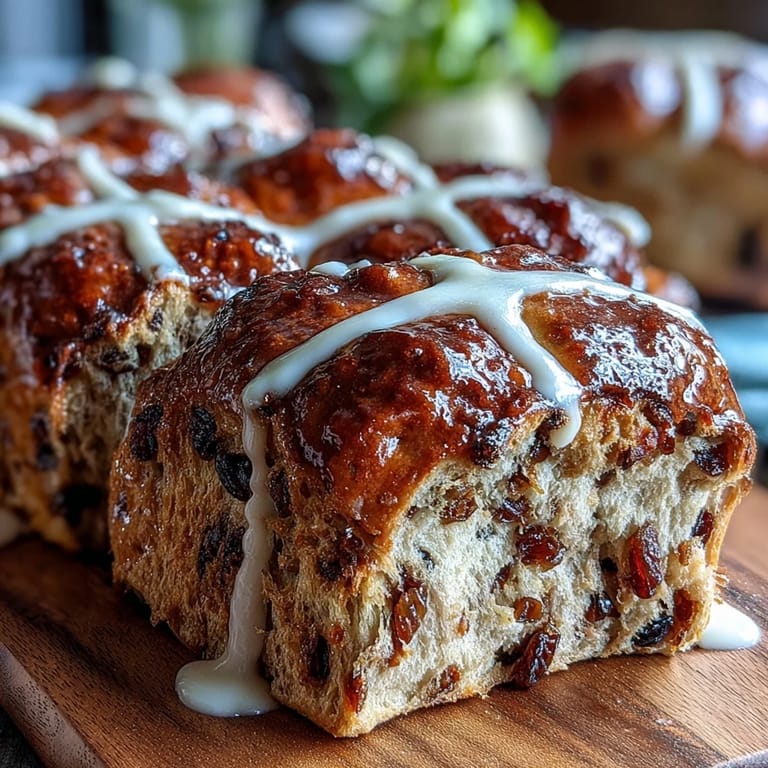
Save These buns have become my spring ritual and my go-to gift, the thing I make when I want to say I was thinking of you without needing words. There's comfort in knowing exactly how to fold those spices into warm dough, and joy in seeing someone's face when they taste what you've made.
Recipe FAQs
- → What spices are used in the dough?
The dough includes cinnamon, allspice, and nutmeg to provide a warm, spiced flavor profile.
- → Can I use different dried fruits?
Yes, substitutions like dried cranberries or apricots work well and offer a different fruity twist.
- → How is the citrus glaze prepared?
The glaze is made by mixing powdered sugar with freshly squeezed orange and lemon juice for a tangy finish.
- → What rising times are involved?
The dough rises for about 1 hour initially, then again for 30 minutes after shaping to achieve a light texture.
- → Is a stand mixer necessary?
A stand mixer can help knead the dough to smoothness but kneading by hand for 8-10 minutes is sufficient.
- → How should the buns be served?
They are best enjoyed slightly warm to enhance their soft texture and citrus aroma.