 Save
Save The first time I made okonomiyaki, my kitchen filled with the smell of cabbage hitting hot oil, and I realized I'd been missing something essential in my cooking life. A Japanese friend had casually mentioned it while we were washing dishes after dinner, and something about the way she described the crispy-chewy texture and those dancing bonito flakes made me determined to try it that same week. I didn't have half the ingredients, so I improvised with what I had, and somehow that accident became the version I still make today.
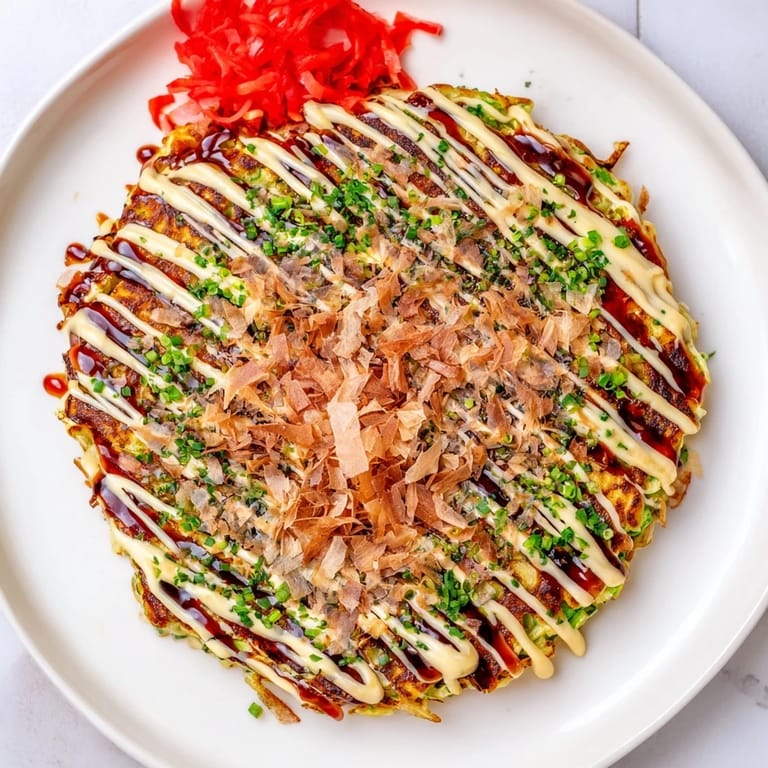
I made these for a small dinner party once, and my neighbor came over early to help prep vegetables. She'd never seen okonomiyaki before, and when I drizzled the sauce in that zigzag pattern and the flakes started moving on their own, she actually gasped. That moment made me understand why street vendors in Osaka take such pride in their craft.
Ingredients
- All-purpose flour: This is your binding structure; don't skip whisking it smooth into the dashi or you'll end up with lumps that refuse to disappear.
- Dashi stock: Use the real stuff if you can find it, or make a quick version with bonito flakes and kombu; water works but tastes flat by comparison.
- Eggs: They're the glue that holds everything together and keeps the pancake tender rather than rubbery.
- Shredded cabbage: Cut it fine enough that it cooks through in the time the pancake spends on the skillet; thick chunks will stay crunchy and tough.
- Green onions and carrot: These add sweetness and color, but they're optional if you want to keep things simple and cabbage-focused.
- Okonomiyaki sauce: This Worcestershire-based sauce is the soul of the dish; if you can't find it, mix equal parts ketchup and Worcestershire with a dash of soy sauce and a pinch of sugar.
- Japanese mayonnaise: Kewpie has a richer, egg-yolk-forward taste that regular mayo can't replicate; it's worth seeking out.
- Bonito flakes: These paper-thin shavings of dried fish wilt from the heat, creating an umami depth that makes the whole thing sing.
- Aonori: This seaweed powder adds a briny, grassy note that feels authentic and transforms the flavor profile.
Tired of Takeout? 🥡
Get 10 meals you can make faster than delivery arrives. Seriously.
One email. No spam. Unsubscribe anytime.
Instructions
- Whisk your batter until it's completely smooth:
- Combine flour, dashi, eggs, salt, and baking powder in a large bowl, whisking until no lumps remain and everything has a silky, pourable consistency.
- Fold in the vegetables with a gentle hand:
- Add shredded cabbage, green onions, carrot, and your protein choice (shrimp or bacon), stirring until everything is evenly distributed without overmixing.
- Heat your skillet and add oil:
- Use a nonstick skillet over medium heat with about 1/2 tablespoon of oil; let it get hot enough that a drop of batter sizzles on contact.
- Scoop and shape your pancake:
- Pour roughly 1 cup of batter onto the skillet and gently shape it into a thick round about 6 inches across, leaving it slightly thicker in the center.
- Cook the first side until golden:
- Watch for the edges to look set and the bottom to turn a deep golden brown, which takes about 4–5 minutes; resist the urge to flip early or it will fall apart.
- Flip with confidence and cook through:
- Use a wide spatula to flip gently, then cook the second side for another 4–5 minutes until the interior is no longer wet and the outside is crispy.
- Repeat with remaining batter:
- Transfer each finished pancake to a plate and repeat with the rest of your batter, adding more oil to the skillet between pancakes as needed.
- Top with sauce, mayo, and flakes:
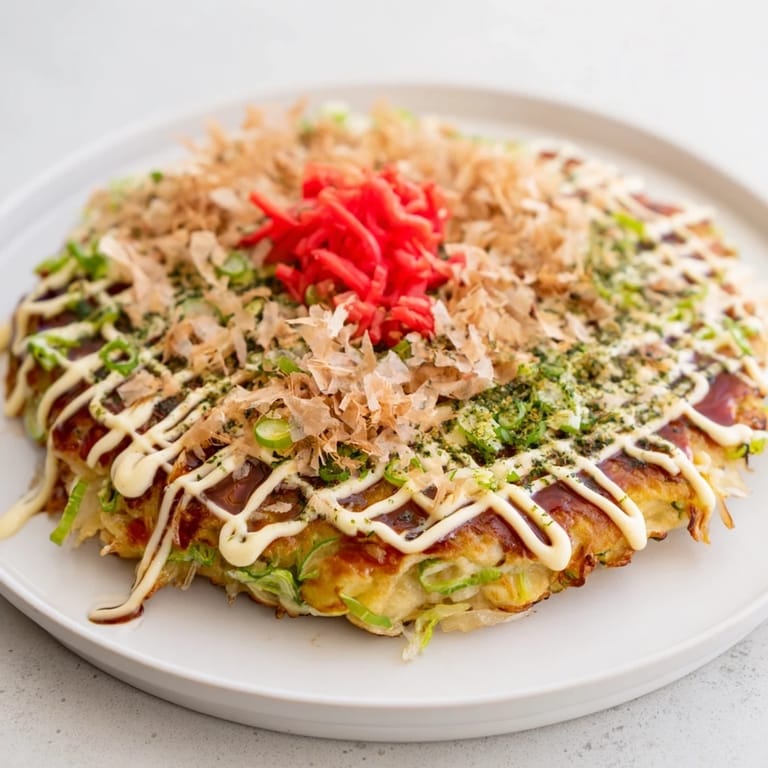
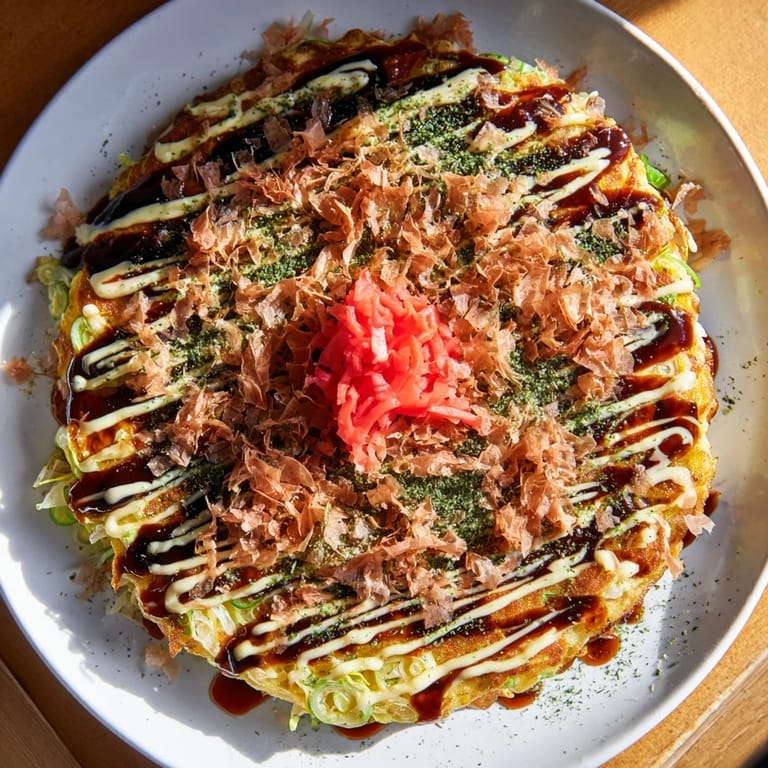
- Drizzle generously with okonomiyaki sauce and mayonnaise in a crisscross pattern, then shower with bonito flakes, aonori, and pickled ginger if using; serve immediately while the flakes are still dancing.
 Save
Save My favorite memory with this dish happened on a rainy Sunday when I made okonomiyaki for myself at noon and ended up eating all four pancakes before anyone else woke up. It was the first time I realized that food could be both comforting and exciting at the same time, humble enough for a solo lunch but impressive enough for company.
The Texture Game
The magic of okonomiyaki lives in its layers of texture: the crispy, caramelized edges give way to a tender, almost crepe-like interior studded with soft, sweet cabbage. This isn't achieved by luck; it's the result of using medium heat, the right ratio of batter to vegetables, and resisting the urge to press down on the pancake while it cooks. I learned this the hard way after flattening my first attempt into a dense, chewy puck that no amount of sauce could rescue.
Building Your Own Flavor Profile
The beauty of okonomiyaki is that it thrives on customization. Vegetarians can skip the bonito and shrimp entirely and add mushrooms, corn, or mozzarella instead. The sauce itself is flexible; if okonomiyaki sauce isn't available, layering Worcestershire, ketchup, soy, and a touch of sugar creates a remarkably similar depth. Even the proportions of mayo to sauce can shift based on your preference; I've made versions where mayo dominates and others where sauce takes over, and both were equally delicious.
When and How to Serve It
Okonomiyaki is best served immediately, while the pancake is still warm and the flakes are actively moving. It works as a snack, a light lunch, or the star of a casual dinner. The Japanese pair it with cold beer or iced green tea, and that combination really does elevate the whole experience in ways I didn't expect until I tried it.
- Let the finished pancake rest for just 30 seconds before adding toppings so the sauce clings properly instead of sliding off.
- If you're cooking for a crowd, keep finished pancakes warm on a low oven while you work through the remaining batter.
- Leftovers can be wrapped and refrigerated for a day or two, then gently reheated in a skillet, though they're never quite as magical as when freshly made.
 Save
Save There's something deeply satisfying about standing in front of your skillet watching a simple pile of cabbage and batter transform into something crispy, warm, and entirely comforting. This dish has become a regular part of my cooking rotation, not because it's difficult, but because it always delivers more joy than the effort it requires.
Recipe FAQs
- → What gives the pancakes their savory flavor?
The combination of dashi stock in the batter and toppings like okonomiyaki sauce, Japanese mayo, and bonito flakes creates a rich, umami-packed taste.
- → Can I make these pancakes vegetarian?
Yes, simply omit shrimp or bacon and bonito flakes, and increase the quantity of shredded vegetables to maintain texture and flavor.
- → How should I cook the pancakes for best results?
Use a nonstick skillet over medium heat, cooking each pancake about 4–5 minutes per side until golden and cooked through.
- → What are good substitutes for okonomiyaki sauce?
A mix of Worcestershire sauce, ketchup, and a bit of soy sauce works well to replicate the tangy, sweet-savory profile.
- → How can I serve these pancakes?
They’re perfect as a snack, appetizer, or light meal, and pair nicely with cold Japanese beer or iced green tea.