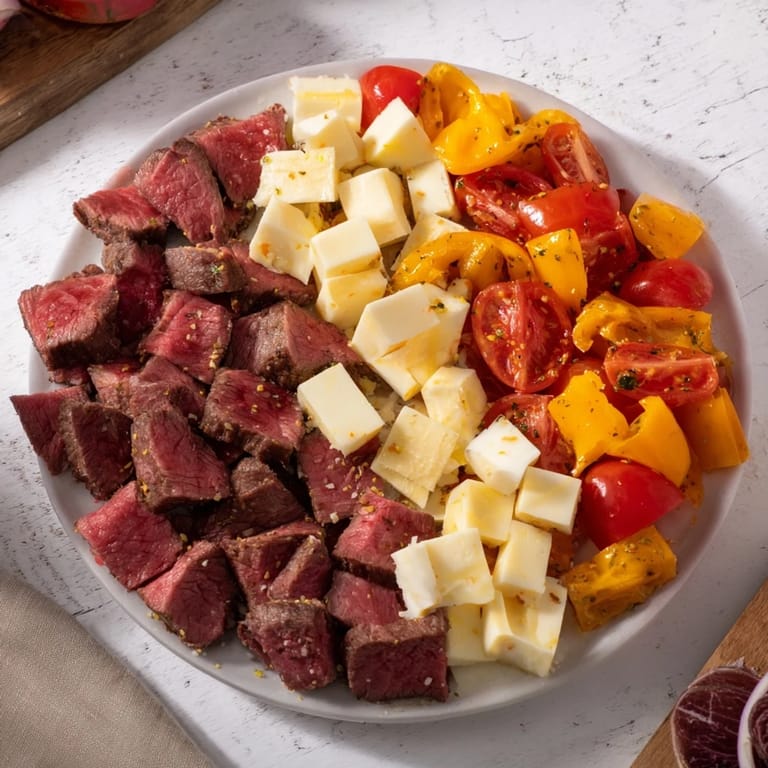
 Save
Save I remember the first time I really understood the beauty of a well-arranged charcuterie board was during a quiet afternoon when my sister came over unexpectedly. Instead of ordering takeout, I raided the deli counter and my cheese drawer, and within twenty minutes, we had this stunning spread before us. That moment taught me something valuable: the most impressive meals don't always require cooking, just intention and an appreciation for quality ingredients. The Keto Power Plate became my go-to when I wanted to feel nourished, satisfied, and honestly, a little fancy without any stress.
I'll never forget serving this to my fitness-focused friends who were skeptical about enjoying good food on their keto journey. Watching their faces light up as they realized they could have cured meats, aged cheeses, and still stay in ketosis was pure joy. That's when I knew this wasn't just a meal—it was proof that eating for your health doesn't mean eating sad, boring food.
Ingredients
- Sliced roast beef (120 g): The foundation of your meat selection—tender, elegant, and rich in iron. Look for thin, even slices from a quality butcher; this makes all the difference in mouthfeel.
- Sliced smoked turkey (120 g): A leaner protein that adds subtle smokiness. It's the bridge between the richer meats and lighter vegetables, keeping everything balanced.
- Prosciutto (120 g): Paper-thin and salty-sweet, this is your platter's crown jewel. Handle it gently and let it cascade slightly for that luxurious look.
- Sliced salami (100 g): The umami bomb that ties everything together. Choose a quality salami with visible fat marbling—it's where the flavor lives.
- Aged cheddar, cubed (100 g): Sharp and crumbly, these little golden cubes add texture and that satisfying aged-cheese tang.
- Gruyère, sliced (100 g): Buttery and complex, Gruyère is the cheese that makes people pause mid-bite. Its nuttiness complements the meats beautifully.
- Manchego, sliced (100 g): This Spanish beauty brings a slightly caramel-like sweetness. Stack it loosely for visual interest.
- Cherry tomatoes, halved (1 cup): Burst with color and brightness. Halving them lets people pop the whole thing in their mouth, and it shows off those pretty seeds.
- Cucumber, sliced (1 cup): Crisp, cooling, and slightly hydrating—your platter's refreshment agent. Slice at a slight angle for elegance.
- Radishes, sliced (1 cup): Peppery and snappy, radishes add a sharp contrast that wakes up your palate between bites of rich cheese.
- Baby bell peppers, sliced (1 cup): Sweet and crunchy, these gems come in jewel tones that make your platter look like edible art.
- Celery sticks (1 cup): The quiet hero—clean, crunchy, and perfect for clearing your palate. Cut into finger-friendly lengths.
- Green olives (1/4 cup): Briny and herbaceous, they're salty punctuation marks across your board.
- Black olives (1/4 cup): Deeper, richer flavor that balances the brightness of the greens.
- Fresh parsley, chopped (2 tbsp): This isn't just for show—it adds a fresh, green note that makes everything taste more vibrant.
- Extra virgin olive oil (2 tbsp): The liquid gold that ties flavors together. A good oil elevates this from nice to memorable.
- Freshly ground black pepper: Always fresh, always generous. Pre-ground tastes like dust compared to what a mill gives you.
Tired of Takeout? 🥡
Get 10 meals you can make faster than delivery arrives. Seriously.
One email. No spam. Unsubscribe anytime.
Instructions
- Choose Your Canvas:
- Start with a large, flat platter—I prefer something with a slightly raised rim or a wooden board. This is your stage, and a generous surface means everything gets room to breathe and look beautiful.
- Meat First, Magic Second:
- Begin by laying down your meats in organized clusters, grouping each type together. Let the roast beef curve slightly, let the prosciutto cascade in loose, romantic waves, and nestle the salami so you can see those gorgeous marbled edges. This isn't just arrangement—it's storytelling with food.
- Cheese Your Moment:
- Place cheese groupings beside each meat section, creating little neighborhoods of flavor. Cube the cheddar so it catches light, layer the Gruyère so people can see the translucence, and fan the Manchego slightly. Think of it like you're building a tiny landscape of flavor.
- Fill the Spaces with Color:
- Now comes the fun part—fill every remaining gap with vegetables, grouping similar items together so your eye travels smoothly across the board. Cluster the red tomatoes together, the green peppers in their own corner, the pale cucumber slices creating flowing lines. You're painting with vegetables.
- Dot and Drizzle:
- Scatter the olives throughout, letting them nestle into little pockets like jewels. A few on the cheese, a few near the vegetables, a few dancing across the meats. This creates rhythm.
- The Final Flourish:
- Lightly drizzle the olive oil over just the vegetables, letting a few drops catch the light. Grind black pepper generously over the same area—you want people to see the pepper, taste it. Finally, scatter your fresh parsley like you're blessing the board. Step back and admire your work before serving.
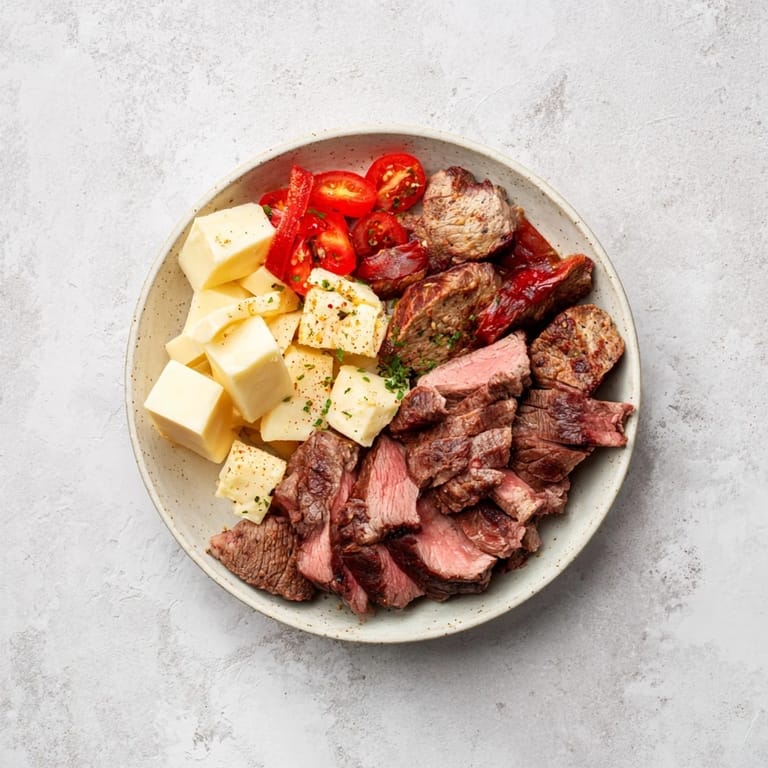 Save
Save The moment I'll always remember is when my dad took his first bite of this platter—he usually grabbed whatever was quickest, barely tasting it. But something about the care and beauty of this spread made him pause, actually slow down, and savor each component. Watching him taste the difference between cheeses, understanding why the crisp vegetables mattered, reminded me that how we present food changes how we experience it.
The Art of Strategic Placement
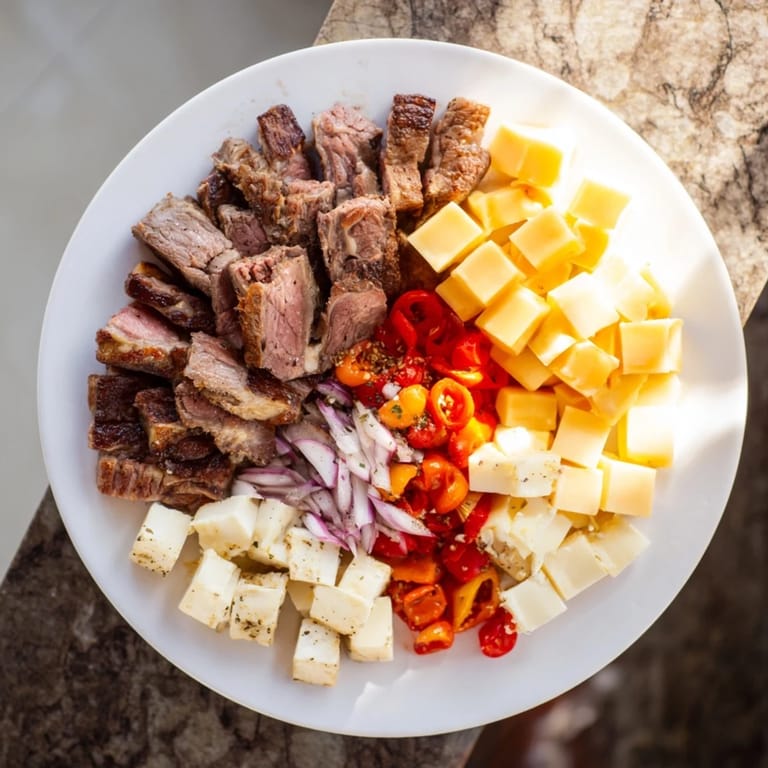
I've learned that how you arrange a platter matters almost as much as what goes on it. Think in clusters rather than spreading everything thin—when similar items are grouped together, each element shines brighter. The eye appreciates rhythm and pattern, so let colors create a story as they move across the board. Leave some breathing room; an overcrowded platter feels chaotic, while a well-spaced one feels intentional and generous. I always step back halfway through arranging and look at it from a distance to see if the colors feel balanced, if the composition draws the eye in a pleasant way.
Timing and Preparation Strategy
The genius of this dish is that almost everything can be prepped ahead. I usually slice meats and cheeses an hour before guests arrive, layer them between parchment paper, and refrigerate. The vegetables can be cut the night before. The only things I do fresh are the final arrangement, the olive oil drizzle, pepper grind, and parsley scatter—these take just five minutes but give the board that alive, just-made quality that makes people want to dig in immediately. If you're making this for a party, this timing strategy keeps you calm and present with your guests instead of frazzled in the kitchen.
Creating Flavor Harmony on Your Board
What transforms a random collection of ingredients into something memorable is understanding how flavors play together. The salty richness of the meats needs the crisp, slightly peppery brightness of radishes and celery. The creamy, complex cheeses need the acidic pop of tomatoes. The herbaceous olives need fresh parsley to echo and amplify that greenness. I think of building a platter like composing music—every element should be heard, nothing should overwhelm, and when someone takes a bite that includes meat, cheese, vegetable, and olive together, there should be a small flavor symphony happening in their mouth.
- Always include at least one sharp, peppery vegetable to cut through the richness of the meats and cheeses
- Balance heavily flavored items (like prosciutto or salami) with neutral, crisp vegetables that cleanse the palate
- Let the fresh parsley be your herb bridge—it echoes the olive's herbaceousness and brings everything forward
 Save
Save Making a beautiful keto board taught me that eating well doesn't have to be complicated or exhausting. Sometimes the most nourishing meals are the ones where you're simply honoring good ingredients and letting them shine. I hope this becomes one of your go-to moves when you want to feel great and look effortless doing it.
Recipe FAQs
- → What types of meats are featured on the keto power plate?
The plate includes sliced roast beef, smoked turkey, prosciutto, and salami, providing a rich variety of flavors and textures.
- → Which cheeses complement this platter best?
Aged cheddar, Gruyère, and Manchego cheeses are used, offering a balance of sharpness and creaminess.
- → What vegetables are included to enhance freshness?
Cherry tomatoes, cucumbers, radishes, baby bell peppers, and celery sticks bring crispness and color to the dish.
- → How is the platter seasoned and garnished?
Green and black olives add pops of flavor, while olive oil drizzle and fresh parsley provide finishing touches.
- → Can any ingredients be substituted for variety?
Yes, meats like roast chicken or cheeses such as Emmental can replace originals. Pickled vegetables or alternate herbs may also be added.