 Save
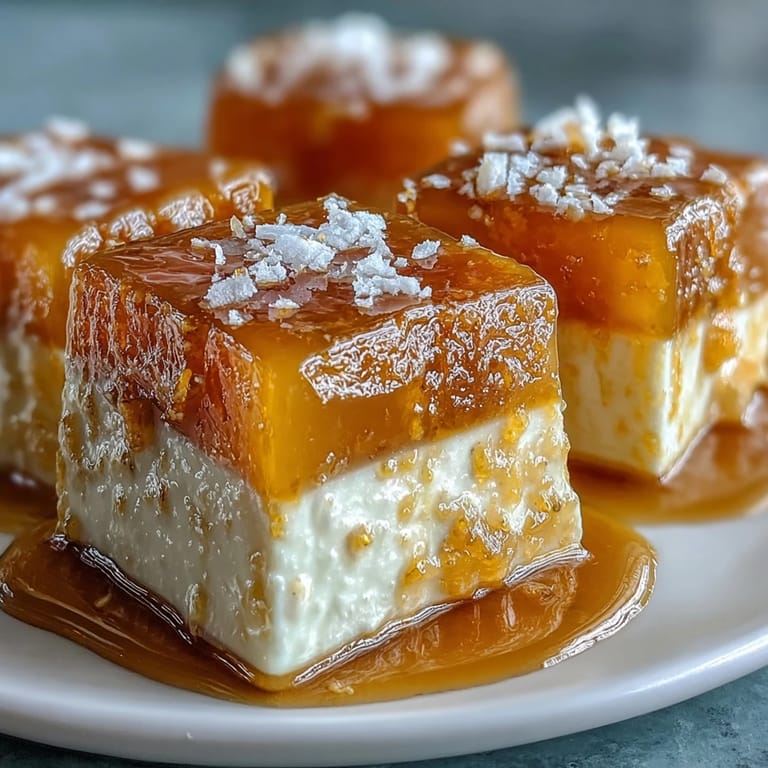
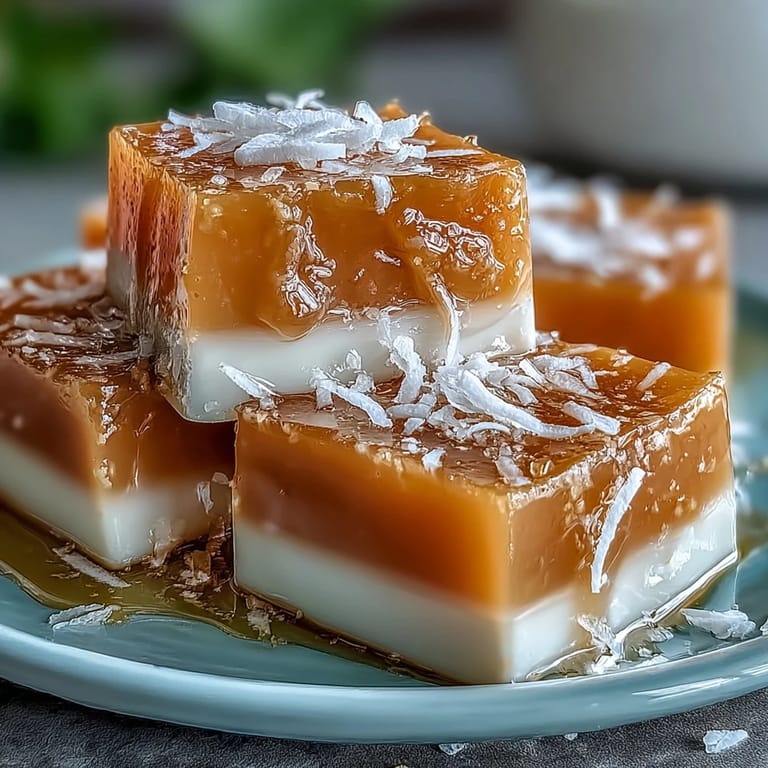
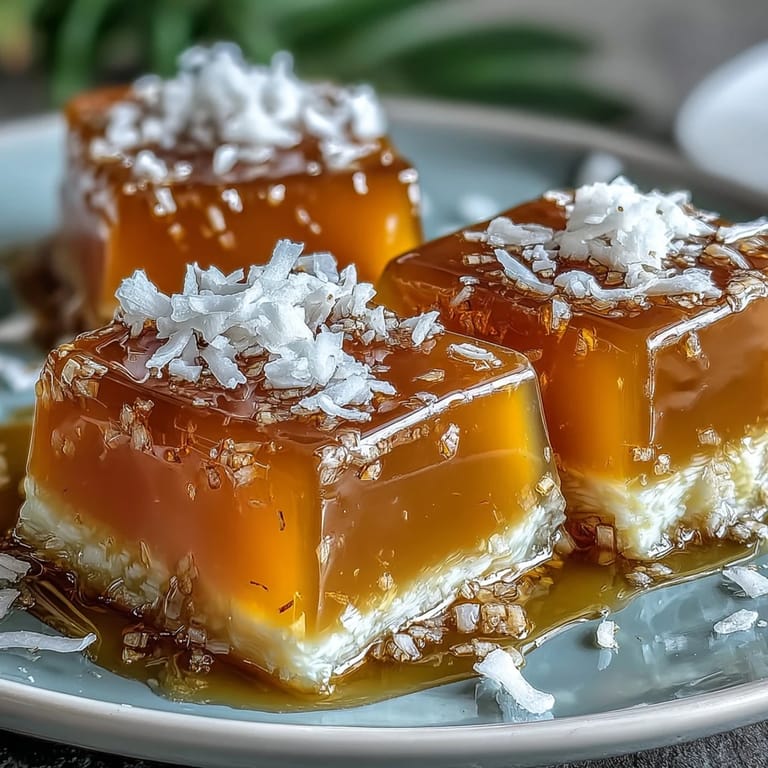
Save The first whiff of sun-ripened mango always reminds me of late spring when the markets are overflowing with their golden bounty. One afternoon, seeking relief from a heatwave, I decided to play with agar-agar for the first time and ended up with these bright, wobbly mango and coconut milk jelly cubes. The gentle jiggle as I cut into the chilled tray made me grin—the kitchen felt instantly cheerier, fragrant with both mango and coconut. The real surprise was how easily these vegan treats came together, layering lushness atop creaminess. On sticky days, nothing cools you down quite like these shimmering jelly cubes.
I remember serving these at a backyard lunch with friends, sunlight streaking across the table as everyone reached for the glistening cubes. There was silence, then grins—and a quiet contest to see who could take the coldest bite without laughing. Jelly, it turns out, is an instant crowd-pleaser for all ages.
Ingredients
- Ripe Mangoes: The riper and juicier, the brighter and sweeter the final jelly—taste first, then adjust sugar so you only heighten the mango’s sunlit flavor.
- Water: A little helps the mango blend to a pourable purée—don’t skip, or it’ll set too thick.
- Sugar: Adjust it to your mango’s mood; some are already sweet enough that you need hardly any.
- Lemon Juice: A quick squeeze sharpens all that tropical sweetness—no more and your jelly could turn tart.
- Agar-agar Powder: Vegan and foolproof for a clean-tasting set—sprinkle it evenly and simmer, or lumps will haunt you.
- Full-Fat Coconut Milk: Richness and silky texture depend on using the creamy kind, not the watery variety; a quick shake blends it before pouring.
- Vanilla Extract: Adds warmth and depth that cozies up to the coconut.
Tired of Takeout? 🥡
Get 10 meals you can make faster than delivery arrives. Seriously.
One email. No spam. Unsubscribe anytime.
Instructions
- Blend the Mango:
- Toss mango flesh, water, sugar, and lemon juice into a blender. Blend until completely smooth, watching the color turn brilliantly golden.
- Simmer with Agar-Agar:
- Pour the mango purée into a saucepan and sprinkle in agar-agar powder. Stir constantly as you heat it to a bubbling simmer—let it go for about 2 minutes, until the agar fully dissolves and scents the air with mangoes.
- Set the Mango Layer:
- Pour the hot mixture into your waiting mold. Let it cool slightly before chilling so the layer sets softly, not firmly—about 45 minutes should do the trick.
- Coconut Milky Magic:
- In a clean saucepan, whisk together coconut milk, sugar, vanilla, and the agar-agar. Bring just to a gentle boil, stirring all the while, and let it quietly simmer for a couple of minutes.
- Layer Together:
- Gently pour the warm coconut mixture over the set (but not rock-hard) mango jelly. The layers should meet but not mix—resist poking, even if tempted.
- Final Chill & Slice:
- Let the mold come to room temperature, then refrigerate again until both layers are firm—1.5 hours is magic. Use a sharp knife dipped in hot water to cut perfect little cubes.
 Save
Save One birthday, I topped the jelly cubes with diced mango and watched my usually indifferent dad sneak seconds. There’s a moment when these cubes disappear so fast they’re less a dessert, more a happy memory in motion.
Choosing Your Perfect Mango
Not all mangoes yield the same results—those small, thin-skinned varieties (like Ataulfo or honey mangoes) often taste sweeter and look more vibrant in jellies. If a mango is stringy, strain the blend for the smoothest cubes.
Agar-Agar Tips for Beginners
Agar-agar sets much firmer and faster than gelatin—don’t be tempted to reduce the amount thinking it’s interchangeable. If you notice white streaks or lumps as you simmer, keep whisking until the liquid goes clear and announces its readiness with bright, tropical fragrance.
Making the Most of Your Cubes
I’ve served these jellies in fruit salads, chopped into drinks, and even layered into parfaits with roasted coconut chips—every approach lifts the mood of a meal. A quick dusting of toasted sesame seeds or even a swirl of lime zest just before serving makes them extra special.
- Don’t stack the cubes tightly when storing, or they may lose their sparkle.
- Leftovers taste surprisingly good with a swirl of coconut yogurt on the side.
- If you like more bite, try folding diced fruit into the bottom layer before it sets fully.
 Save
Save I hope you find an excuse to make these mango coconut jelly cubes on a sunny day—their cool comfort and cheerful color are reason enough. Share them, and the happiness multiplies.
Recipe FAQs
- → How much agar-agar should I use to ensure a firm set?
Use the listed amounts (1½ tsp for the mango layer, 1 tsp for the coconut) as a starting point; agar strength varies by brand. Bring mixtures to a full simmer and keep boiling for 1–2 minutes so the powder dissolves completely, then cool to set. Increase slightly if you prefer a firmer, less wobbly gel.
- → Can I use canned mango puree instead of fresh mango?
Yes. Canned or frozen mango purée works well—adjust sugar to taste since canned purées can be sweeter. If using thicker purée, thin with a bit of water to match the texture needed for even cooking and setting with agar.
- → How do I avoid the coconut layer mixing into the mango layer?
Chill the mango layer until it is just set, not fully firm—about the time indicated—so it supports the second layer. Pour the warm coconut mixture slowly over the back of a spoon or down the side of the mold to reduce impact. Allow further refrigeration until fully firm before cutting.
- → What storage method preserves texture and flavor?
Store the cubes covered in the refrigerator for up to 3–4 days. Keep them in an airtight container to prevent absorption of other odors and to retain the fragrance of mango and coconut. Avoid freezing, which can alter the gel texture.
- → Are there vegan or non-vegan gelling alternatives to agar-agar?
Agar-agar is a vegan gelling agent ideal for clear, firm gels. Gelatin yields a softer, melt-in-mouth texture but is not vegan. If using gelatin, reduce the amount and bloom it in cold water before dissolving; expect a different mouthfeel and setting temperature.
- → Any tips for cutting perfect cubes?
Use a sharp knife warmed in hot water and wiped dry between cuts to achieve clean edges. Chill the mold until fully firm, then unmold onto a cutting board. Clean the blade between each slice for neat, glossy cube faces.