 Save
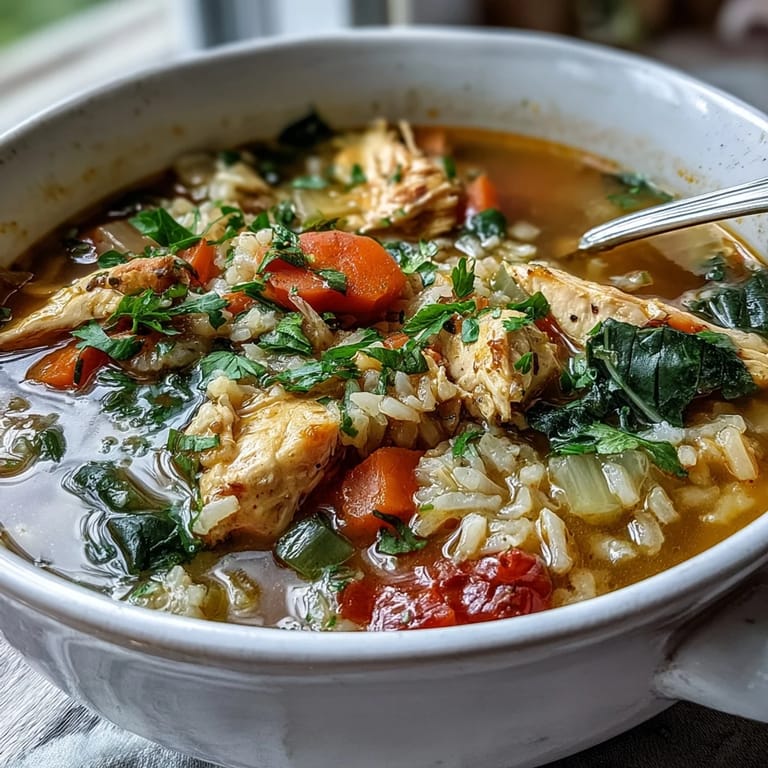
Save There's something quietly magical about watching a pot of plain broth transform into something golden and alive, and this soup does exactly that. I discovered it on a Tuesday when I was determined to stop ordering takeout and actually cook something nourishing at home. The beauty of this one-pot wonder is that it asks so little of you while delivering everything your body craves, especially on days when the world feels a bit too much. It's the kind of meal that feels like a hug in a bowl, made even better because you built it yourself.
I made this for my roommate Marcus during that brutal flu season last winter when he'd been sick for days and couldn't face anything heavy. He stood in the kitchen doorway in his sweats, looking skeptical, but the moment that parsley hit the bowl something shifted in his expression. He ate two servings straight and asked me to write down the recipe on a Post-it note because he wanted to make it himself. That's when I knew this wasn't just soup; it was the kind of thing people actually want to return to.
Ingredients
- Boneless, skinless chicken breasts (about 400 g, cut into bite-sized pieces): Using breast meat keeps this light and clean-tasting, and cutting them into smaller pieces means they finish cooking gently within the broth rather than drying out.
- Medium yellow onion, diced: This is your flavor foundation, and taking 30 seconds to dice it properly means it breaks down evenly into the soup.
- Carrots and celery stalks, sliced: They're the quiet backbone of this dish, adding natural sweetness and earthiness that makes people ask what your secret ingredient is.
- Garlic cloves, minced: Three cloves is exactly the right amount where you know it's there without it shouting; toast it briefly to wake up those aromatic oils.
- Long-grain white rice, rinsed: Rinsing removes the starch coating, which prevents the soup from turning cloudy and gluey as everything simmers.
- Low-sodium chicken broth (8 cups): This is where quality actually matters because there's nowhere for mediocre broth to hide; read the label to avoid hidden sodium that'll make seasoning impossible.
- Dried thyme and oregano (1 teaspoon each): These two herbs are the soul of the soup, working together to create that warm, homey flavor you can't quite name but absolutely crave.
- Bay leaf: It sits quietly during cooking and releases subtle complexity that rounds out all the other flavors beautifully.
- Black pepper and salt (1/2 teaspoon and 3/4 teaspoon respectively): Start with these amounts and taste as you go because you can always add more, never less.
- Fresh parsley, chopped: This is what makes the soup taste alive instead of just warm; add it at the very end so it stays bright green.
- Olive oil (1 tablespoon): Just enough to start the vegetables without making this anything heavier than it needs to be.
Tired of Takeout? 🥡
Get 10 meals you can make faster than delivery arrives. Seriously.
One email. No spam. Unsubscribe anytime.
Instructions
- Build your base:
- Heat the olive oil in a large pot over medium heat, then add the diced onion, carrots, and celery. You want to hear them sizzle gently, not aggressively; 4 to 5 minutes is the sweet spot where they start softening but haven't lost their shape.
- Wake up the garlic:
- Add your minced garlic and let it cook for exactly one minute—any longer and it turns bitter and loses that fresh punch you're after. You'll smell when it's ready; that fragrant moment is your signal.
- Introduce the chicken:
- Add the bite-sized chicken pieces and stir them around for 2 to 3 minutes until they're lightly golden on the outside. They won't be cooked through yet, which is perfect; they'll finish gently in the simmering broth.
- Bring everything together:
- Stir in the rinsed rice, thyme, oregano, bay leaf, salt, and pepper. Pour in all that beautiful broth and bring everything to a rolling boil; you'll see the broth turn slightly cloudy from the rice starch, which is exactly what should happen.
- Let it simmer:
- Reduce the heat to a gentle simmer, cover the pot, and let it cook for 20 minutes while you stir occasionally. The rice will go from chalky to tender, the chicken will turn opaque and juicy, and the whole house will smell impossibly good.
- Add the greens:
- Stir in the spinach or kale and cook for 2 to 3 minutes until it's completely wilted and dark green. If you're using heartier greens, don't be shy about pushing them down into the broth.
- Finish strong:
- Taste the soup and adjust the seasoning—this is where most people hold back when they should be confident. Stir in the lemon juice and fresh parsley, find and discard that bay leaf, and serve it while it's steaming.
 Save
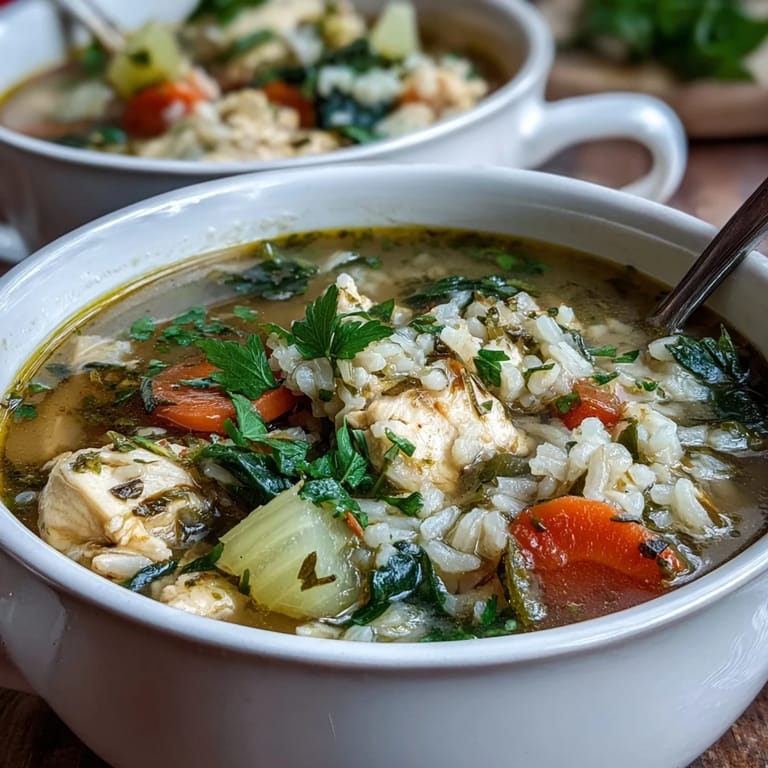
Save What stays with me about this soup is how it brought my whole extended family together on a snowy Sunday when everyone had different dietary needs. My cousin with celiac disease could eat it, my uncle watching his sodium intake could adjust the broth, and my niece who suddenly decided she was vegetarian could have it with chickpeas instead of chicken. In one pot, we'd found something that belonged to all of us.
The Science Behind the Comfort
There's a reason this soup feels so restorative, and it's not just nostalgia or placebo. The long, slow simmering of bones and aromatics creates a naturally gelatinous, mineral-rich broth that your body actually absorbs efficiently. The rice provides sustained energy without the crash, the chicken offers lean protein that keeps you satisfied for hours, and the vegetables bring vitamins and fiber that you can actually taste rather than just consume. This is the kind of meal where nutrition stops being something you force down and becomes something you genuinely want.
Stretching a Single Batch
Make this soup on Sunday and you'll eat well all week, though it transforms as it sits. The rice keeps absorbing broth, so by Wednesday it's thicker and more like a risotto-soup hybrid, which some people argue is even better. When you reheat it, add an extra cup of broth to bring it back to its original consistency; I keep a carton of good broth in the fridge specifically for this reason. You can also freeze it in portions, though I've found the soup stays fresher longer if you freeze the broth and chicken separately from the cooked rice, then combine them when reheating.
Variations That Work
The skeleton of this recipe is forgiving enough to bend to whatever you have on hand or whatever you're craving. I've added roasted root vegetables on cold November nights, swapped the white rice for barley when I wanted something earthier, and once threw in some diced tomatoes when I was feeling Mediterranean. The herb combination is what ties it all together, so keep those constants and play with everything else. If you're vegetarian, chickpeas or white beans step in for chicken beautifully, and vegetable broth with a parmesan rind adds the savory depth you'd otherwise get from poultry.
- Add a parmesan rind while simmering and remove before serving for an extra layer of umami richness.
- Substitute brown rice for white rice but increase the simmer time to 35 to 40 minutes so it actually gets tender.
- Leftovers thicken as they sit because the rice keeps absorbing broth, so add extra broth when reheating to restore the original consistency.
 Save
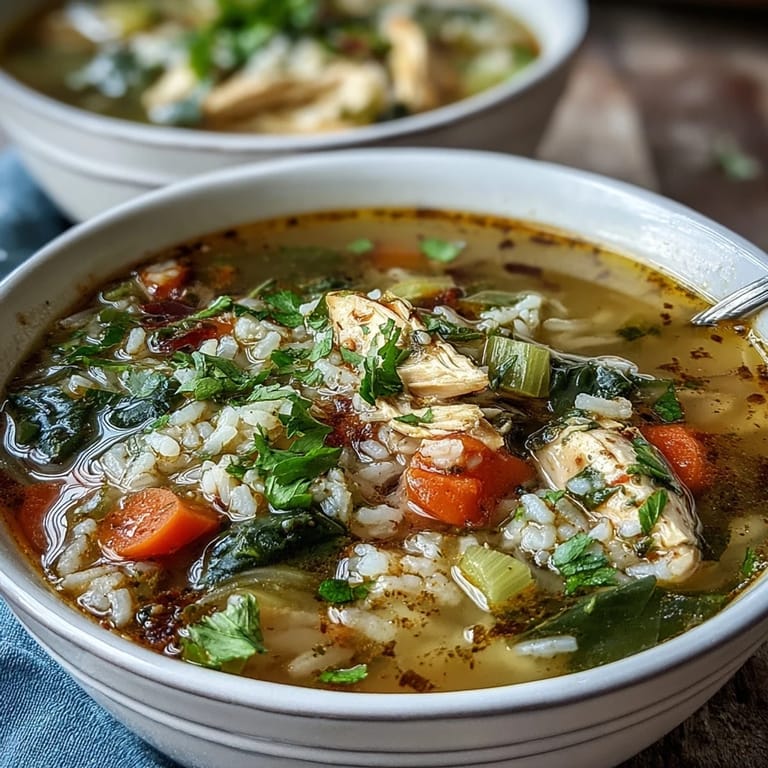
Save This soup has become my answer to almost every question: what do you make when someone's sick, what do you bring to a potluck, what do you make when you want to feel grounded and healthy without any fuss? Keep it in regular rotation and you'll never run out of reasons to make it again.
Recipe FAQs
- → What type of rice works best for this dish?
Long-grain white rice is ideal for even cooking and a fluffy texture; brown rice can be used but requires longer simmering.
- → Can I use other greens besides spinach or kale?
Yes, tender greens like Swiss chard or collard greens can be added toward the end of cooking for extra nutrients.
- → How do I ensure the chicken stays tender?
Lightly browning bite-sized chicken pieces before simmering helps seal juices, resulting in tender, flavorful bites.
- → What can enhance the flavor during simmering?
Adding herbs like thyme and oregano along with a parmesan rind (removed before serving) enriches the broth's depth.
- → Is this dish suitable for gluten-free diets?
Yes, using gluten-free broth and rice makes it compatible with gluten-free dietary needs.