 Save
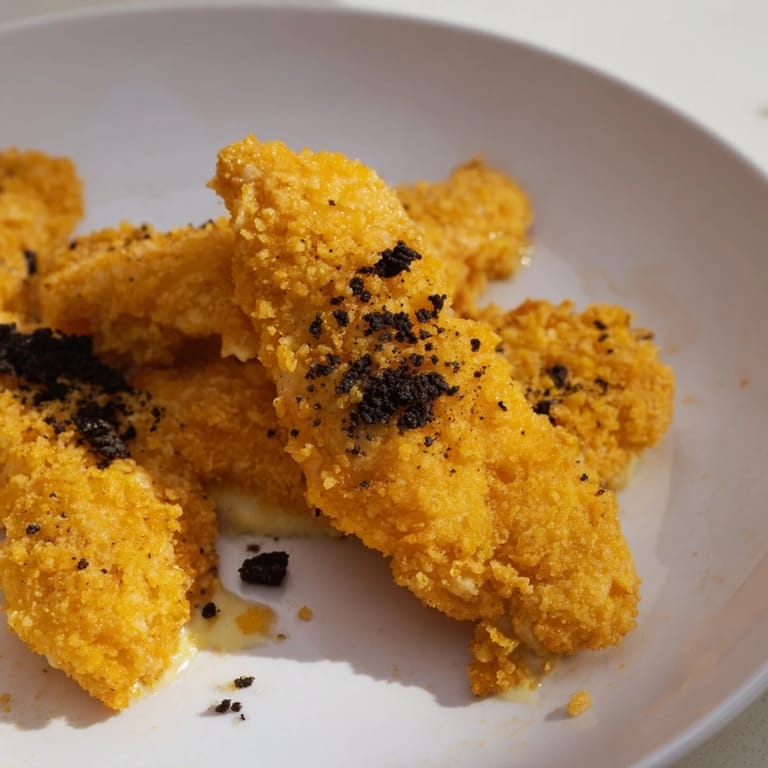
Save The first time I made these, I was standing in my kitchen on a random Tuesday, scrolling through late-night food videos, when I stumbled across someone double-frying chicken in crushed Oreos. My initial thought was pure skepticism—sweet and savory in such an extreme way felt almost wrong. But then curiosity won, and I had to try it. The moment that first batch came out of the oil, still crackling and gleaming, I bit into one and everything changed. That crispy-sweet shell gave way to juicy chicken, and suddenly the whole mad idea made perfect sense.
I made these for a group of friends who were skeptical—very skeptical—about the whole Oreo-chicken concept. The moment they tried one, the conversation stopped. No jokes, no chatter, just quiet chewing and then requests for more. That's when I knew this wasn't just a novelty recipe; it was something people actually craved.
Ingredients
- Chicken tenders (500 g): You want pieces that are roughly the same thickness so they cook evenly and stay juicy inside while the coating crisps up perfectly.
- Salt, black pepper, garlic powder: These three do the heavy lifting for the base flavor—don't skip the garlic powder, it makes a real difference underneath all that Oreo sweetness.
- All-purpose flour (120 g): This is your first line of defense, creating the base for the crispy exterior before the egg mixture seals it.
- Eggs and milk (2 eggs, 60 ml milk): The egg wash is your adhesive—it makes everything stick together and helps both coatings bond to the chicken.
- Oreo cookies (18 cookies, finely crushed): Crush them into varied sizes, not powder—you want some texture and the cream bits are essential, so don't bother separating them.
- Vegetable oil (1 L): You need enough oil to fully submerge the tenders, and vegetable oil has a high smoke point that keeps it stable at frying temperature.
Tired of Takeout? 🥡
Get 10 meals you can make faster than delivery arrives. Seriously.
One email. No spam. Unsubscribe anytime.
Instructions
- Prepare your chicken:
- Pat the tenders completely dry with paper towels—any moisture will cause splattering and uneven cooking. Season them generously with salt, pepper, and garlic powder, getting into all the nooks.
- Set up your dredging station:
- Arrange three shallow bowls in a line: flour in the first, beaten eggs mixed with milk in the second, and more flour in the third. This assembly line approach makes the process smooth and keeps your hands relatively clean.
- Double-coat the chicken:
- Working one tender at a time, coat it in flour, shake off excess, dip into the egg mixture, then press into the flour again. The double coating creates serious crunchiness—don't rush this step.
- Heat your oil:
- Get your oil to exactly 175°C (350°F) using a thermometer if you have one. If it's too cool, the coating absorbs oil and gets greasy; too hot and it burns before the chicken cooks through.
- First fry:
- Working in batches so you don't overcrowd the pan, fry the flour-coated tenders for 5–6 minutes, turning once halfway through. They're done when golden brown and a meat thermometer reads 75°C (165°F) inside.
- Oreo coat and second fry:
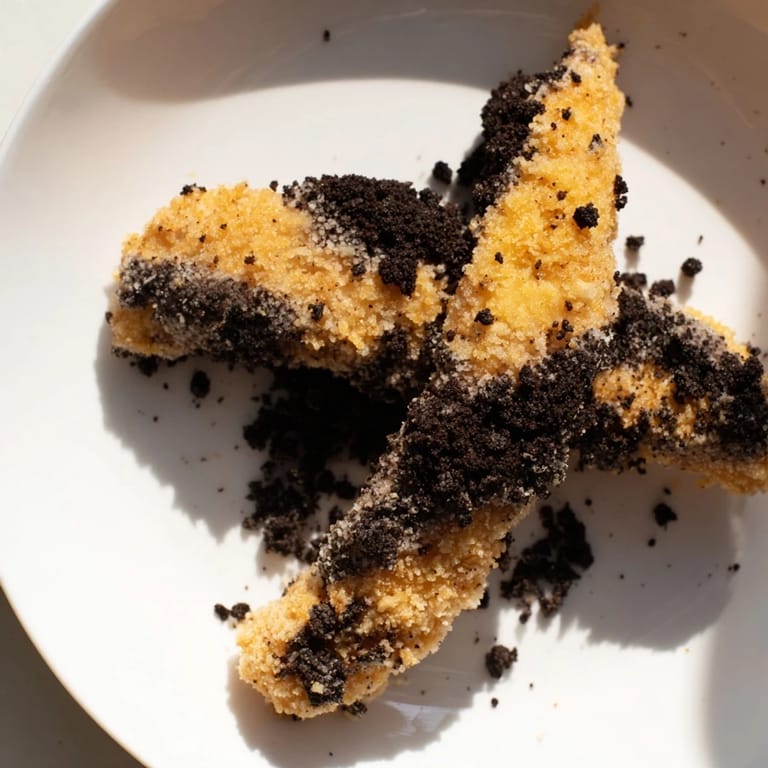
- While the tenders are still warm, dip each one back into the egg mixture, then immediately roll it in crushed Oreos, pressing gently so the pieces stick. Back into the hot oil for just 1–2 minutes—you're not cooking the chicken again, just crisping up the Oreo shell until it stops being wet.
- Drain and serve:
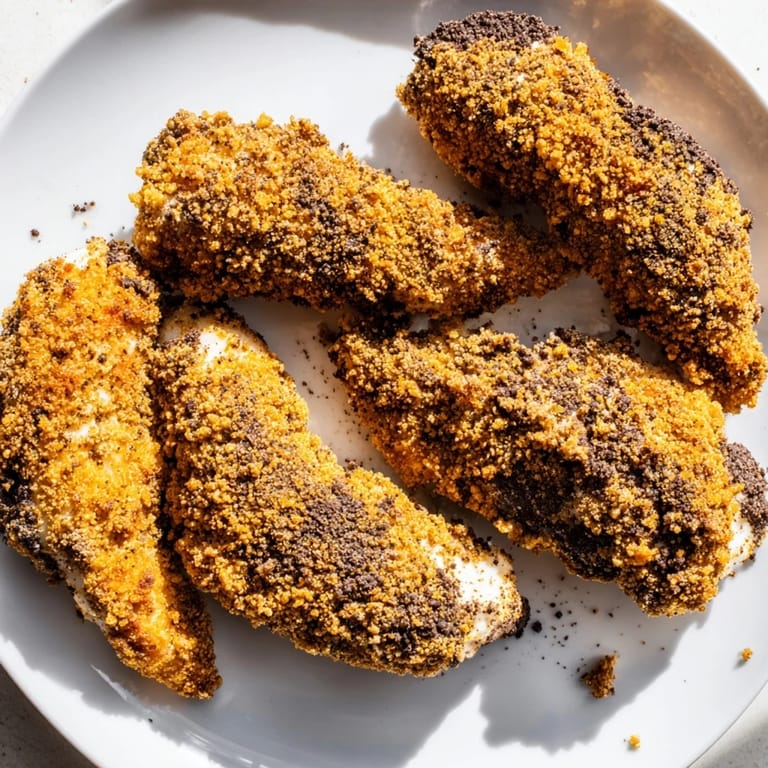
- Lift them out with a slotted spoon onto fresh paper towels. The best part is eating them immediately while everything is still hot and the contrast between textures is at its peak.
 Save
Save There's something magical about watching someone bite into one of these for the first time—that split second of confusion before the flavors click and their whole face changes. It's theater disguised as dinner, and somehow it never gets old.
The Temperature Game
Getting the oil temperature right is genuinely the difference between success and greasy disappointment. I learned this the hard way when I got impatient one night and dropped tenders into oil that was barely warm. They absorbed oil like sponges and tasted flat. Now I always check with a thermometer, and if I don't have one, I use the old trick of dropping a single bread cube in—if it browns in about 60 seconds, you're in the zone.
Why Double Frying Actually Works
The genius of this recipe is that you're frying twice for a reason. The first fry cooks the chicken and seals in the juices. The second fry is purely about texture—it toasts the Oreos and creates this incredible contrast where the inside stays juicy while everything outside is shatteringly crisp. It's not overkill; it's strategy.
Beyond the Basic Recipe
Once you nail the basic version, you can play around. I've added a tiny pinch of cayenne to the flour for heat, which plays beautifully against the sweet Oreos. I've also dipped them in vanilla cream sauce instead of eating them plain. The beauty of this recipe is that it's solid enough to handle experimentation but good enough that you don't need to mess with it.
- For extra indulgence, serve with a vanilla cream dip or sweet chili sauce on the side for dunking.
- If you're sensitive to the dairy or gluten, swap in gluten-free flour and dairy-free chocolate sandwich cookies and the whole thing still works.
- Make these ahead and reheat them in a 180°C oven for 5 minutes if you're cooking for a crowd—they won't be quite as crispy as fresh, but they'll still be excellent.
 Save
Save This dish lives in that weird, wonderful space between junk food and genuine cooking—it requires technique and timing, but it tastes like pure indulgence. Once you make it, you'll understand why it keeps happening again and again in my kitchen.
Recipe FAQs
- → What oil is best for frying?
Use vegetable oil or any neutral oil with a high smoke point for deep frying to achieve crispiness without burning.
- → Can I add spices to the coating?
Yes, adding cayenne pepper or paprika to the flour mixture adds a spicy kick and enhances the flavor balance.
- → How do I ensure the Oreo coating sticks well?
After the first fry, dip the tenders back in the egg mixture before rolling in crushed Oreos to help the coating adhere firmly.
- → What texture should the final chicken have?
The inside should be juicy and tender while the exterior is crispy with a crunchy, slightly sweet Oreo crust.
- → Can I substitute gluten-free ingredients?
Yes, gluten-free flour and gluten-free sandwich cookies can replace traditional ones without compromising texture.