 Save
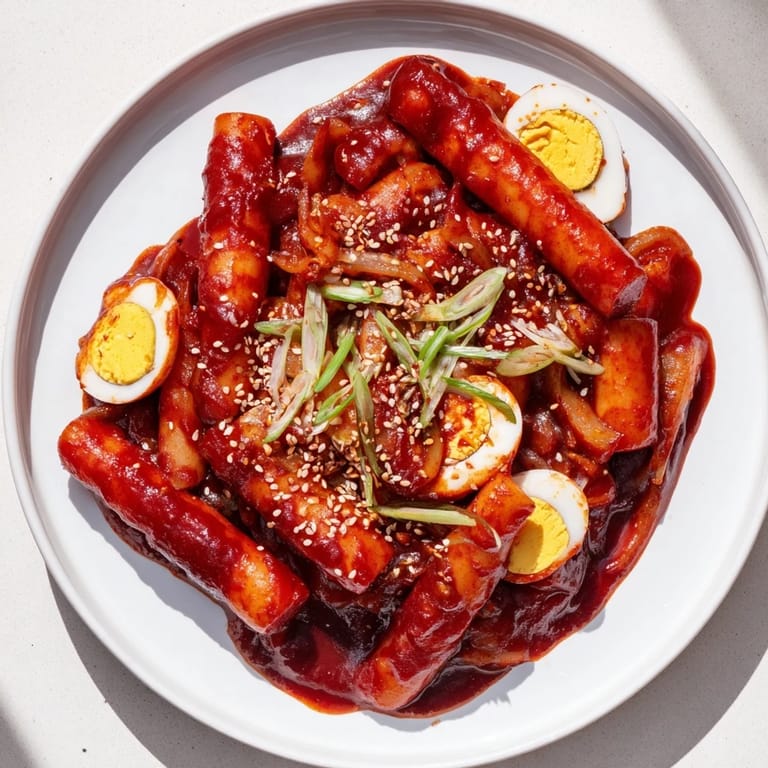
Save The first time I tasted tteokbokki was on a crowded Seoul street corner at midnight, watching a vendor's hands move with practiced speed through clouds of steam. The rice cakes were impossibly chewy, dancing in a sauce so vibrant red it almost glowed under the neon signs overhead. Years later, I finally understood why that vendor looked so relaxed—once you nail the sauce and timing, this dish practically makes itself. Now whenever I make it at home, that same magic happens: the kitchen fills with that unmistakable gochujang aroma, and somehow everyone materializes without being called.
I remember my friend Sarah asking what that smell was the moment she walked in, before she even took off her coat. By the time I'd set out the bowls, she was already leaning over the pot with a spoon, completely ignoring my protests that it needed two more minutes. That's when I realized tteokbokki isn't just food—it's an invitation, a signal that something good is happening right now, in this kitchen, and everyone's welcome.
Ingredients
- Rice Cakes (500g): Korean cylindrical tteok are the heart of this dish; their chewy texture is irreplaceable, and soaking them first ensures they stay tender rather than mushy.
- Eggs (4 large): Hard-boiled eggs add richness and a satisfying bite that balances the spice—peel them while they're still slightly warm for a smoother finish.
- Gochujang (3 tablespoons): This fermented chili paste is where the soul lives; it's spicy, salty, and slightly sweet all at once.
- Gochugaru (2 tablespoons): Korean chili flakes add extra heat and texture; they don't dissolve the way gochujang does, so you taste little bursts of spice throughout.
- Soy Sauce (2 tablespoons): The umami backbone that ties everything together and deepens the sauce's color.
- Sugar and Honey (1 tablespoon each): Sugar cuts the heat quickly, while honey adds a subtle depth that regular sugar can't quite match.
- Garlic (2 cloves, minced): Fresh garlic brightens the sauce; don't skip the mincing or you'll get harsh chunks.
- Sesame Oil (1 teaspoon): Toasted sesame oil is essential—it adds a nutty warmth that you can actually taste at the end.
- Water and Broth Base (3 cups water, kombu, anchovies): The kombu and anchovies create a light, savory foundation that lets the gochujang shine without overwhelming.
- Onion (1 small, sliced): Onion softens as it cooks and adds a gentle sweetness that rounds out the spice.
- Green Onion (1 sheet sliced): Green onion is pure freshness—add it at the very end so it stays bright and crisp.
- Fish Cake (optional): Adds a subtle fishiness and chewy texture, but the dish is equally beautiful without it.
- Sesame Seeds (1 tablespoon, toasted): The final flourish—nutty and warm, tying everything back to that Korean street food magic.
Tired of Takeout? 🥡
Get 10 meals you can make faster than delivery arrives. Seriously.
One email. No spam. Unsubscribe anytime.
Instructions
- Soak the Rice Cakes:
- Place the tteok in a bowl of warm water and let them sit for 10 minutes; this softens them just enough so they won't break apart when stirred. If you skip this step, you'll end up with tough, unyielding cakes that resist your spoon.
- Make the Broth:
- Bring water to a boil, add the kombu and anchovies, then lower the heat and let it simmer gently for 10 minutes—you want the flavors to whisper, not shout. The broth should smell clear and briny, not fishy or overwhelming.
- Boil the Eggs:
- While the broth simmers, drop eggs into boiling water and set a timer for 8 to 9 minutes depending on your stove's personality—8 minutes gives you a slightly runny yolk, 9 is fully cooked. Plunge them into ice water the moment time's up; cold water stops the cooking and makes peeling so much easier.
- Build the Sauce:
- Remove the kombu and anchovies from the broth, then stir in gochujang, gochugaru, soy sauce, sugar, honey, minced garlic, and sesame oil until everything dissolves into one glossy, crimson sauce. This is where you taste and adjust—if it's too spicy, add a bit more sugar; if it's too mild, a pinch more gochugaru wakes it right up.
- Cook the Tteok and Vegetables:
- Drain the soaked rice cakes and add them to the sauce along with the sliced onion and fish cake if you're using it, then stir often over medium heat for 10 to 12 minutes—the sauce should bubble gently and thicken until it coats the back of your spoon. The rice cakes will soften and begin to absorb that red sauce, and the kitchen will smell like pure joy.
- Add the Eggs and Finish:
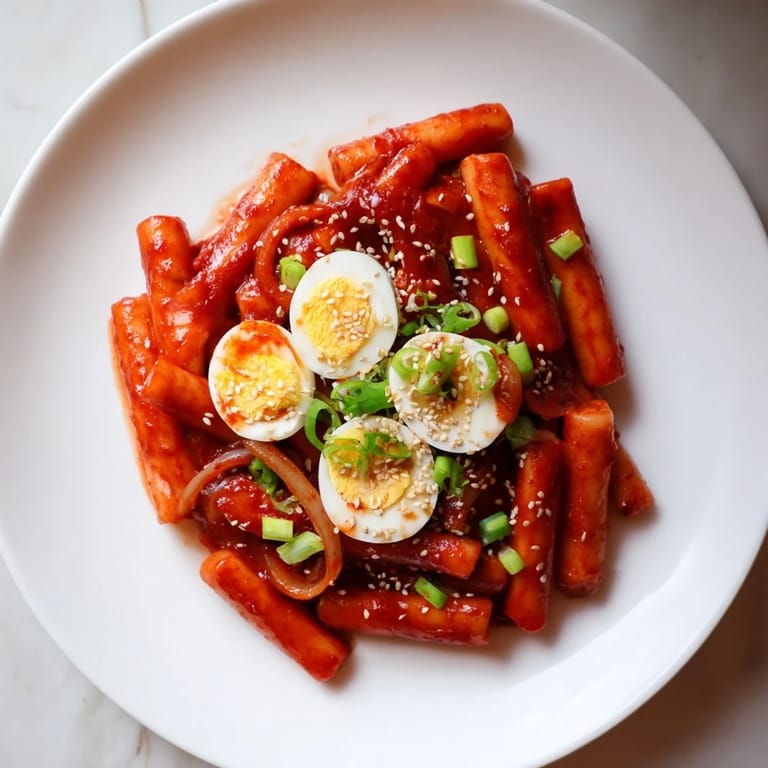
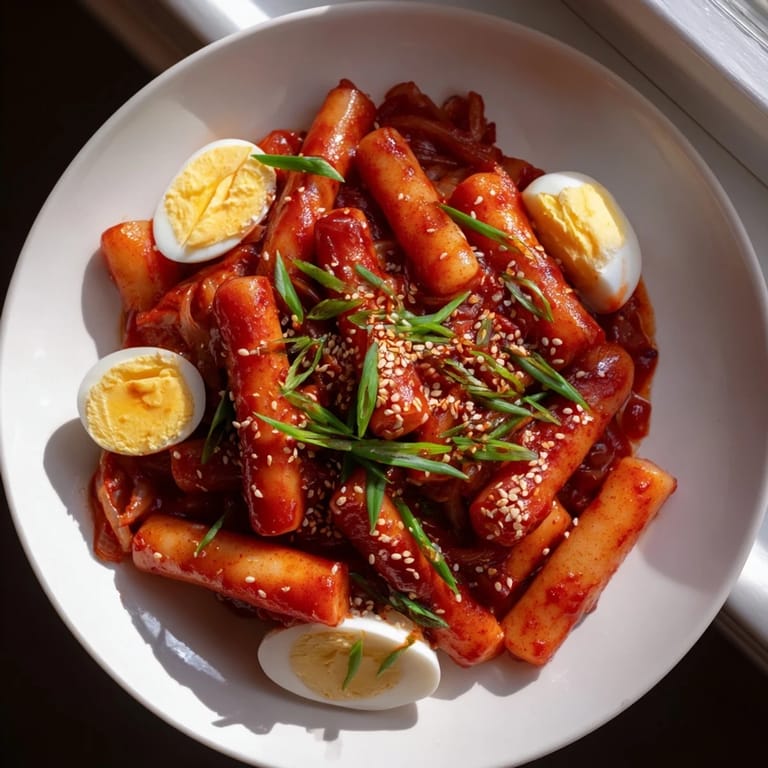
- Gently stir in your peeled eggs and let everything warm together for another 2 to 3 minutes so the eggs pick up the flavors and heat evenly. Pour everything into a bowl, scatter green onions and sesame seeds on top, and serve while the steam is still rising.
 Save
Save There's a moment about three-quarters through cooking when the sauce transforms from scattered and thin to a unified, glossy coat that clings to every rice cake—that's when you know you're doing it right. The first time I saw that shift happen in my own pot, I felt like I'd cracked some kind of code.
Spice Level Secrets
Gochujang and gochugaru are cousins but with different temperaments: gochujang is fermented and complex, releasing its heat slowly, while gochugaru is direct and immediate. If you're new to Korean heat, start with 1.5 tablespoons of each and taste the sauce before adding the rice cakes—you can always add more, but you can't take it back. I learned this the hard way when a guest made a face that suggested their mouth was under attack, so now I always undershoot and let people decide if they want extra on the side.
Making It Your Own
The beauty of tteokbokki is that it's forgiving—add shredded cabbage for crunch, sliced carrots for sweetness, even ramen noodles for extra chew. Some nights I throw in whatever vegetables are looking lonely in my fridge, and somehow it always works. The sauce carries everything, so trust it and experiment.
Vegetarian and Dietary Notes
Skip the anchovies and fish cake entirely, and use vegetable broth or just water with kombu for that savory depth—the gochujang brings enough umami that you won't miss the fish at all. The rest of the recipe stays exactly the same, and I've made it both ways for mixed tables without anyone noticing the difference.
- Swap honey for agave or brown sugar if you're avoiding bee products.
- Check gochujang and soy sauce labels for gluten if that matters for your table.
- The sesame oil, seeds, and soy sauce are naturally vegan, so this dish works beautifully for plant-based eaters too.
 Save
Save Tteokbokki is the kind of dish that tastes like someone cares—whether you're making it for yourself on a quiet Tuesday night or for a crowd that shows up at the smell. That's the real magic here.
Recipe FAQs
- → How do I soften the rice cakes before cooking?
Soak the rice cakes in warm water for about 10 minutes if they are hard or refrigerated. This helps them cook evenly and become chewy.
- → Can I make this without anchovies for a vegetarian option?
Yes, omit anchovies and fish cake, and prepare the broth using only kombu and water for a vegetarian-friendly base.
- → How spicy is the sauce and can I adjust it?
The sauce has a balanced spicy-sweet flavor from gochujang and gochugaru. Adjust the chili flakes and paste amounts to suit your preferred heat level.
- → What is the purpose of boiling eggs with the dish?
Boiled eggs add a creamy texture and richness that complements the bold sauce and chewy rice cakes.
- → Are there any suggested additions to enhance texture?
Adding vegetables like cabbage or carrots, or even ramen noodles, can bring additional texture and variety to the dish.
- → What garnishes enhance the flavor?
Fresh green onions and toasted sesame seeds sprinkle a fragrant, nutty finish to the dish, elevating its flavor profile.