 Save
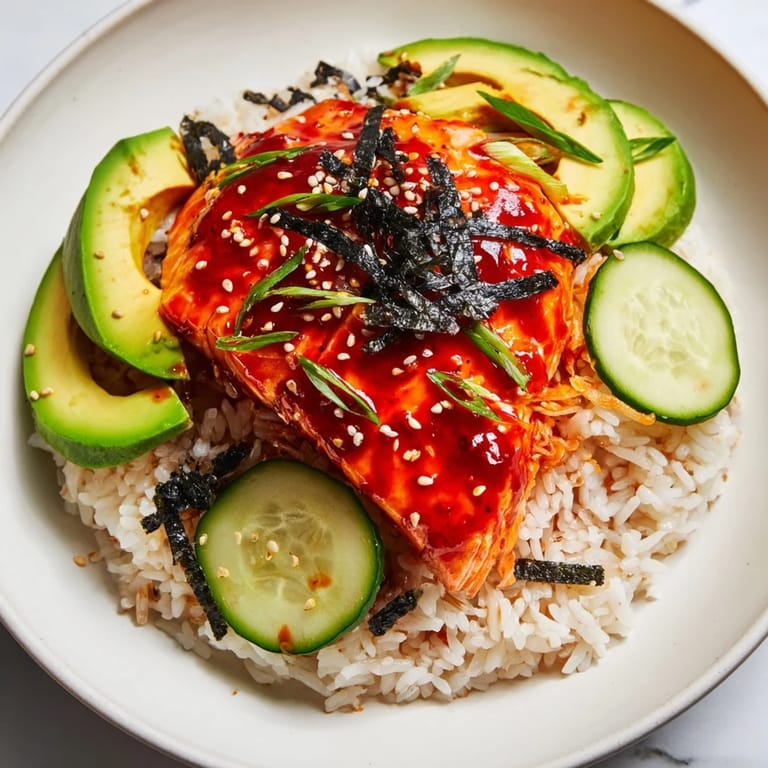
Save I stumbled onto this salmon bowl during one of those late-night cooking videos rabbit holes, watching someone layer perfectly cooked fish over rice with the kind of precision that made it look effortless. What got me was how the orange-gochujang glaze caught the light—glossy, deep, almost jewel-like—and I knew I had to try it myself. The first time I made it, I actually squeezed the orange juice by hand because I couldn't find fresh juice at the store, and somehow that extra effort made the whole bowl taste better. Now it's become my go-to when I want something that feels restaurant-quality but doesn't demand hours in the kitchen.
I made this for a friend who'd just finished a tough week, and watching her face when she took that first bite—the way the glaze clung to the salmon and the rice absorbed it—felt like serving her a small moment of care. She asked for the recipe before she'd even finished her bowl, and the fact that it was simple enough for her to actually make it made the whole thing feel right.
Ingredients
- Salmon fillets (150 g each): Look for fillets that feel firm to the touch and smell like the ocean, not fishy—that's how you know they're fresh enough to deserve this treatment.
- Gochujang: This Korean chili paste is fermented, which means it brings depth that regular hot sauce can't touch, and it plays beautifully with the citrus in this recipe.
- Orange juice (freshly squeezed): Bottled juice will work, but fresh makes a difference in brightness—the glaze tastes alive instead of flat.
- Soy sauce: Use the good kind if you have it; it's worth the small cost difference for the depth it adds to the glaze.
- Honey: This balances the heat and salt, turning everything harmonious instead of aggressive.
- Rice vinegar: The acid cuts through richness and keeps the palate clean—don't skip it for regular vinegar.
- Toasted sesame oil: Just a teaspoon, but it's doing heavy lifting, adding a nutty warmth that ties everything together.
- Fresh ginger and garlic: Mince them fine so they distribute evenly through the glaze; you want every brush stroke to carry flavor.
- Short-grain rice: It holds the glaze better than long-grain, and somehow feels more forgiving if you're new to rice cooking.
- Cucumber, avocado, nori, sesame seeds, scallions: These toppings aren't just garnish—they're the contrast that makes the whole bowl interesting, adding texture and freshness against the rich salmon.
Tired of Takeout? 🥡
Get 10 meals you can make faster than delivery arrives. Seriously.
One email. No spam. Unsubscribe anytime.
Instructions
- Set your stage:
- Preheat the oven to 200°C and line a tray with parchment—this prevents sticking and cleanup later. While the oven warms, remove the salmon from the fridge so it comes closer to room temperature, which helps it cook evenly.
- Season the salmon:
- Salt and pepper each fillet on both sides, being generous but not reckless. The seasoning is what wakes up the salmon's own flavor before the glaze even touches it.
- Build the glaze:
- Whisk together the gochujang, orange juice, soy sauce, honey, rice vinegar, sesame oil, ginger, and garlic in a bowl until it's smooth and glossy. If it feels thick, the orange juice will loosen it as you stir—don't force it.
- First glaze and bake:
- Brush half the glaze over the salmon fillets and slide them into the oven for 12–14 minutes. The salmon will go from translucent to opaque at the thickest part—that's your signal it's done, and you want to catch it just there, not overcooked.
- Prep while it cooks:
- Use these minutes to get the rice warm, slice the cucumber thin enough to curl slightly, and arrange your avocado and nori. Having everything ready means assembly is smooth, not frantic.
- Add shine (optional but worth it):
- If you're using the broiler, brush the remaining glaze over the cooked salmon and broil for 1–2 minutes—it will bubble slightly and develop that sticky, caramelized finish that looks impressive and tastes complex.
- Assemble with intention:
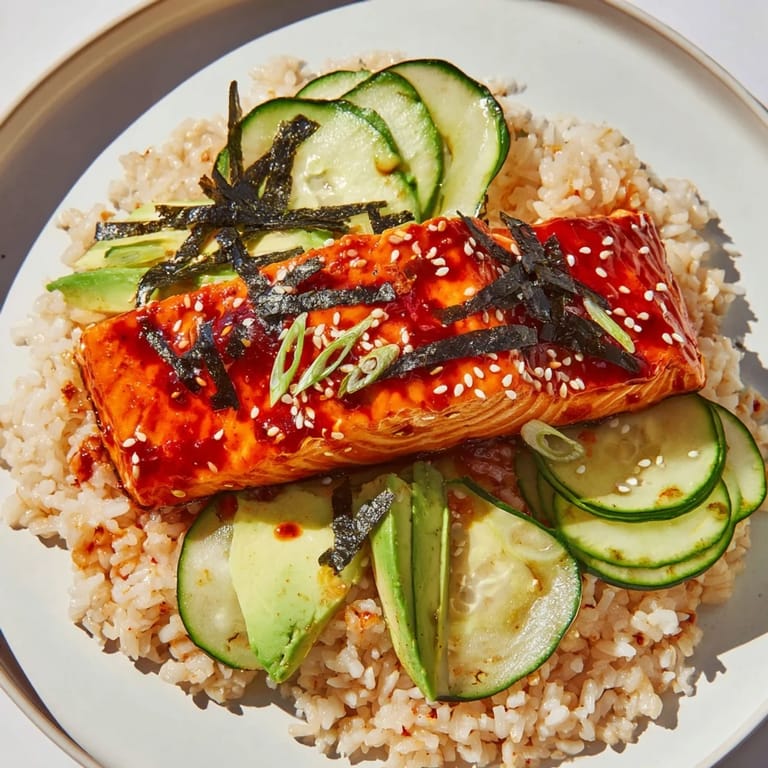
- Divide the warm rice between two bowls, then nestle a salmon fillet into each. Arrange the cucumber, avocado, and nori strips around it like you're composing something, then scatter sesame seeds and scallions on top—texture matters here.
- Serve right away:
- The rice should still be warm, the avocado should still be cool, and the glaze should still have that sticky gleam. Eat it as soon as it's assembled.
 Save
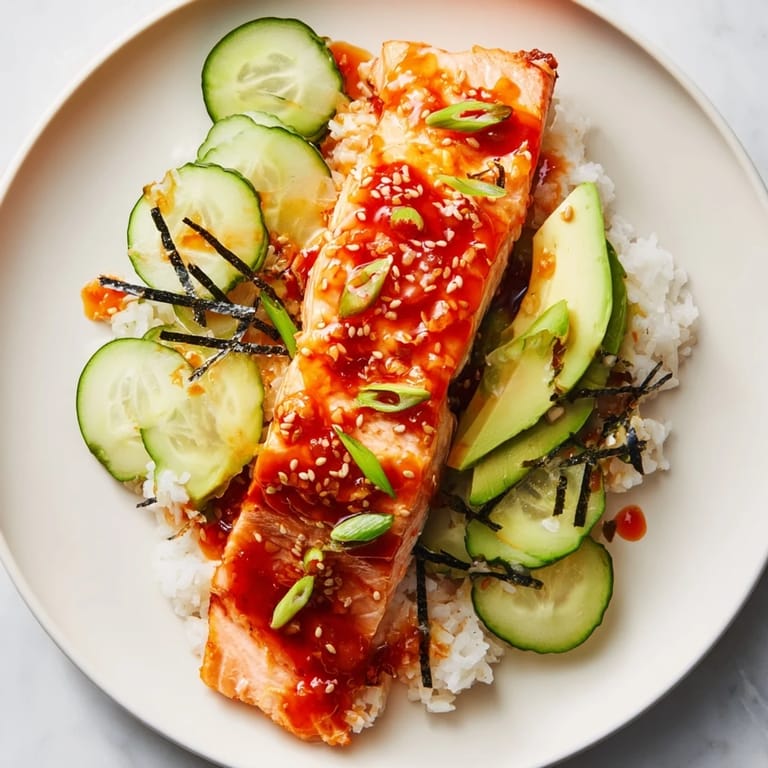
Save What I love most about this bowl is the way it transforms an ordinary Tuesday dinner into something that feels thoughtful and composed. There's something about salmon glazed bright with citrus and chili that makes you slow down and actually taste what you're eating.
The Art of the Glaze
The gochujang glaze is the whole story here, and it's worth understanding why these ingredients work together. The gochujang brings fermented depth and heat, the orange juice adds brightness and helps balance the salt, honey smooths out any harsh edges, and the sesame oil ties everything into something that feels rich without being heavy. When you taste it raw from the bowl before you brush it on, it should feel bold—maybe even a bit intense—but once it hits the salmon and caramelizes slightly, it becomes something else entirely, more refined and less aggressive.
Why Salmon Matters Here
Salmon's natural fattiness is what makes this work—a leaner fish would taste dry under that broiler heat, but salmon actually gets better the more its oils render out. The flakes stay tender because there's fat there to keep them moist, and the fish is substantial enough to stand up to the bold glaze instead of being bullied by it. If you've had salmon that felt rubbery or tough, it was probably overcooked or not fresh enough; this recipe asks you to watch it and pull it at just the right moment, which is why it tastes so much better than restaurant versions that sit under heat lamps.
Building Your Bowl
The components around the salmon matter more than they seem to—they're not just pretty arrangement, they're functional. The cucumber brings cool crunch that cuts through the richness, avocado adds creaminess that lets your palate reset between bites, and the nori adds a mineral umami note that echoes the gochujang without competing with it. Toasted sesame seeds and scallions finish everything with a whisper of nuttiness and sharp onion bite that pulls it all into focus.
- Make sure your rice is actually warm when you assemble—cold rice will cool the salmon and dull the glaze flavors.
- Slice your avocado just before assembly so it doesn't brown or oxidize and turn gray at the edges.
- If you want to add extra vegetables like pickled ginger or shredded carrot, do it because you love them, not because you feel obligated to fill space in the bowl.
 Save
Save This bowl has become my answer when I want to cook something that feels restaurant-quality but actually belongs in a home kitchen—it's that rare thing that's simple enough to make on a regular night but special enough to serve to someone you want to impress.
Recipe FAQs
- → What type of salmon works best for this dish?
Use skinless salmon fillets of similar size to ensure even cooking and a tender texture.
- → Can the glaze be made ahead of time?
Yes, the orange-gochujang glaze can be prepared in advance and refrigerated for up to 2 days to enhance its flavors.
- → How do you achieve the sticky finish on the salmon?
Brushing the salmon with remaining glaze and briefly broiling it at the end creates a caramelized, sticky surface.
- → What can be served alongside this dish?
It pairs well with crisp citrusy white wines and additional crunchy vegetables like pickled ginger or shredded carrots.
- → Is there a vegetarian alternative suggested?
Tofu can replace salmon for a vegetarian version, absorbing the glaze flavors similarly when baked.