 Save
Save The first time I tasted mango sticky rice wasn't in Thailand—it was at a tiny restaurant tucked between two office buildings, on a sweltering afternoon when I'd ducked in just to escape the heat. One spoonful changed everything. The way that warm, pillowy rice clung to my tongue while the cool, buttery mango melted alongside it felt like two completely different worlds somehow agreeing. I spent the next year chasing that feeling in my own kitchen, burning steamer baskets and oversalting coconut sauce until I finally figured it out.
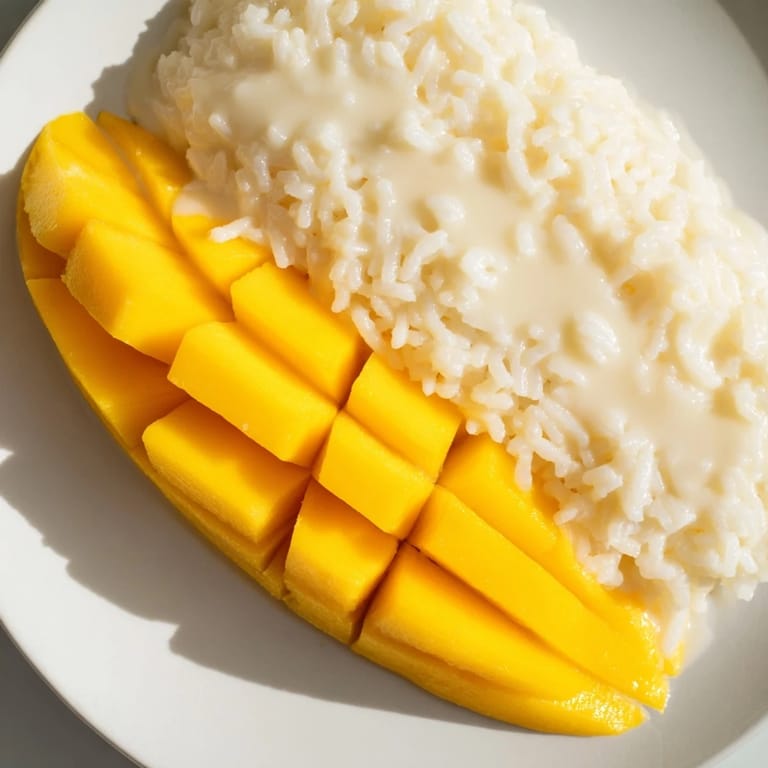
I made this for a dinner party once, and the moment everyone's faces lit up when they saw those perfect mango slices arranged on the plate—I knew I'd nailed something special. My friend Sarah went back for thirds and asked if I'd made it with some kind of secret ingredient, which made me laugh because the only secret was patience and not being afraid to use the full-fat coconut milk like the recipe asked.
Ingredients
- Glutinous (sweet) rice, 1 cup: This isn't regular rice—the starch structure is what makes it sticky and luxurious, almost custard-like when cooked properly.
- Coconut milk, 1 cup full fat: Do not reach for the light version; the richness is what makes this feel indulgent.
- Granulated sugar, 1/4 cup: Sweetens the coconut sauce just enough to let the mango's natural flavor shine through without overpowering it.
- Salt, 1/4 tsp: A small amount that somehow makes every other flavor taste more like itself.
- Large ripe mangoes, 2: The star—pick mangoes that yield slightly to pressure and smell fragrant at the stem end, not the hard greenish ones.
- Coconut cream, 2 tbsp optional: A drizzle on top catches light and adds a silky richness that transforms the final dish.
- Toasted sesame seeds or mung beans, 1 tbsp optional: The textural contrast against the creamy rice is worth keeping, even as a subtle garnish.
Tired of Takeout? 🥡
Get 10 meals you can make faster than delivery arrives. Seriously.
One email. No spam. Unsubscribe anytime.
Instructions
- Rinse and soak the rice:
- Run cold water over the sticky rice in a fine-mesh strainer, stirring gently with your fingers until the water that drains turns from cloudy white to almost clear—this takes about five passes. Soak it in fresh water for at least four hours, or overnight if you can plan ahead; this softens the grains so they steam evenly.
- Steam the rice until tender:
- Drain the soaked rice and spread it in a cheesecloth-lined steamer basket, then steam for 25 to 30 minutes until each grain is tender and fully translucent. You'll know it's ready when a grain tastes soft all the way through, not chalky in the center.
- Warm the coconut sauce gently:
- Pour coconut milk into a saucepan and add sugar and salt, then stir over medium heat until the sugar dissolves completely and the mixture smells like toasted coconut. Keep the heat gentle—if it starts to bubble actively, pull it back, because boiling breaks the sauce's silky texture.
- Dress the rice while warm:
- Tip the steamed rice into a bowl and pour about three-quarters of the warm coconut sauce over it, then fold gently to coat every grain. Let it sit covered for 10 to 15 minutes so the rice absorbs the coconut flavor and becomes even more luscious.
- Slice and arrange the mango:
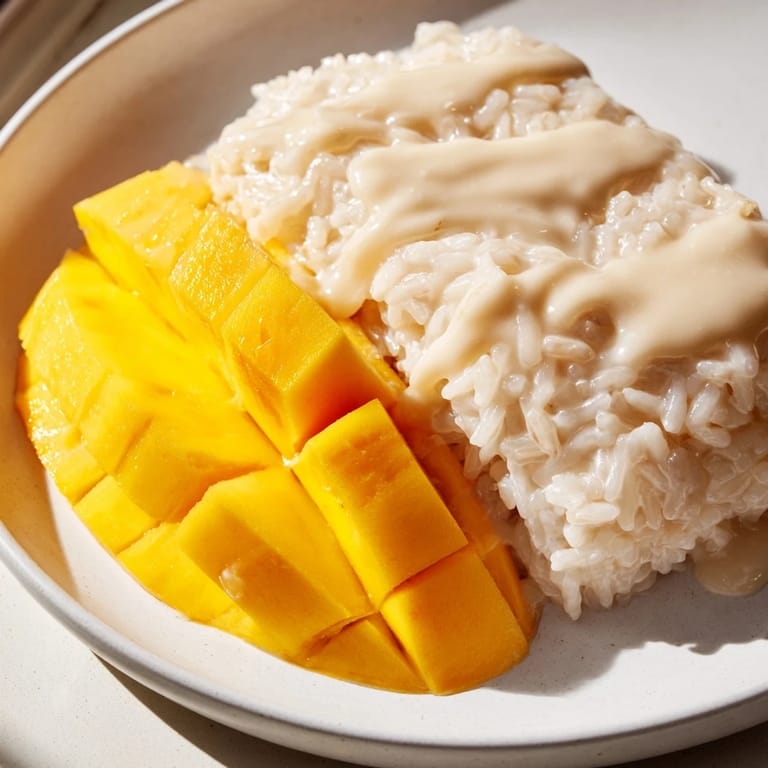
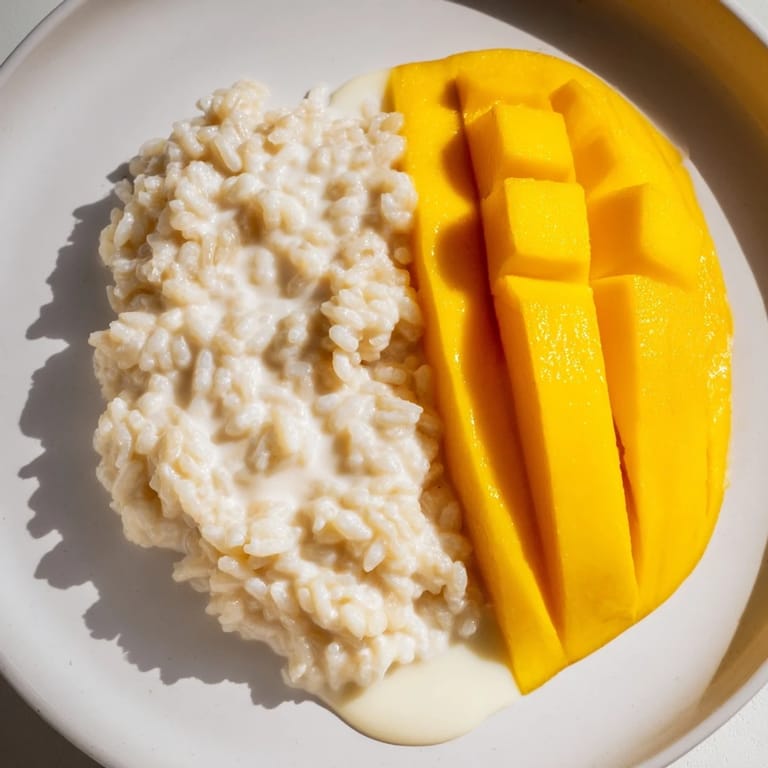
- Cut each mango in half along the flat side of the pit, then score the flesh in a crosshatch pattern and push the skin inside-out to create those beautiful little cubes, then slide a knife under to separate them. Arrange the slices or cubes on your serving plate, mounding the sticky rice alongside.
- Finish and serve:
- Drizzle the remaining coconut sauce over everything, add a spoonful of coconut cream if using, and scatter sesame seeds or mung beans across the top for texture. Eat this right away while the rice is still warm and the mango is cool and perfect.
 Save
Save My grandmother once told me that the best meals are the ones where you stop eating with your mouth and start eating with your whole body—where texture and temperature matter as much as flavor. That's mango sticky rice, perfectly. It's why I come back to this recipe again and again.
The Mango Choice Matters
Not every mango is equal, and I learned this the hard way by making this dessert with the wrong ones. A truly ripe mango should yield just slightly when you hold it in your palm—not soft enough to bruise, but with enough give that your thumb leaves the faintest impression. If you're buying ahead, pick ones that still have a bit of firmness, and leave them on your counter stem-side down for a day or two. The difference between a mediocre mango and a perfect one is the difference between a good dessert and one that people ask you to make again. When you cut into it, the flesh should be golden-yellow or sunset-orange, never pale or white.
Making the Coconut Sauce Your Own
The basic coconut sauce is simple, but there's room for personality here. If you can find palm sugar instead of regular granulated sugar, use it—the flavor is deeper and somehow more tropical, almost caramelly. Some nights I add a whisper of vanilla extract or a tiny splash of pandan extract if I have it on hand, which gives the whole dish an almost floral quality. The key is to keep the coconut milk at a gentle temperature; if you let it get too hot, it can separate slightly, and you'll lose that silky mouthfeel that makes this dish worth eating.
Timing and Temperature Play
The temperature contrast is literally half of what makes this work, so timing matters. You want the rice warm—still steaming or at least hot enough that you can feel the heat rising from it—while the mango is cool, either from the fridge or freshly sliced. That temperature play is what creates the sensation that makes your brain light up when you eat it. Plate this right when everything is ready; don't let it sit around waiting for guests. The magic window is maybe 20 minutes after the rice is dressed before things start to cool down unevenly and lose their sparkle.
- Steam the rice while you chill your mangoes in the fridge for the best contrast.
- Have your plates warming in the oven so the rice doesn't cool down the moment it hits ceramic.
- Slice the mango just before serving so it's as cool and fresh as possible against the warm rice.
 Save
Save This dessert sits at that perfect intersection of simple and sophisticated—the kind of thing you can make on a weeknight but that somehow feels special enough for company. Once you've made it once, it becomes the dessert you return to, again and again.
Recipe FAQs
- → What type of rice is used for the dish?
Glutinous, or sticky rice, is used to achieve the signature chewy and sticky texture essential to the dish.
- → How is the coconut sauce prepared?
The sauce combines coconut milk, sugar, and a pinch of salt heated gently until the sugar dissolves, ensuring a smooth, sweet coating for the rice.
- → Can the rice be steamed with additional flavors?
Adding pandan leaves during steaming imparts a fragrant, aromatic touch enhancing the dish's tropical profile.
- → What are the suggested garnishes?
Coconut cream adds richness, while toasted sesame seeds or mung beans offer a crunchy contrast and nuttiness.
- → Is it important to serve immediately after preparation?
Yes, to maintain the creamy texture of the sticky rice; refrigeration can harden the rice and alter the dish’s consistency.