 Save
Save I'll never forget the afternoon I discovered that the most memorable gatherings aren't about elaborate dishes, but about abundance and color on a single board. A friend from Morocco brought a stunning platter to my potluck, and I watched how people's eyes lit up when they saw it. That moment taught me that simplicity, when done thoughtfully, becomes elegant. Now, whenever I need to feed a crowd or simply want to celebrate fresh ingredients, I create this Vegan Global Gardener Platter. It's become my love letter to markets bursting with color and the joy of eating with our hands.
I'll always remember my sister's wedding shower when I brought this platter. The caterer had cancelled last minute, and I had three hours to feed forty people. I grabbed every gorgeous vegetable from the farmer's market, arranged them with intention, and created four different dips at my kitchen counter. The best part? More people came back to that platter than the hot appetizers. It taught me that sometimes the simplest solutions are the most impressive.
Ingredients
- Rainbow carrots, sliced into coins: Choose thin slices so they stay tender and don't require much chewing. The color gradient is half the magic here, so seek out purple, orange, and golden varieties at farmers markets.
- Baby cucumbers, sliced or quartered: These stay crispier longer than regular cucumbers and have thinner skins. The texture contrast with softer dips is essential.
- Cherry tomatoes, assorted colors: Leave some whole so people can pop them in their mouths like little bursts of sweetness. The mix of reds, yellows, and purples makes the board sing visually.
- Radishes, thinly sliced: Many people skip radishes, but they're the secret weapon. They provide a peppery crunch and stay impossibly crisp for hours.
- Baby bell peppers, sliced: These are sweeter than their larger cousins and people love dipping them directly into hummus. Cut them into rings or strips depending on your board's flow.
- Snap peas: Keep these whole and raw. They're the gateway vegetable that even vegetable-skeptical guests will reach for repeatedly.
- Mixed color grapes, seedless: They provide sweetness and natural spacing between vegetables. The ruby reds and greens create visual interest.
- Strawberries, halved: These announce that this is a sophisticated platter, not just vegetables. The freshness and slight tartness contrast beautifully with savory dips.
- Pineapple chunks: A touch of tropical brightness that makes people smile. They're sturdy enough to dip without falling apart.
- Kiwi, peeled and sliced: The bright green is a visual anchor, and the tartness balances rich dips perfectly.
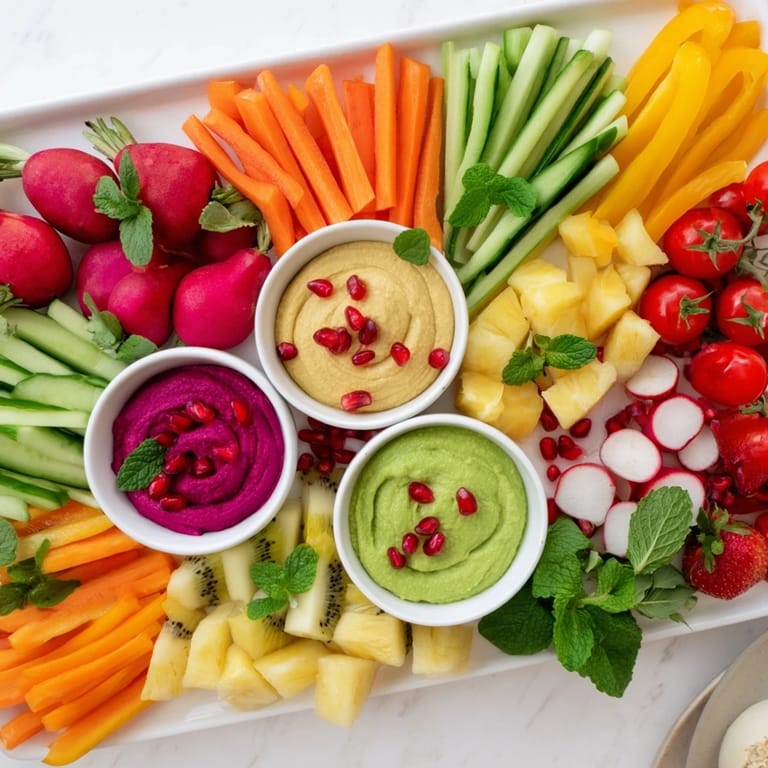
- Classic hummus: This is your neutral canvas. Make sure it's silky smooth because it sets the tone for the whole dipping experience.
- Beetroot hummus: This is your showstopper color. People choose foods with their eyes first, and this deep magenta bowl draws them in.
- Guacamole: Use the ripest avocados you can find. If making it fresh, squeeze lemon over it and place plastic wrap directly on the surface to prevent browning.
- Cashew tzatziki: This creamy, cool dip is the vegan answer to traditional tzatziki. Soak the cashews well and blend until it's silk-like.
- Pomegranate seeds: These jewels are scattered into gaps and create pops of color and a slight tartness that wakes up the palate.
- Fresh herbs and edible flowers: Mint, basil, and parsley aren't just garnishes; they're flavor bridges between dips and produce. Edible flowers transform this from nice to unforgettable.
- Gluten-free crackers or pita chips: These give people options for those moments when they want something more substantial than vegetables alone.
Tired of Takeout? 🥡
Get 10 meals you can make faster than delivery arrives. Seriously.
One email. No spam. Unsubscribe anytime.
Instructions
- Prepare everything with intention:
- Wash each vegetable and fruit, then dry them completely with a clean kitchen towel or paper towels. Wet produce won't keep as long and it'll make your board look tired. As you slice, think about texture contrasts. Thin radish slices, chunky pineapple, whole snap peas. Lay everything on a clean kitchen towel as you work so excess moisture is drawn away.
- Choose your canvas:
- Select your largest platter or wooden board. The bigger it feels, the more abundant and generous the spread will appear. If you don't have something large enough, stack two smaller boards or use a clean, oversized cutting board. The surface should be clean and perhaps very lightly oiled with a food-safe cloth so nothing slides around.
- Position your dip bowls strategically:
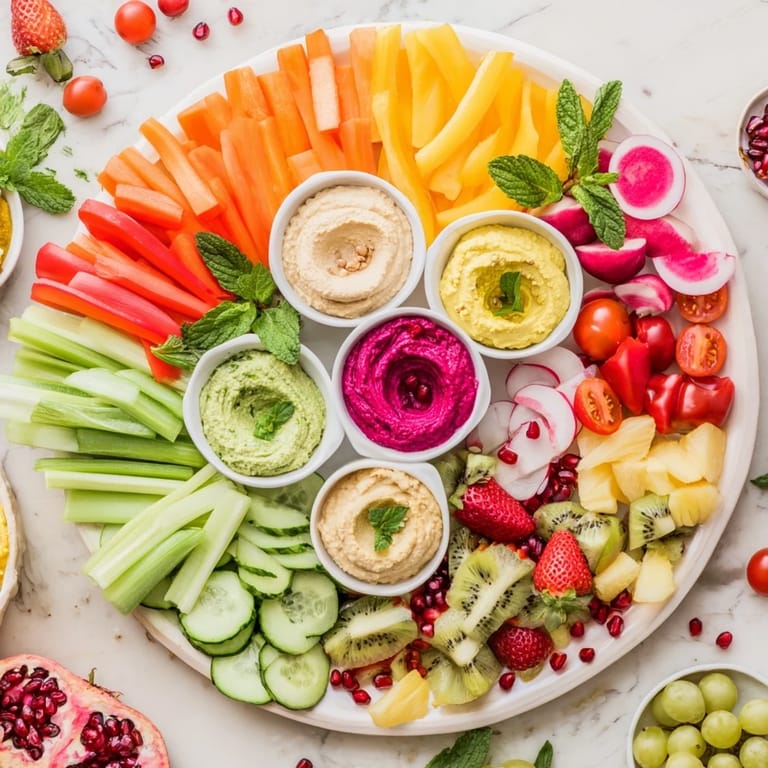
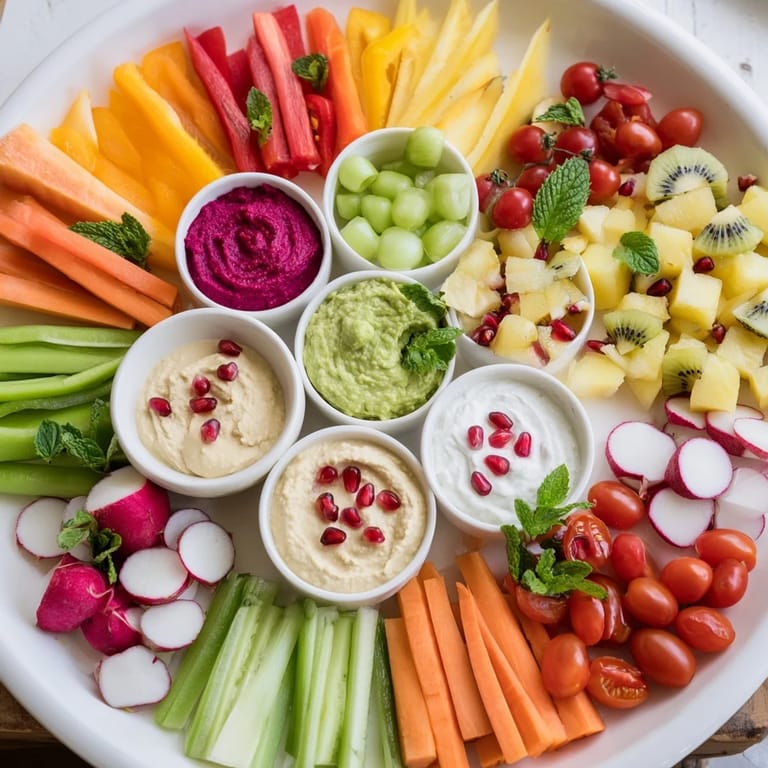
- Place your four dips in small bowls at different points around the platter, almost like points on a compass. Space them so people approaching from any angle can reach a dip. I usually arrange mine north, south, east, and west. The visual spacing helps guide people's eyes around the whole board and prevents crowding in one area.
- Build color-blocked sections with rhythm:
- Start with one type of vegetable or fruit in a section, then move to the next. Think of it like a painter building a landscape. Carrots in one arc, cucumbers in another, tomatoes creating pools of red, then transitions into the fruit section. The key is to group similar colors together but vary the shapes and sizes. A section of thin radish slices followed by chunky pineapple creates visual rhythm.
- Fill the gaps with texture and wonder:
- Once your vegetables and fruits are arranged, look at the empty spaces. These are your opportunities. Scatter pomegranate seeds like rubies into the gaps. Tuck fresh herbs between sections. Place a few crackers near the dips so people know they're available. Lay edible flowers in unexpected spots. This is the stage where your platter transforms from organized to magical.
- Serve fresh or hold with care:
- If you're serving immediately, bring the platter straight from your preparation to the table. If you're making it ahead, cover it loosely with plastic wrap and refrigerate. Remove it about 15 minutes before serving so everything comes to room temperature and the vegetables regain their maximum crispness. The dips should also be slightly cooler than room temperature, creating a refreshing contrast.
 Save
Save What I treasure most about this platter is watching how people interact with it. There's no pressure to be polite or take just one bite. Everyone stands around it, talking and laughing while their hands keep reaching for another snap pea, another strawberry, another dip combination. It becomes a centerpiece for connection, not just a vehicle for vegetables.
The Beauty of Arrangement
Creating a beautiful platter is really about understanding negative space and color flow. I learned this the hard way after my first chaotic attempts at arranging boards. Now I think about the platter like a painting. Cool colors in one corner, warm colors in another, everything balanced so the eye travels smoothly around the board. When someone looks at your platter, they should feel a sense of calm abundance, not visual chaos. Choose your board color carefully too. A light wooden board makes vegetables pop. A dark slate board is dramatic but can hide some of the delicate colors. I've started preferring natural wood because the vegetables seem to glow against it.
Making Your Own Dips
Store-bought dips are perfectly acceptable, but making your own transforms this from a simple platter to a labor of love. Hummus takes five minutes in a food processor. Guacamole is just ripe avocados, lime, salt, and cilantro mashed with a fork. The cashew tzatziki is the only one that requires overnight soaking of cashews, but it's worth it because the flavor is so much creamier and more luxurious than store versions. When you make your own dips, you control the salt level and can adjust seasonings to your taste. Plus, there's something deeply satisfying about knowing every element came from your own hands.
Adapting for Every Season
The beauty of this platter is that it celebrates whatever season you're in. Summer means stone fruits, fresh berries, and tender young vegetables. Fall brings root vegetables, pomegranate seeds, and perhaps some roasted chickpeas for warmth. Winter offers beets, Brussels sprout leaves thinly shaved, kiwi, and citrus. Spring brings the first tender shoots, fresh peas, and the most delicate radishes. You could also add marinated olives, roasted chickpeas for crunch, or candied nuts for a touch of sweetness. The skeleton remains the same, but the flavors and visuals shift to honor what the earth is offering right now.
- In winter, add shaved beets and Brussels sprouts for earthiness and substance
- In spring, showcase fresh tender peas and the first herbs from your garden
- In summer, go heavy on berries and stone fruits alongside crisp vegetables
 Save
Save Every time I make this platter, I'm reminded that feeding people well doesn't require a stove or hours of labor. It requires attention, intention, and respect for the incredible ingredients available to us. This board is proof that the simplest food, arranged with love, is often the most memorable.
Recipe FAQs
- → What fresh vegetables are ideal for this platter?
Rainbow carrots, baby cucumbers, cherry tomatoes, radishes, baby bell peppers, and snap peas offer a colorful, crunchy variety.
- → Which fruits complement the vegetable sections?
Seedless grapes, strawberries, pineapple chunks, and sliced kiwi add natural sweetness and vibrant color contrasts.
- → What plant-based dips pair well with the vegetables and fruits?
Classic hummus, beetroot hummus, guacamole, and cashew tzatziki provide creamy textures and diverse flavors for dipping.
- → How can I add extra freshness and visual appeal to the platter?
Pomegranate seeds, fresh herbs like mint and basil, along with edible flowers, enhance both flavor and presentation.
- → Are there allergen considerations with this dish?
Yes, cashew tzatziki contains nuts and hummus may have sesame; consider replacements if allergies are a concern.
- → What serving tools or equipment should I prepare?
Use a large serving board, small bowls for dips, a sharp knife for slicing, cutting board, and serving tongs for easy handling.