 Save
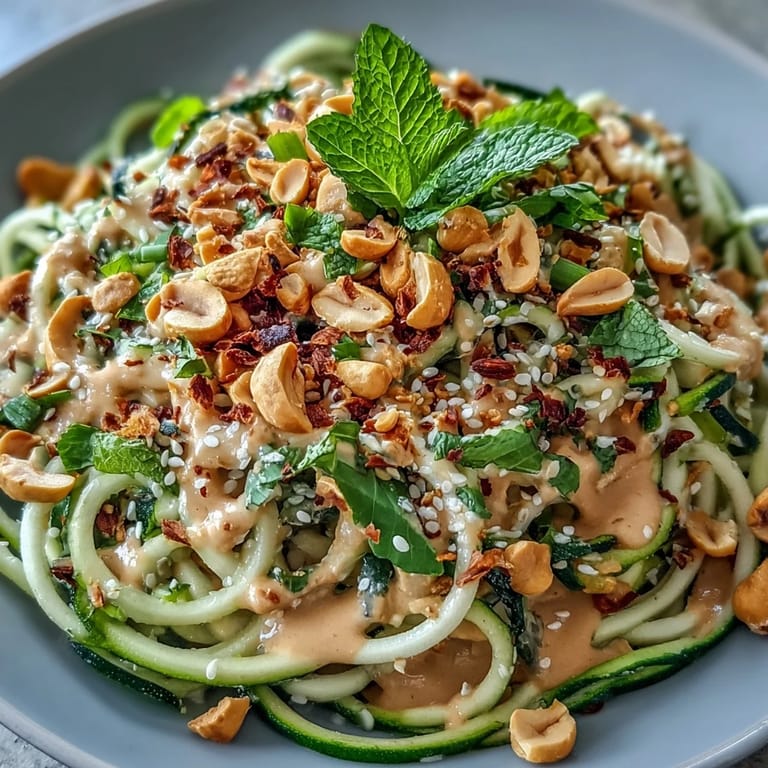
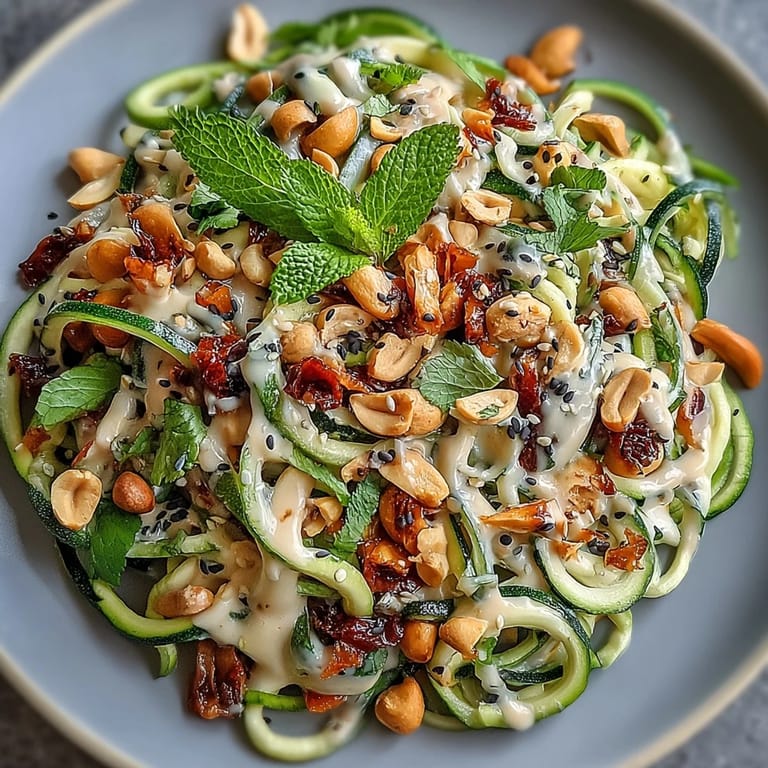
Save My neighbor brought this salad to a summer potluck last July, and I watched people go back for thirds when there were plenty of heavier options available. She mentioned it took barely twenty minutes, which seemed impossible given how restaurant-quality it looked on the table. The way the zucchini noodles caught the light, tangled with those jewel-toned vegetable ribbons, made me want to learn her technique that afternoon. Now I make it whenever I need something that feels both indulgent and honest.
I made this for my partner after they mentioned craving something crunchy and fresh but didn't want me spending hours in the kitchen. Watching them eat it straight from the serving bowl while standing at the counter, still in their work clothes, told me everything I needed to know. They even asked if I could keep the ingredients stocked, which is the highest compliment a home cook can receive.
Ingredients
- Zucchini, spiralized: Use medium zucchini so they're not too watery; if yours seem wet, pat them dry with a clean kitchen towel before tossing.
- Carrot, shaved into ribbons: A vegetable peeler works just fine, but a mandoline makes this task nearly effortless and gives you thinner, more elegant strips.
- Red bell pepper: The sweetness and crunch here balance the umami from the dressing beautifully.
- Cucumber: Keep the skin on for color and fiber; if your cucumber is thick, you can halve it lengthwise before shaving.
- Spring onions: Their mild onion bite adds an important layer of flavor that raw garlic would overpower.
- Red cabbage: This holds its crunch longer than green cabbage and adds a subtle earthiness that complements peanuts.
- Fresh cilantro and mint: Don't skip these; they're what transform this from a vegetable salad into something with real character.
- Roasted peanuts: Buy them already roasted so you can focus on assembly; roughly chopped gives better texture than finely ground.
- Sesame seeds: Toast them yourself if you have time, but quality store-bought ones work beautifully too.
- Peanut butter: Use natural, creamy versions without added sugars; the ingredient list should be peanuts and maybe salt.
- Soy sauce or tamari: Tamari is naturally gluten-free, and its deeper umami makes the dressing feel more sophisticated.
- Maple syrup or agave: This slight sweetness mellows the saltiness and rounds out the flavor profile without being cloying.
- Lime juice, fresh: Bottled lime juice won't give you the same brightness; squeeze it yourself if you can.
- Rice vinegar: This gentle acid prevents the dressing from tasting sharp or aggressive.
- Toasted sesame oil: A little goes a long way here, so don't be tempted to add more than called for.
- Fresh ginger: Microplane it directly into the dressing for the finest, most integrated texture.
- Garlic clove: One small clove is enough; too much will overshadow the delicate peanut and ginger notes.
- Water: Add this slowly until the dressing coats the back of a spoon without being thick like peanut butter.
- Chili flakes or Sriracha: This is entirely optional and should match your comfort level with heat.
Tired of Takeout? 🥡
Get 10 meals you can make faster than delivery arrives. Seriously.
One email. No spam. Unsubscribe anytime.
Instructions
- Prep all your vegetables with care:
- Spiralize your zucchini and use a vegetable peeler or mandoline to create thin ribbons of carrot, bell pepper, and cucumber. The more uniformly cut everything is, the more elegant the salad will look and the better it will coat with dressing.
- Combine everything in one large bowl:
- Toss the zucchini noodles with the vegetable ribbons, spring onions, shredded red cabbage, cilantro, and mint. At this point, nothing is dressed yet, so the vegetables should feel light and separate.
- Build your dressing with intention:
- In a separate small bowl, whisk the peanut butter, soy sauce or tamari, maple syrup, lime juice, rice vinegar, sesame oil, ginger, and garlic until smooth. Add water gradually while whisking, tasting as you go, until you reach a consistency that's pourable but still coats a spoon.
- Dress gently and taste as you go:
- Pour the dressing over your vegetables and toss with your hands or two large spoons, making sure everything gets coated without crushing the delicate noodles. Take a bite and adjust the lime, soy sauce, or heat level to match your preferences.
- Plate and finish with crunch:
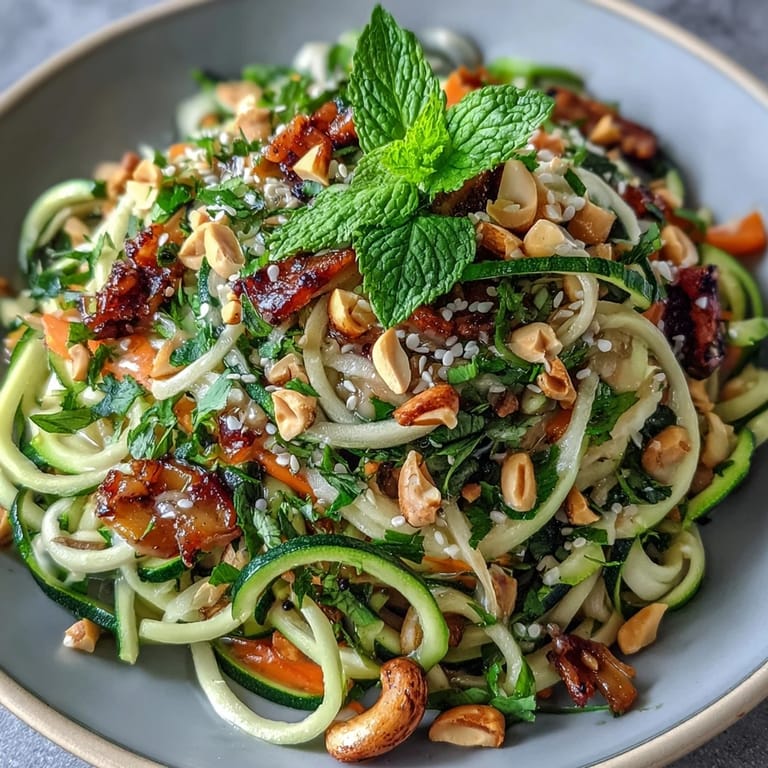
- Transfer the salad to a serving platter or individual bowls and scatter the roasted peanuts and sesame seeds over the top. Serve immediately if you want maximum crunch, or cover and chill for up to an hour.
 Save
Save My friend with celiac disease told me this was the first time in months she'd felt like she could eat something at a gathering without calling ahead or bringing her own dish. That moment sitting on my patio, her just enjoying food without worry, made me understand that sometimes the simplest recipes are the most generous ones.
The Secret to Keeping Everything Crunchy
The moment vegetables are cut, they start releasing water, which is why this salad demands respect for timing. I learned to dry my zucchini noodles on a clean kitchen towel right after spiralizing, which removes excess moisture without damaging them. This one small step is what stands between a salad that stays crisp for hours and one that turns into mush by the time you sit down to eat.
Making This Your Own
The framework here is flexible enough to accept your preferences without losing its soul. I've added shredded beets for earthiness, thinly sliced radishes for peppery bite, and even some shaved apple when I wanted something slightly sweeter. The dressing holds everything together, so you can confidently swap vegetables based on what's in your garden or farmer's market.
Storage and Serving Wisdom
This salad teaches you the difference between prepping and assembling, which is a lesson that applies far beyond this dish. Keep your vegetables prepped in separate containers in the fridge for up to two days, store your dressing in a jar by itself, and assemble only what you'll eat within an hour. The peanuts and sesame seeds should be added just before serving, so they don't soften into the dressing.
- If you need to feed a crowd, double the dressing recipe and set it out in a small bowl so people can dress their own portions.
- Leftovers are best eaten within a few hours, though you can always use them as a filling for lettuce wraps the next day if they lose their crunch.
- This salad pairs beautifully with grilled tofu or tempeh if you want to add protein without changing the character of the dish.
 Save
Save This salad has become my answer whenever someone asks what to bring to a gathering or what they can make when they don't feel like cooking. It's proof that simplicity and care often create something far more memorable than complexity ever could.
Recipe FAQs
- → How do I spiralize zucchini for this dish?
Use a spiralizer or julienne peeler to create long, noodle-like strands from zucchini. This adds a fresh texture and base for the salad.
- → Can I substitute the peanut butter in the dressing?
Yes, sunflower seed butter is a great alternative for those with nut allergies and keeps the rich, creamy texture intact.
- → What is the best way to shave vegetables into ribbons?
A vegetable peeler or mandoline works well to create thin, delicate ribbons from carrots, bell peppers, and cucumbers, enhancing the salad’s visual appeal and texture.
- → How can I make the dressing less thick?
Gradually whisk in water to thin the Thai peanut dressing to your desired consistency for easier tossing and coating.
- → Are there any recommended garnishes or additions?
Fresh herbs like cilantro and mint brighten the salad. You can also add baked tofu or edamame for extra protein and garnish with lime wedges for citrus notes.