 Save
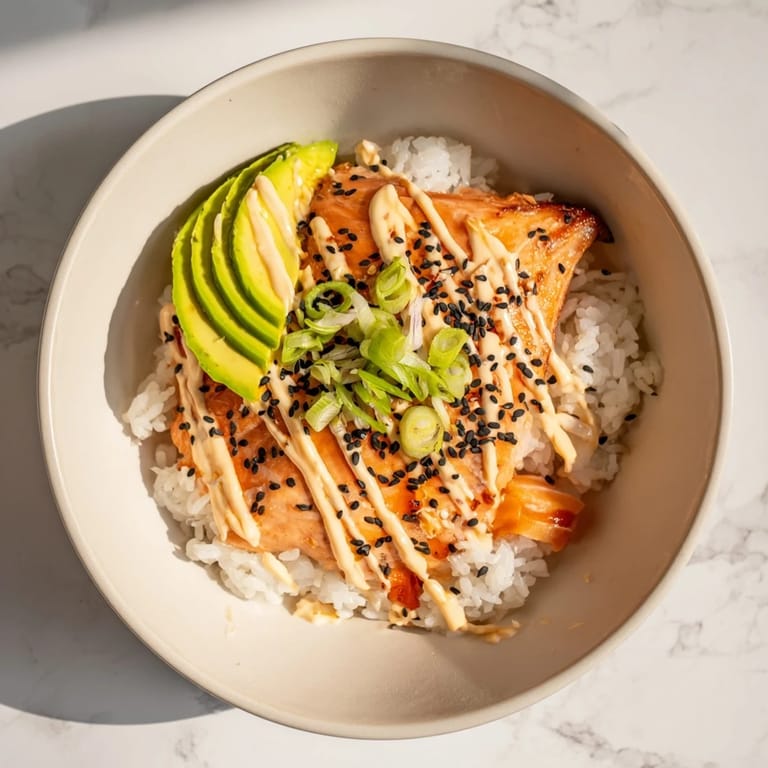
Save The first time I tried this viral salmon rice bowl, I was skeptical—it looked too simple to be satisfying. But then I took a bite with a piece of nori, and something clicked. The warm rice, flaked salmon, and that creamy mayo made it impossible to stop reaching for another scoop. It's become my go-to when I want something that tastes intentional but doesn't require a fuss, especially on those evenings when I'm tired but my stomach isn't.
I made this for my friend who claimed she didn't eat fish, and watching her ask for the recipe before she'd even finished was oddly satisfying. She said it was the nori sheets—how they added this salty crunch without tasting fishy at all. Now she texts me photos of her variations, and honestly, that's the real win here.
Ingredients
- Cooked salmon fillet (about 170 g): Use whatever you have—fresh cooked, canned, or even leftover from dinner. It flakes apart so easily that texture isn't as precious here as it might be in other dishes.
- Cooked white rice (2 cups, preferably chilled): Leftover rice is actually ideal because it's firmer and won't turn mushy when mixed. If fresh, just spread it on a plate first.
- Soy sauce (1 tablespoon): The backbone of flavor—don't skip it even if you think the salmon is already salty enough. It adds depth that nothing else does.
- Sesame oil (1 teaspoon): A little goes far. This is what makes it taste like something you'd get from a proper kitchen, not just assembled from leftovers.
- Japanese mayonnaise (1 tablespoon): Kewpie or any Japanese mayo works because it's creamier and richer than regular mayo, which is why it matters here.
- Sriracha or chili sauce (1 teaspoon, optional): Add heat if you like it, skip if you don't—the dish is fully formed either way.
- Avocado (1 whole, sliced): Timing is everything with avocado, so slice it just before serving to keep it from browning.
- Roasted seaweed or nori (1 sheet, cut into squares): This is the secret weapon that elevates everything from good to crave-worthy. Use it as your edible spoon.
- Toasted sesame seeds (1 teaspoon): Buy them already toasted if you can—it's one less pan to clean and they taste the same.
- Spring onions (2, thinly sliced): The freshness here cuts through the richness and reminds your palate that you're eating something alive and real.
- Pickled ginger (optional): A tiny bit adds snap and sweetness without announcing itself too loudly.
- Lemon or lime wedges (optional): Squeeze these over everything at the end if you want brightness and a lift.
Tired of Takeout? 🥡
Get 10 meals you can make faster than delivery arrives. Seriously.
One email. No spam. Unsubscribe anytime.
Instructions
- Flake the salmon:
- Place your cooked salmon in a microwave-safe bowl and use a fork to break it into bite-sized pieces. Don't overthink it—you want flakes, not salmon dust, so let the natural structure guide you.
- Layer with rice:
- Pile the cooked rice right on top of the salmon. If using leftover rice from the fridge, sprinkle it lightly with water and let it sit for a moment to soften.
- Warm everything together:
- Cover the bowl with a microwave-safe plate or plastic wrap and microwave on high for 1 to 2 minutes. You're looking for warmth throughout, not heat—just enough so the rice is steaming and the salmon is no longer cold.
- Mix in the dressing:
- Pour the soy sauce and sesame oil directly into the bowl and stir everything together with a fork or spoon. The heat should help distribute the flavors evenly, and you'll smell that unmistakable toasted sesame aroma right away.
- Dress and top:
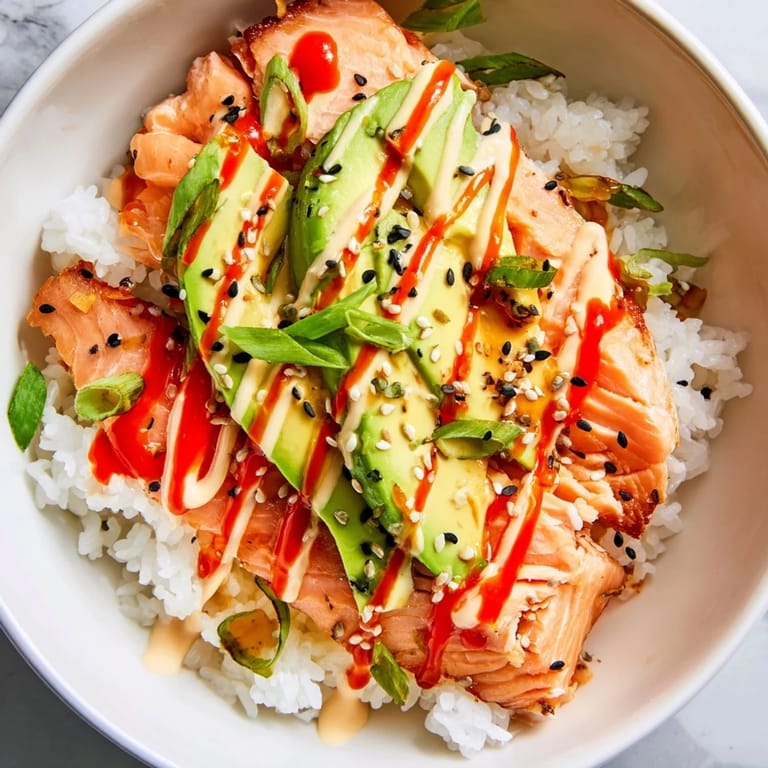
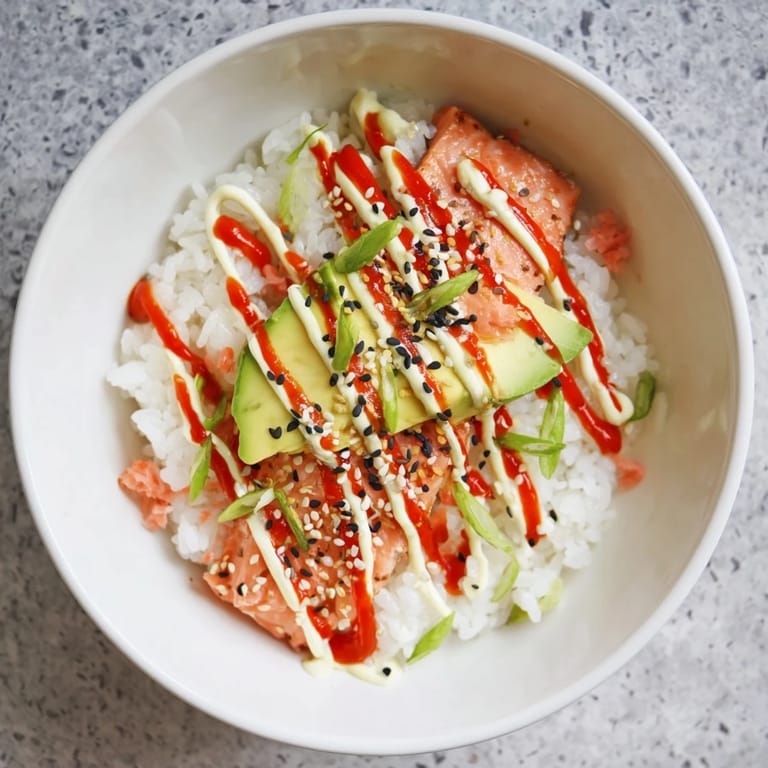
- Drizzle the Japanese mayo across the top, add Sriracha if that's your thing, then arrange your avocado slices, spring onions, sesame seeds, and pickled ginger in whatever pattern feels right to you.
- Serve with intention:
- Place the roasted seaweed sheets and lemon wedges alongside the bowl. This is the moment where the dish becomes an experience—let people fold a piece of nori around each scoop and squeeze citrus if they want that brightness.
 Save
Save There's something almost meditative about eating this bowl with your hands—tearing off a piece of nori, scooping up rice and salmon, biting into that creamy avocado. It's the kind of dish that tastes like care but requires almost none, which is a rare and lovely thing.
Why This Bowl Works
The genius of this dish is how it balances textures and temperatures. You've got warm rice, cool avocado, chewy nori, and that little snap from the sesame seeds all playing together. It's not just assembled—it's orchestrated in a way that feels intentional without being complicated. The soy sauce and sesame oil do the heavy lifting flavor-wise, so nothing else has to shout.
Playing with Variations
Once you make this once, you'll start seeing endless possibilities. I've added shredded cucumber for crunch, scattered kimchi for funk, thrown in pickled radish when I wanted something sharp and bright. Someone told me they use smoked salmon instead of regular, and suddenly it becomes something smokier and more complex. The rice and mayo are the anchors—everything else is flexible.
Making It Work for Your Life
This dish shines when you have leftover rice and some cooked salmon hanging around, but it's also the kind of thing you can build on purpose when you need lunch that actually feels intentional. Use whatever rice you have, swap in canned salmon if fresh feels like too much, skip ingredients that aren't sitting in your kitchen.
- Brown rice adds nutty flavor and fiber if you want to make it feel heavier and more grounding.
- Tamari instead of soy sauce keeps it gluten-free without changing the essential character of the dish.
- A handful of shredded carrots, extra greens, or even leftover roasted vegetables transform it into something entirely different while staying recognizable.
 Save
Save This is the kind of bowl that makes you feel like you've cooked something real even when you haven't—and honestly, that's exactly the point. It's comfort that doesn't require you to be a chef.
Recipe FAQs
- → Can I use brown rice instead of white rice?
Yes, brown rice works well and adds extra fiber, making the dish heartier and more nutritious.
- → What can I substitute for Japanese mayonnaise?
You can use regular mayonnaise or a vegan alternative depending on your preference.
- → Is it possible to use smoked salmon in this dish?
Smoked salmon can be used as a flavorful alternative, though it won't require warming like cooked salmon.
- → How can I make this bowl gluten-free?
Use tamari instead of soy sauce to keep it gluten-free without sacrificing taste.
- → Are there any suggested additional toppings?
Try adding kimchi, shredded carrots, or cucumber slices to introduce more freshness and crunch.
- → What tools do I need to prepare this dish?
A microwave-safe bowl, fork for flaking salmon, knife, and cutting board are all you need.