 Save
Save My neighbor once knocked on my door at dusk, following the smell of caramelizing onions wafting through our shared hallway. She stood there holding a wine glass, asking if I was making that soup she'd heard about—the one that takes forever but tastes like you've been cooking all day. That's when I realized Dutch oven French onion soup isn't really about time; it's about patience rewarding you with something so deeply golden and savory that people will pause mid-conversation just to breathe it in.
I made this soup the night before my dad's surgery, and somehow standing at the stove stirring those onions became meditation. By the time bowls went under the broiler, the whole kitchen glowed amber, and for a moment everything felt less terrifying. He came downstairs drawn by the smell, and we sat together eating it warm while talking about nothing important—which was exactly what we needed.
Ingredients
- 5 large yellow onions, thinly sliced: Yellow onions have the best balance of sweetness when caramelized; don't skip the slicing step, as thin cuts cook evenly and develop that glossy, jammy texture.
- 3 tablespoons unsalted butter and 2 tablespoons olive oil: The butter brings richness while oil prevents burning during the long caramelization—use this combo, not just one.
- 2 garlic cloves, minced: Added after onions soften so the garlic doesn't scorch, which would turn bitter.
- 1 teaspoon sugar: This tiny pinch accelerates caramelization and deepens the natural sweetness without making it taste sugary.
- 8 cups beef broth: Quality matters here since broth is the backbone; use low-sodium so you control the salt level as you go.
- 1/2 cup dry white wine: The wine cuts richness and adds complexity—skip it if you must, but it makes a real difference in depth.
- 2 teaspoons fresh thyme leaves: Fresh thyme is worth seeking out; if using dried, cut the amount in half since dried is more concentrated.
- 2 bay leaves: They perfume the whole pot without being noticed until you fish them out at the end.
- 1 tablespoon Worcestershire sauce: A savory whisper that makes people ask what secret ingredient you used.
- 1 baguette, sliced into 1/2-inch rounds: Day-old baguette works best since it's sturdier and toasts without falling apart in the soup.
- 2 cups Gruyère cheese, grated: Gruyère melts into creamy strands and has a nutty flavor that elevates everything; freshly grated melts more smoothly than pre-shredded.
Tired of Takeout? 🥡
Get 10 meals you can make faster than delivery arrives. Seriously.
One email. No spam. Unsubscribe anytime.
Instructions
- Start the foundation:
- Heat the butter and olive oil together in your Dutch oven over medium heat until the mixture foams gently. Add all those sliced onions at once—it'll look like way too many, but they'll collapse as they cook down, releasing their water.
- Caramelize low and slow:
- Stir every few minutes, letting the heat do the work rather than cranking it up. After about 20 minutes they'll turn translucent, then gradually golden, then deep amber around 40–45 minutes total. This is where patience becomes flavor.
- Wake it up with garlic:
- When the onions reach that deep caramel color, add the minced garlic and stir constantly for just one minute—you want fragrance, not browning.
- Deglaze the pot:
- Pour in the wine and use a wooden spoon to scrape up all those caramelized bits stuck to the bottom; they're pure flavor. Let it simmer for a few minutes until the wine smells less sharp and more integrated.
- Build the soup:
- Add the broth, thyme, bay leaves, and Worcestershire sauce, then bring everything to a gentle simmer. Let it cook uncovered for 20–30 minutes so flavors can marry and intensify, then taste and adjust salt and pepper.
- Toast the bread:
- While soup simmers, arrange baguette slices on a baking sheet and run them under a hot broiler for about a minute per side until they're golden and crispy—watch them closely so they don't char.
- Assemble and broil:
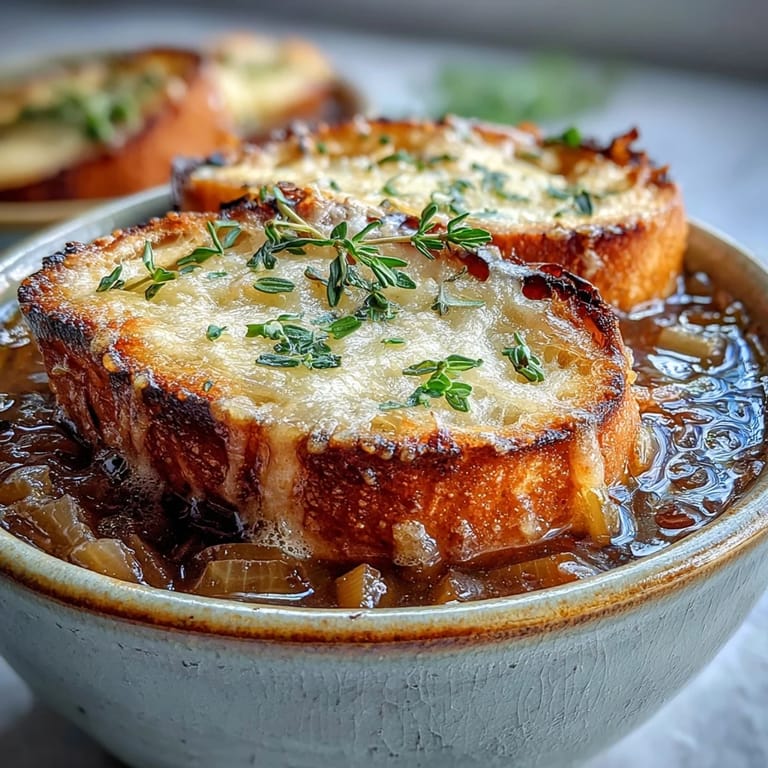
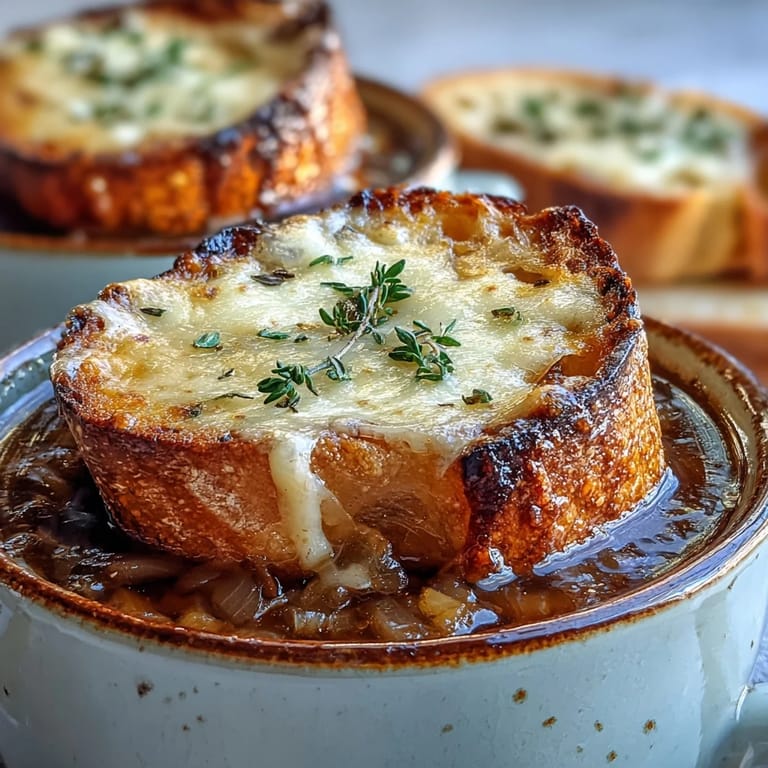
- Ladle soup into oven-safe bowls, top each with a toasted baguette slice, then pile on grated Gruyère generously. Place the bowls on a baking sheet and broil just until the cheese bubbles and browns slightly at the edges, maybe 2–4 minutes.
- Serve right away:
- The soup stays hotter longer in the bowl, and the cheese is at that perfect melted moment. Garnish with extra thyme if you have it.
 Save
Save There's a moment when you pull those bowls out from under the broiler and the melted cheese is still actively bubbling, steam rising in little pockets through the crust, that you realize why this soup has been made the same way in French kitchens for centuries. It's not complicated, but it feels ceremonial, and that matters.
The Onion Transformation
The entire magic of this soup happens during caramelization, when onions release their natural sugars and those sugars break down into complex compounds that taste savory, slightly sweet, and impossibly deep. It sounds technical, but what you're actually doing is just standing there stirring occasionally, watching them go from raw and pungent to soft and golden. The smell changes too—it starts sharp, then becomes fragrant, then settles into something almost meaty and rich.
Why Broth Matters Here
This isn't a soup where you can hide behind cream or butter if the broth is thin and flat. The broth is basically a co-star with the onions, so using good broth—whether homemade or a quality store-bought brand—makes a noticeable difference. If your broth tastes weak on its own, it'll taste weak in the soup, no matter how perfect the caramelization is.
Making It Your Own
Once you master the basic version, this soup invites small variations that feel natural rather than forced. Some people add a splash of sherry or cognac instead of wine, or they'll stir in a pinch of nutmeg during the final simmer. Others swear by mixing Gruyère with Emmental or using Swiss cheese if that's what they have. The skeleton of the recipe is strong enough to handle these changes.
- Try adding a splash of sherry or a splash of brandy for deeper complexity and a slightly different flavor profile.
- If Gruyère isn't available or is too pricey, Swiss or Emmental cheese works beautifully and costs less.
- For a vegetarian version, swap beef broth for vegetable broth and use tamari or soy sauce instead of Worcestershire sauce.
 Save
Save This soup has a way of becoming comfort in a bowl, something you make when you need warmth or when you want to impress someone without fussing. Once you've made it once, you'll find yourself making it again and again.
Recipe FAQs
- → Why does caramelizing onions take so long?
Caramelization requires patience—about 40–45 minutes over medium heat—to slowly break down the onions' natural sugars and develop that deep, rich brown color and sweet-savory flavor that defines this classic dish.
- → Can I make this ahead of time?
Absolutely. The soup base actually improves after sitting in the refrigerator for 1–2 days, allowing flavors to meld. Simply reheat gently before adding the bread and cheese topping.
- → What cheese works best for the topping?
Traditional Gruyère offers the best melting properties and nutty flavor profile, but Swiss, Emmental, or a blend of Gruyère and Parmesan create equally delicious results with excellent bubble and golden-brown finish.
- → How do I achieve the perfect cheese crust?
Use oven-safe bowls, place them on a baking sheet for easy handling, and broil on the upper rack for 2–4 minutes. Watch closely to prevent burning—the cheese should be melted, bubbly, and golden brown.
- → What wine should I use?
A dry white wine like Sauvignon Blanc or Pinot Grigio works beautifully. The wine adds acidity and depth that balance the sweet caramelized onions and rich broth.
- → Can I freeze this soup?
The soup base freezes beautifully for up to 3 months. However, freeze it without the bread and cheese topping—add those fresh when reheating for the best texture and flavor.