 Save
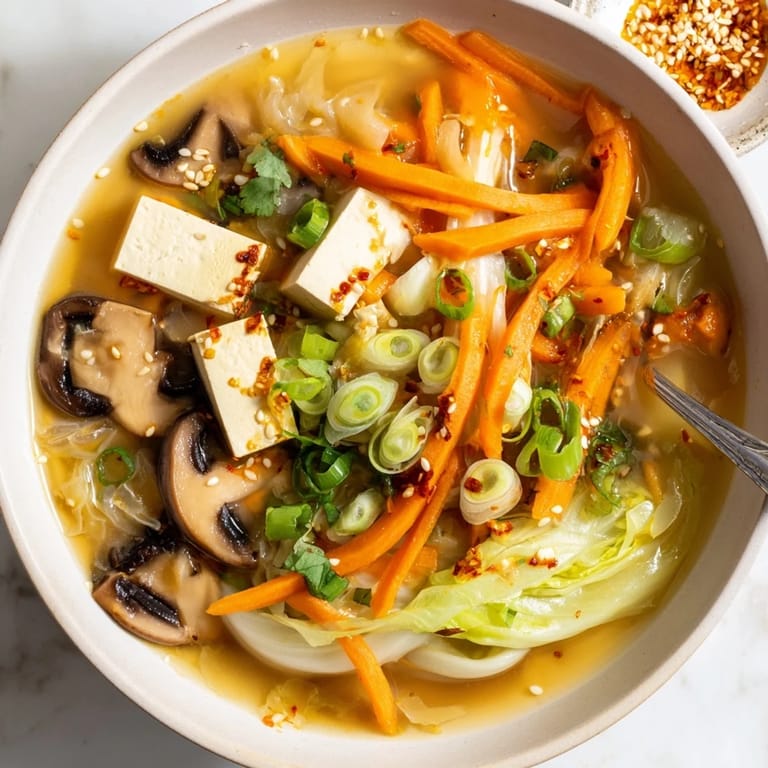
Save Last February, when winter had been dragging on for what felt like six months straight, I found myself staring at a neglected piece of ginger in my refrigerator door. Something about the knobby, tan root spoke to me, and I decided to build an entire meal around its warming properties. That afternoon experiment became this soup, which I've now made at least a dozen times.
My roommate walked in while I was ladling that first batch into mismatched bowls, her nose wrinkling at the intense ginger aroma wafting through our tiny apartment. She was skeptical after one spoonful, she literally texted her mother to ask if I could make it again for their family dinner that weekend. Now whenever someone mentions feeling under the weather, I immediately think of this golden broth.
Ingredients
- Water or vegetable broth: The foundation carries all those aromatics, so choose something you would happily drink on its own
- Fresh ginger: Slice it thinly rather than mincing to make fishing out the pieces easier later
- Garlic cloves: Thin slices release flavor more gently than crushing them
- White or yellow miso paste: White is milder and sweeter while yellow brings more depth
- Napa cabbage: Adds lovely silkiness and absorbs the broth beautifully
- Carrot: Julienned pieces cook quickly and bring sweetness to balance the salty miso
- Shiitake mushrooms: Their meaty texture makes every spoonful feel substantial
- Scallions: Fresh onion brightness cuts through the rich broth
- Toasted sesame seeds: That nutty crunch transforms each bite
- Fresh herbs: Cilantro or parsley adds a pop of color and freshness
- Chili oil or flakes: Just enough heat to wake up your palate without overwhelming
- Silken tofu: Cubes of this add protein while melting into the broth
- Soba or rice noodles: Turn this from soup to a complete meal in a bowl
Tired of Takeout? 🥡
Get 10 meals you can make faster than delivery arrives. Seriously.
One email. No spam. Unsubscribe anytime.
Instructions
- Build the aromatic broth:
- Bring your liquid to a gentle bubble and drop in the ginger and garlic slices, letting them dance around the pot for about ten minutes while your kitchen fills with their perfume.
- Add the vegetables:
- Toss in the cabbage, carrot ribbons, and mushroom slices, then simmer for another five to seven minutes until everything has softened but still holds its shape.
- Dissolve the miso:
- Whisk the paste with a ladle of hot broth in a separate bowl until completely smooth, then stir it back into the pot off the heat.
- Warm through the additions:
- If you are using tofu or cooked noodles, add them now and let them gently heat for two minutes in the hot broth.
- Finish with flair:
- Ladle into your favorite bowls and scatter scallions, sesame seeds, herbs, and that optional hit of chili over the top.
 Save
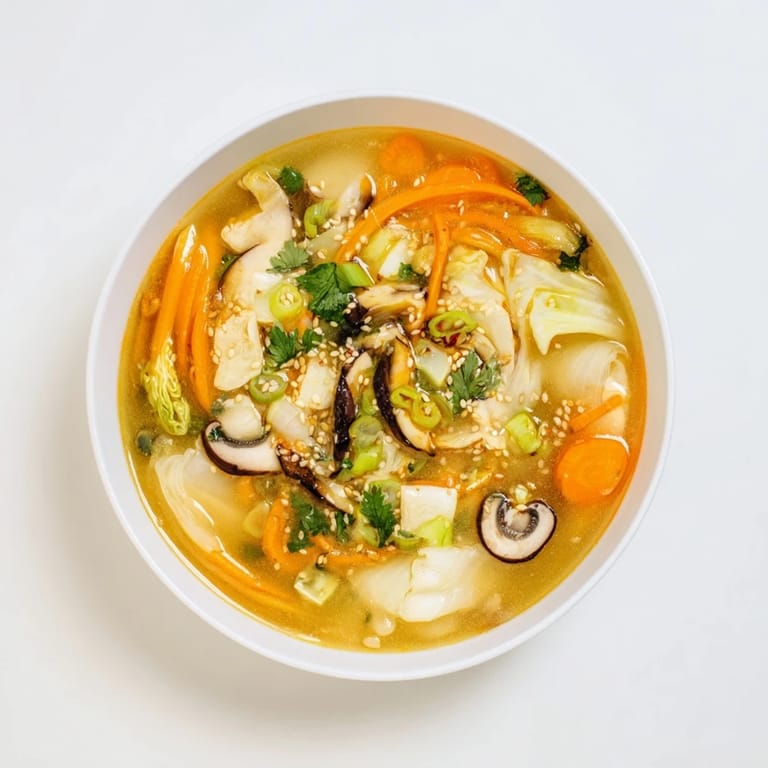
Save This soup has become my go-to for friends recovering from illness or just needing something gentle. The way the steam rises up while you cradle the bowl feels like a hug for your insides.
Making It Your Own
I have swapped shiitakes for enoki mushrooms when I wanted something more delicate, and bok choy works beautifully in place of napa cabbage if that is what you have on hand. The formula is forgiving.
Build-Ahead Strategy
You can simmer the ginger and garlic broth up to two days ahead and store it in the refrigerator. Just wait to add the miso until you are ready to serve, and keep your vegetables chopped and ready in separate containers.
Serving Suggestions
A crisp white wine like Sauvignon Blanc cuts through the richness, but a pot of green tea feels more aligned with the soup is restorative spirit. I like to set out small bowls of extra chili oil and sesame seeds so everyone can customize their final bowl.
- Crusty bread for dipping is never a bad idea
- A simple side salad rounds out the meal nicely
- Leftovers reheat beautifully for lunch the next day
 Save
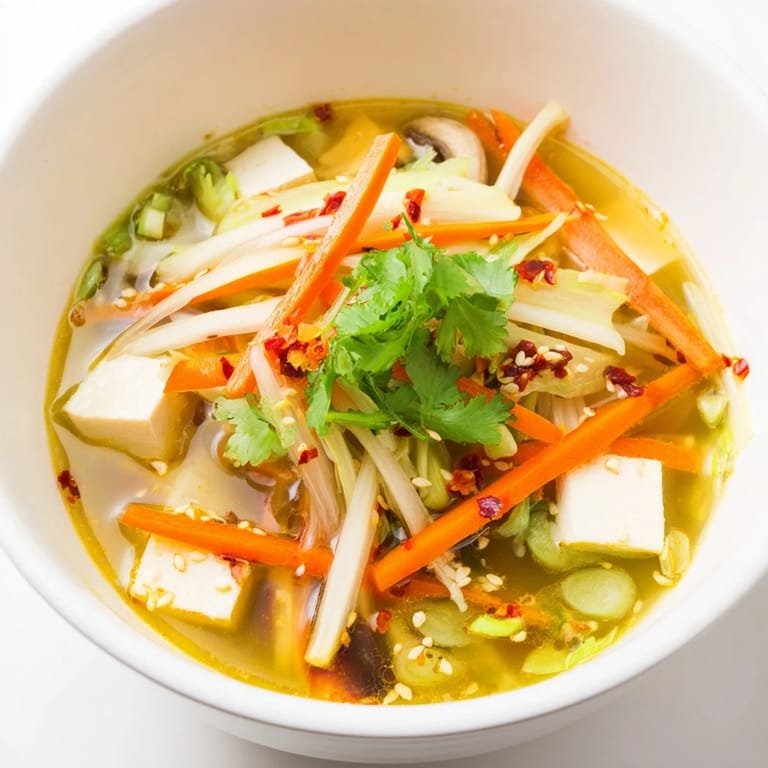
Save There is something profoundly comforting about a bowl of soup that knows exactly what your body needs. May this one warm you through whatever winter throws your way.
Recipe FAQs
- → Can I use red miso instead of white or yellow?
Red miso has a stronger, more intense flavor and longer fermentation time. It will work but may overpower the delicate ginger and vegetable notes. If using red miso, start with half the amount and adjust to taste.
- → Why shouldn't I boil the soup after adding miso?
High heat destroys the beneficial probiotics and enzymes in miso paste. The gentle, plant-based bacteria that develop during fermentation are sensitive to boiling temperatures. Adding miso off the heat preserves both the nutritional benefits and the complex, nuanced flavor profile.
- → What vegetables work best in this broth?
Napa cabbage, carrots, and shiitakes are traditional choices that complement the miso-ginger base. Other excellent options include bok choy, spinach, daikon radish, or snap peas. Hardier vegetables like kale or broccoli require longer simmering times.
- → Is this suitable for meal prep?
The soup stores well for 3-4 days in the refrigerator. For best results, keep the miso separate and add it when reheating to preserve probiotics. The noodles will absorb liquid and become soft, so consider storing them separately if you prefer al dente texture.
- → How can I make this heartier?
Add silken tofu for protein, or include cooked soba or rice noodles directly in the bowls. For extra substance, try adding diced sweet potato, winter squash, or a soft-boiled egg. The broth also pairs beautifully with grilled tempeh or pan-fried dumplings on the side.
- → What's the best way to slice fresh ginger for broth?
Thin coins or matchsticks work best—they release flavor more readily than large chunks. No need to peel if the ginger is young and thin-skinned; simply scrub clean. For a cleaner presentation, you can strain the ginger slices before serving, though leaving them in adds more kick.