 Save
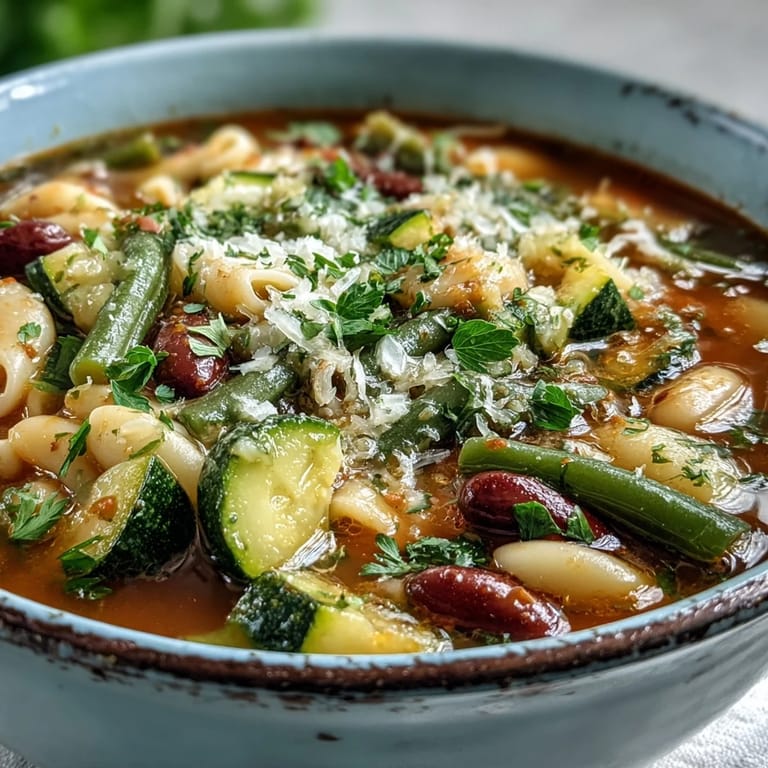
Save My neighbor Marco showed up one October afternoon with a basket of zucchini from his garden, apologizing for the abundance. I had no idea what to do with six of them, so he stayed for coffee and told me about his grandmother's minestrone, how she made it whenever the season shifted and vegetables needed using up. He described it so vividly—the smell of soffritto hitting hot oil, beans breaking down just slightly, pasta swelling in the broth—that I went straight to the market and came home determined to recreate it. That soup became my answer to everything: unexpected guests, tired evenings, the need to feel connected to something warm and honest.
The first time I made this for people was during a lunch gathering that threatened to be awkward—friends meeting friends, everyone a bit cautious. I served it in old white bowls with fresh parsley scattered on top and thick bread on the side. Halfway through, conversations started overlapping naturally, and someone asked for seconds. There's something about minestrone that softens the edges of a room and makes strangers feel less strange.
Ingredients
- Olive oil: Use good oil here because you taste it in the soffritto, that holy combination of onion, carrot, and celery that becomes the soup's foundation.
- Onion, carrots, and celery: This trio is non-negotiable—dicing them roughly equal means they cook at the same pace and create that perfect texture throughout.
- Garlic: Two cloves minced fine, added after the soffritto so it doesn't burn and turn bitter.
- Zucchini and green beans: These vegetables break down slightly during cooking, thickening the broth naturally while adding substance.
- Spinach or kale: Leafy greens wilt at the very end, adding brightness without overcooking into nothing.
- Diced tomatoes: A 14 oz can provides acidity and depth; San Marzano if you can, though any good quality tomato works.
- Vegetable broth: Six cups gives you that balance between broth-heavy and hearty—add more if you prefer it soupy, less if you like it thick.
- Oregano, basil, and thyme: Dried herbs are fine here because they steep into the broth, but don't skip them or the soup tastes thin.
- Bay leaf: One leaf, removed before serving—it anchors the flavor without announcing itself.
- Small pasta: Ditalini is traditional, but shells or small elbows work beautifully too.
- Cannellini and kidney beans: Both types add different textures and a creamy quality that thickens the broth slightly.
- Parmesan, parsley, and extra olive oil: These garnishes transform a bowl from simple to finished, awakening the flavors underneath.
Tired of Takeout? 🥡
Get 10 meals you can make faster than delivery arrives. Seriously.
One email. No spam. Unsubscribe anytime.
Instructions
- Start the soffritto:
- Heat olive oil in a large pot over medium heat until it shimmers slightly, then add diced onion, carrot, and celery. Sauté for 5 to 6 minutes, stirring occasionally, until the vegetables soften and the onion becomes translucent—you'll know it's ready when the kitchen smells almost sweet.
- Build the flavor base:
- Add minced garlic along with the diced zucchini and green beans, stirring constantly for 3 to 4 minutes. This is when the pot becomes fragrant and alive, every vegetable releasing its essence into the oil.
- Bring it all together:
- Pour in the diced tomatoes, vegetable broth, oregano, basil, thyme, and bay leaf, then add a generous pinch of salt and pepper. Stir well to combine, then increase the heat and bring everything to a rolling boil—you'll see the surface ripple actively.
- Let it simmer:
- Once boiling, reduce the heat to medium-low, place a cover on the pot, and let it cook undisturbed for 15 minutes. The soup will deepen in color and the flavors will marry together.
- Add pasta and beans:
- Remove the cover and stir in the small pasta and both drained beans, then simmer uncovered for 10 to 12 minutes until the pasta reaches al dente. Stir occasionally so nothing sticks to the bottom.
- Finish with greens:
- Add the spinach or kale and cook for just 2 to 3 minutes until it wilts completely and turns a darker shade of green. Remove the bay leaf with a spoon before the next step.
- Taste and adjust:
- Spoon a small amount into a bowl and taste it carefully—this is your moment to add more salt, pepper, or even a pinch more dried herbs if it needs brightness. Trust your instincts here.
- Serve warm:
- Ladle the soup into bowls, then crown each one with a small handful of freshly grated Parmesan, a sprinkle of chopped parsley, and a thin drizzle of excellent olive oil. The garnishes are not optional—they wake up every spoonful.
 Save
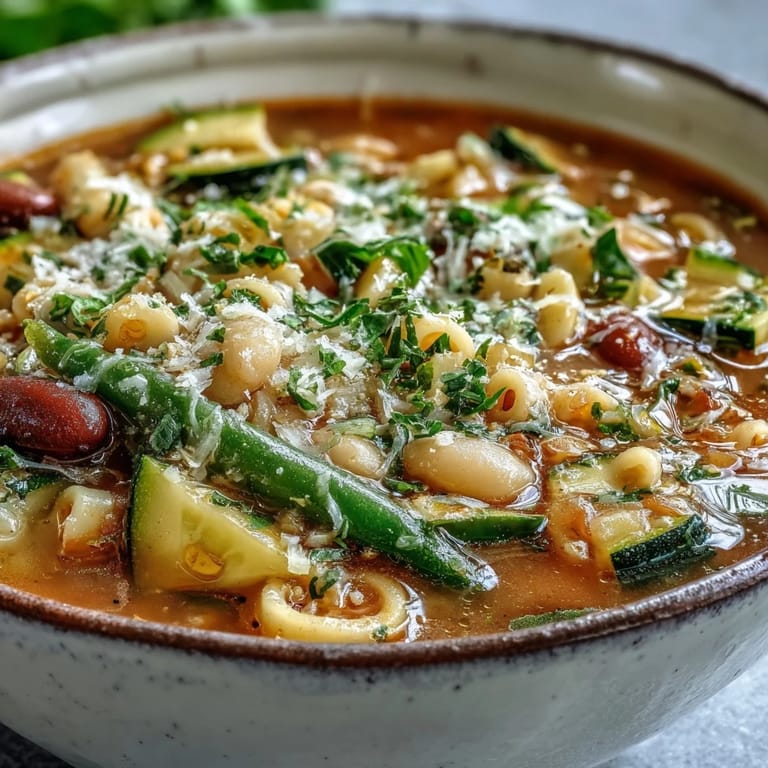
Save My daughter asked once why this soup tasted different every time I made it, and I realized she was right—it depended entirely on which vegetables showed up that week and my mood while cooking. That variability became the whole point. There's freedom in a soup that doesn't demand precision, that welcomes improvisation.
When to Make This Soup
Minestrone belongs to the shoulder seasons—that moment in fall when you have excess garden vegetables, or spring when you're tired of winter and want something alive and green. But honestly, it works any time you need comfort that doesn't feel heavy, nutrition that tastes like care. Make it on lazy Sundays, on nights when cooking feels more meditative than rushed, or whenever you have vegetable scraps that deserve better than the compost bin.
Variations That Work Beautifully
Once you understand this soup's structure, you can reshape it according to what's in your kitchen and what your body craves. Add diced potatoes in autumn for earthiness, swap beans for lentils if you prefer their nuttiness, include small cabbage wedges for a peppery note. I've made versions with just spring peas and fresh herbs, and others thick with root vegetables in winter. The soup remains honest and whole through all these variations.
- Stir in pesto at the end for a Genovese twist that tastes like summer all year.
- Finish with a splash of red wine to add depth and slight tannins.
- Try small cubed potatoes instead of pasta if you want something heartier and gluten-free.
Storing and Reheating
This soup keeps in the refrigerator for five days and actually improves after the first day once the flavors have settled together more completely. Freeze it in portions if you want to stretch it further, though the texture of the vegetables becomes softer after thawing. When you reheat it, do so gently over medium heat with a splash of broth stirred in, tasting as you go to restore any seasoning that faded during storage.
 Save
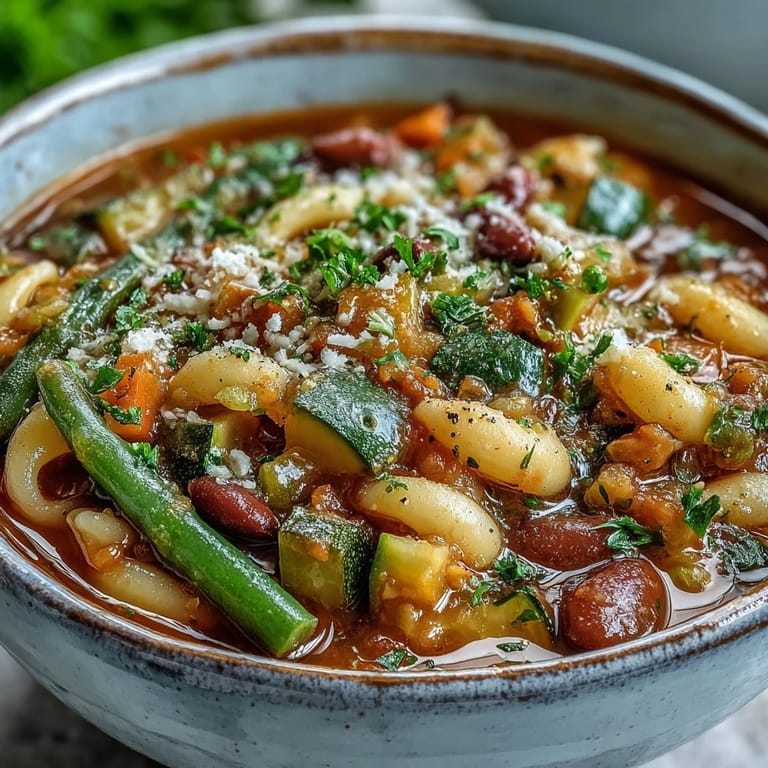
Save This soup taught me that good cooking doesn't require complexity, just attention and willingness to work with what you have. Serve it to yourself on a quiet evening and you'll understand why people have made versions of it across centuries.
Recipe FAQs
- → What vegetables work best in minestrone?
Classic minestrone includes onions, carrots, celery, zucchini, green beans, and leafy greens like spinach or kale. You can also add potatoes, cabbage, or peas based on seasonal availability and personal preference.
- → Can I make minestrone soup ahead of time?
Yes, minestrone actually tastes better the next day as flavors have time to meld. Store in an airtight container in the refrigerator for up to 4 days. Add a splash of broth when reheating since the pasta absorbs liquid.
- → How do I prevent pasta from getting mushy?
Cook the pasta separately and add it to individual bowls when serving, or slightly undercook it directly in the soup since it continues absorbing liquid. For leftovers, the pasta will soften but remains enjoyable.
- → Is minestrone soup gluten-free?
Traditional minestrone contains pasta with gluten. Simply substitute with gluten-free pasta varieties like rice or corn-based shapes. Ensure all other ingredients, including canned beans and broth, are certified gluten-free.
- → Can I freeze minestrone soup?
Freeze minestrone without the pasta for best results. The soup base freezes well for up to 3 months. Add freshly cooked pasta when reheating to maintain ideal texture.
- → What can I serve with minestrone?
Crusty Italian bread, focaccia, or garlic bread perfect for soaking up the broth. A light green salad with balsamic vinaigrette balances the hearty soup. For wine, pair with Chianti, Sangiovese, or a light Pinot Noir.