 Save
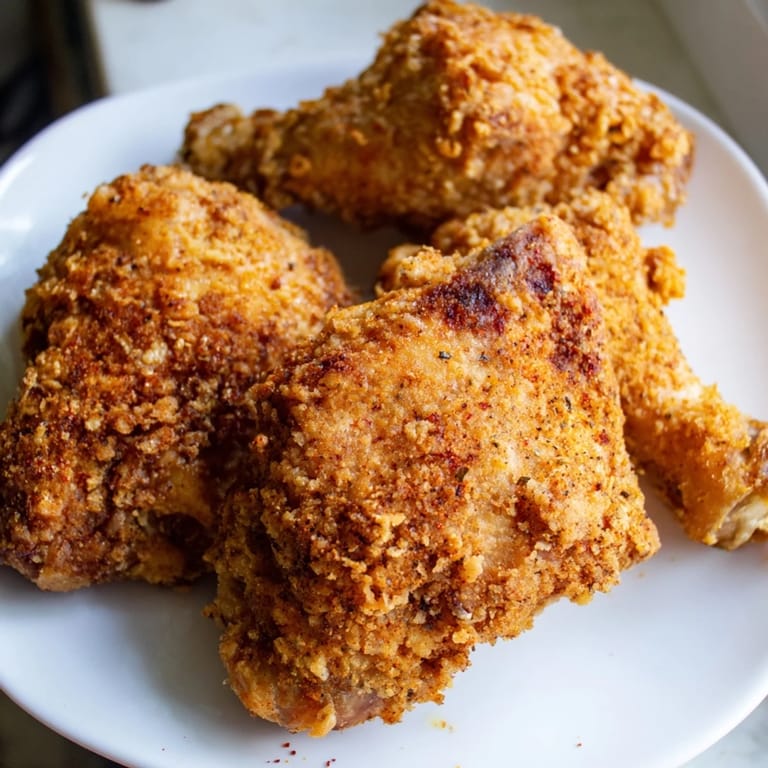
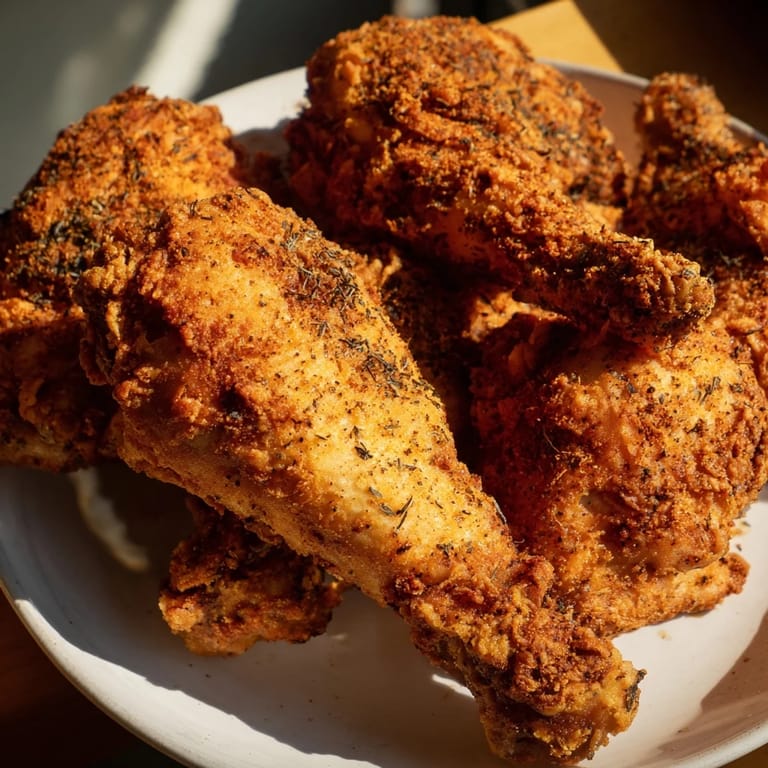
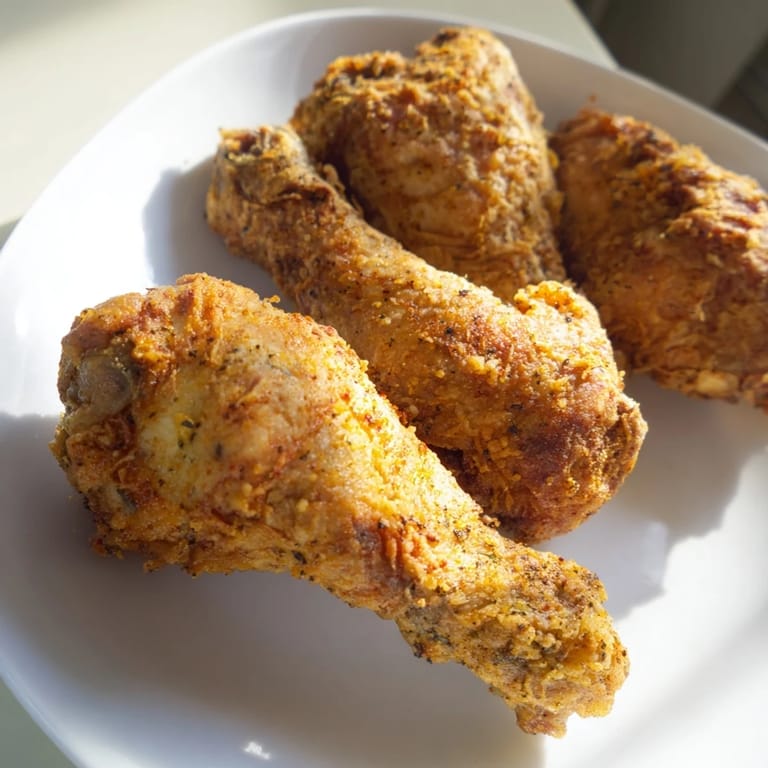
Save My first attempt at replicating KFC's signature fried chicken happened on a rainy Saturday when my mom offhandedly mentioned she'd been craving it but the nearest location was forty minutes away. I spent the afternoon hunting through food blogs and spice combinations, determined to crack their formula. The moment that golden, crispy chicken emerged from the hot oil—shattering between my teeth with that perfect salty crunch—I knew I'd stumbled onto something worth perfecting. That single batch led to years of tweaks, failed experiments, and eventually this spice blend that tastes so close to the original, my family now prefers my version.
I served this to my partner's parents at a casual Sunday dinner, and watching his dad's face when he took that first bite was worth every minute spent fine-tuning the spice ratios. He actually put his fork down and said, "You didn't—no, you actually made this yourself?" That moment, standing in my kitchen with homemade fried chicken drawing genuine surprise and approval, crystallized why I love cooking: the ability to create something that tastes like a cherished memory.
Ingredients
- Chicken (8 pieces, skin-on, bone-in): The skin crisps beautifully and bone-in pieces stay juicier, but boneless thighs work if you prefer less mess.
- Buttermilk (250 ml): This is non-negotiable—it tenderizes the meat while the acidity helps the coating cling, creating that signature crackling texture.
- All-purpose flour (200 g): Plain flour is your base; the spices do the flavor heavy lifting.
- Paprika (2 tsp): Adds warmth and color without overpowering the other spices.
- Garlic powder, onion powder (1 tsp each): These create that savory backbone that makes people ask what your secret is.
- Dried thyme, basil, oregano (1 tsp each): The herb trinity that whispers nostalgia and comfort.
- Celery salt, white pepper, black pepper, mustard powder, ginger, cayenne, sage (1/2 tsp each): Each one adds complexity—this isn't a simple salt-and-pepper situation.
- Vegetable oil (1 liter): Use neutral oil that can handle high heat; vegetable or peanut oil works best.
Tired of Takeout? 🥡
Get 10 meals you can make faster than delivery arrives. Seriously.
One email. No spam. Unsubscribe anytime.
Instructions
- Prepare the buttermilk marinade:
- Whisk together buttermilk, salt, and black pepper in a large bowl. Submerge your chicken pieces, coating them thoroughly, then cover and refrigerate for at least an hour—overnight if you have the patience, as it lets the seasoning and tenderizing work their magic.
- Build your signature spice blend:
- In a separate bowl, whisk together all the flour and spices, making sure there are no clumps hiding in the corners. This step matters because uneven spice distribution leads to some pieces tasting bland.
- Coat the chicken with confidence:
- Remove each piece from the buttermilk, shake off excess gently (you want a light drip, not a pool), then press it firmly into the spiced flour. The pressure helps the coating adhere. Once coated, set the pieces on a wire rack and let them sit for 10 minutes—this is when the flour seals and crisps up beautifully.
- Heat your oil to precision:
- Use a thermometer and bring your oil to exactly 170°C (340°F). Too cool and the coating absorbs oil and becomes greasy; too hot and the outside burns before the inside cooks.
- Fry in manageable batches:
- Working with about three to four pieces at a time, gently lower them into the oil. You'll hear an immediate sizzle—that's the sound of magic starting. Turn the pieces occasionally so they brown evenly, aiming for 12–15 minutes total until they're golden and the internal temperature hits 75°C (165°F).
- Finish with restraint:
- Drain your chicken on a wire rack, which keeps the bottom from steaming and losing its crispness. Let it rest for five minutes before eating so the meat stays juicy.
 Save
Save The most surprising moment came when my teenage nephew, a self-proclaimed fast-food connoisseur, declared this better than the chain version. Suddenly this wasn't just a recipe anymore—it was proof that homemade food, made with intention and a little bit of obsession, genuinely surpasses shortcuts.
The Secret Behind the Spice Blend
What makes this blend work is the balance between savory spices (garlic, onion, celery salt) and warm aromatics (thyme, oregano, sage) without letting any single flavor dominate. The ginger and mustard powder add subtle complexity that makes people pause mid-bite and wonder what they're tasting. Cayenne provides gentle heat that builds quietly rather than screaming in your mouth. After years of tweaking, I learned that the magic happens when no single spice overwhelms—each one plays its part like musicians in an orchestra.
Common Mistakes (and How to Dodge Them)
Early attempts taught me harsh lessons about impatience and oversized batches. Overcrowding the fryer drops the oil temperature dangerously low, causing the chicken to absorb grease instead of crisping. Skipping the marinade time might save hours, but the meat won't be tender or flavorful enough to justify the shortcut. And rushing the coating—not pressing the flour on firmly enough—results in pieces that shed their coating mid-fry. Respect the process and it rewards you with chicken that tastes like someone really cared.
Serving Suggestions and Variations
I've served this chicken with creamy coleslaw and buttered biscuits to recreate the full fast-food experience, but it also shines with simple sides like roasted vegetables or a fresh salad. For a lighter approach, the same spice blend works beautifully in an air fryer, though the crust won't be quite as shattering. Some nights I crank up the cayenne to five teaspoons for more heat; other times I dial it back to zero for guests who prefer milder flavors. This blend is forgiving enough to adapt while staying recognizably itself.
- For meal prep, fry the chicken ahead and reheat it briefly in a 180°C oven to restore crispness.
- Double-dip technique creates an extra-thick crust that's worth the extra effort for special occasions.
- Make a larger batch of the spice blend and store it in an airtight container for future frying adventures.
 Save
Save This recipe isn't complicated, but it rewards attention and respect for the fundamentals. Once you've nailed it, you've earned yourself a lifelong chicken hack that tastes like comfort and smells like victory.
Recipe FAQs
- → How long should the chicken marinate?
Marinate the chicken for at least 1 hour, though overnight marination intensifies the flavor and tenderness.
- → What oil temperature is ideal for frying?
Heat the oil to 170°C (340°F) for a perfectly crispy and thoroughly cooked coating.
- → Can I double-dip the chicken for extra crispiness?
Yes, dipping the chicken back into buttermilk and flour a second time enhances the crispiness of the coating.
- → What sides pair well with this crispy chicken?
Classic sides like coleslaw, fries, or biscuits complement the savory, crispy chicken perfectly.
- → Is it possible to make a lighter version of this dish?
Yes, air-frying the coated chicken offers a lighter alternative while maintaining crispiness.