 Save
Save The first time I made laksa, I was standing in a cramped Malaysian night market stall, watching the cook move with such ease through this elaborate dance of spices and steam. Years later, I recreated that exact moment in my own kitchen—the way the lemongrass hits the oil first, how the coconut milk swirls into that deep red paste like silk settling into water. What struck me most wasn't perfecting the technique; it was how a single bowl could transport me back to that humid evening, to the sound of sizzling woks and the vendor's easy smile.
I made this for my neighbor on a rainy Tuesday when she'd had a terrible week at work. She took one spoonful of the broth and just closed her eyes, and I realized then that some dishes do more than fill your stomach—they remind you that someone cares enough to spend time in the kitchen for you. She's asked for it nearly every month since.
Ingredients
- Vegetable oil: The base for blooming your aromatics; a neutral oil lets the spices take center stage without fighting for flavor.
- Onion, garlic, ginger, and lemongrass: This aromatic foundation is non-negotiable—don't rush the sautéing or you'll lose the delicate floral notes that make laksa sing.
- Laksa paste: Buy a good quality one if you're new to this; homemade is wonderful, but store-bought saves you an hour and delivers consistent results.
- Coconut milk: Full-fat is your friend here; it creates that luxurious body that makes each spoonful feel indulgent.
- Vegetable broth: Use something flavorful you'd actually drink on its own—it's not just filler.
- Soy sauce and sugar: These balance the heat and depth; they're the quiet adjusters that pull everything into harmony.
- Rice noodles: Thick or vermicelli both work beautifully; the key is not overcooking them before they hit the bowl.
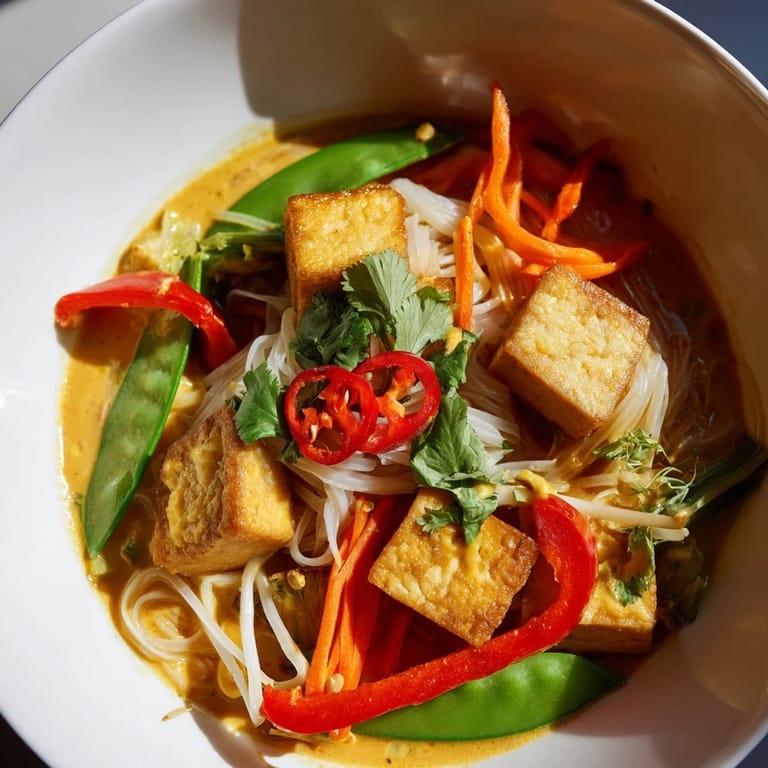
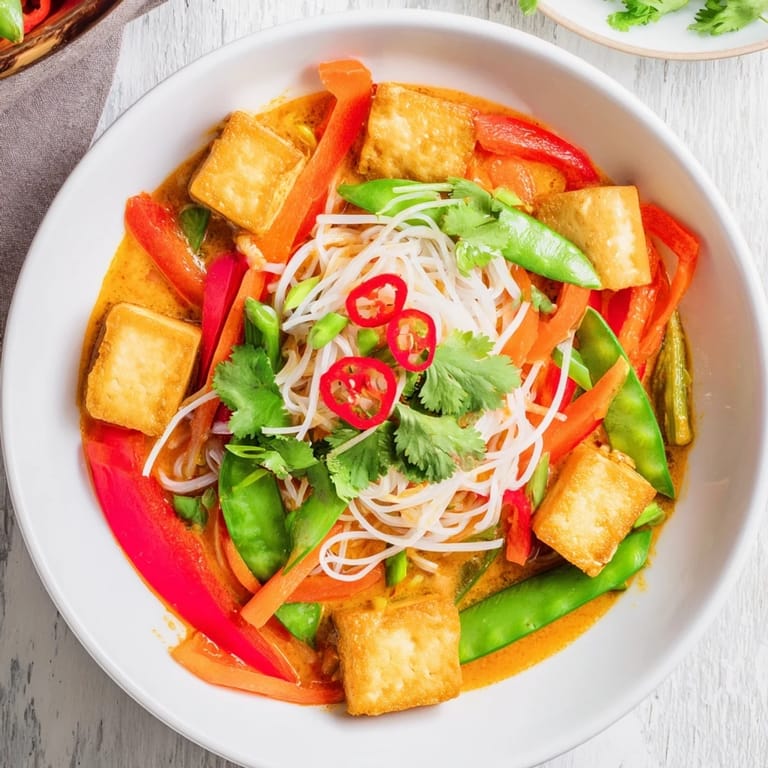
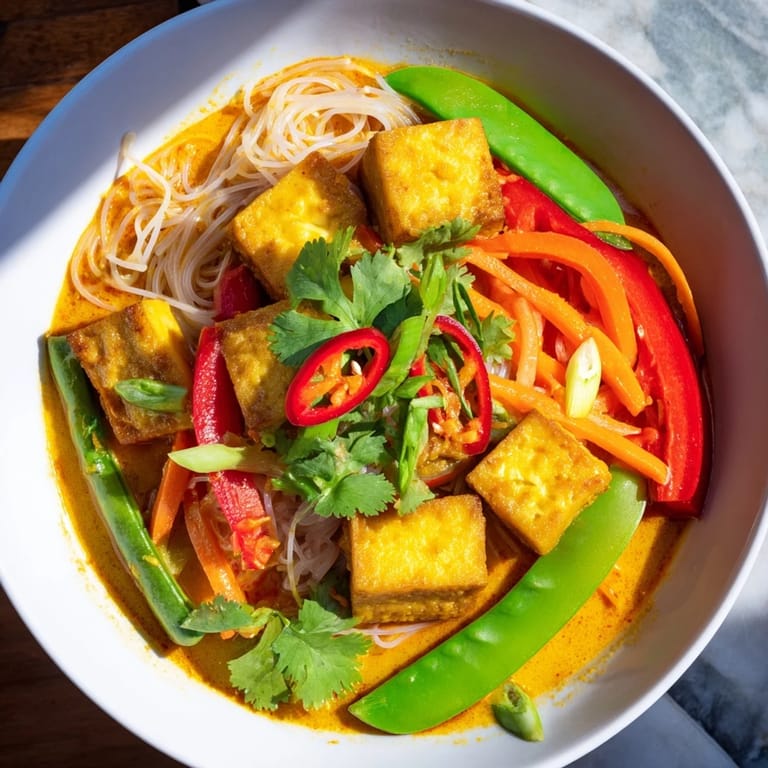
- Tofu: Firm tofu holds its shape and develops a golden crust that adds textural contrast to the soft, slippery noodles.
- Fresh vegetables: Bean sprouts, carrots, bell pepper, and snow peas each bring their own crunch and color; don't skip variety here.
- Cilantro, lime, and chili: These final garnishes aren't decoration—they're the brightness that prevents the dish from feeling heavy.
Tired of Takeout? 🥡
Get 10 meals you can make faster than delivery arrives. Seriously.
One email. No spam. Unsubscribe anytime.
Instructions
- Bloom your aromatics:
- Heat oil in a large pot, then add the onion, garlic, ginger, and lemongrass. You'll know it's right when the kitchen fills with that grassy, slightly sweet smell and the onions turn translucent—this takes about 3 to 4 minutes of patient stirring.
- Awaken the paste:
- Stir in the laksa paste and let it cook for 2 minutes, breaking it apart and letting it coat every aromatics. The paste will deepen in color and smell almost floral.
- Build the broth:
- Pour in the coconut milk and vegetable broth slowly, stirring as you go so everything combines smoothly without lumps. Bring it to a gentle simmer and let it bubble softly for 10 minutes—this is when the flavors truly get to know each other.
- Season with intention:
- Add soy sauce, sugar, and salt to taste. Taste it now; it should be balanced—creamy but not flat, spicy but not one-note, slightly sweet but not dessert-like.
- Prepare your noodles and tofu:
- While the broth simmers, cook or soak your rice noodles according to package directions and drain them well. In a separate skillet, pan-fry the tofu cubes until they're golden and crispy on the outside, which adds textural contrast.
- Add the vegetables:
- Slip the carrots, bell pepper, and snow peas into the simmering broth for the last 3 to 4 minutes—they should be tender but still have a slight snap when you bite them.
- Assemble and serve:
- Divide noodles into bowls, ladle the steaming broth and vegetables over them, and top with fried tofu, bean sprouts, spring onions, cilantro, and chili slices. Serve with lime wedges so each person can brighten their bowl exactly as they like it.
 Save
Save There's a moment near the end of cooking when you lean over the pot and the steam hits your face—that's when you know it's working. My daughter came into the kitchen during that moment once and said it smelled like a place she'd never been but somehow remembered. That's laksa at its best: a bridge between here and somewhere magical.
Making Laksa Your Own
The beauty of this recipe is how it welcomes adaptation. I've made it with mushrooms when tofu felt too plain that day, added baby bok choy when I wanted something earthier, and once threw in snap peas from my garden at the last minute. None of these felt like I was fixing the recipe—they felt like I was having a conversation with it. The core—the broth, the balance, the technique—stays strong enough to handle whatever vegetables you have on hand.
The Texture Philosophy
What separates a forgettable laksa from one you crave is contrast. The soft noodles need something crispy (that golden tofu), the warm broth needs something fresh (cilantro and lime), and the smooth curry needs vegetables that still have a gentle resistance when you bite them. I used to overcook everything, thinking tenderness was the goal—now I understand that every element should have its own voice, and they all sound better together.
Timing and Service
Laksa is one of those dishes that rewards you for staying present while you cook. There are no long, hands-off phases where you can disappear to answer emails; instead, you're tending to things, tasting, adjusting, and building layers of flavor as you go. On the day I cooked this for my neighbor, I realized that the dish itself was teaching me to slow down—and maybe that's why she felt so cared for when she ate it.
- Assemble each bowl to order so the noodles stay warm and the vegetables maintain their crunch.
- Set out lime wedges and chili slices so guests can customize heat and brightness to their preference.
- Serve immediately after ladling; every minute counts when you're after that perfect temperature.
 Save
Save Laksa isn't just a recipe—it's an invitation to sit with someone, to share something warm and complex and alive. Make it, taste it, and let it remind you why you cook in the first place.
Recipe FAQs
- → What makes the broth flavorful in this dish?
The broth gains richness from coconut milk, laksa paste, and a blend of aromatics like lemongrass, garlic, and ginger, creating a fragrant and spicy base.
- → Can I substitute the tofu with another ingredient?
Firm tofu is recommended for its texture, but you can replace it with tempeh or cooked chicken for variation.
- → What type of noodles work best here?
Rice noodles, either thick or vermicelli, work well as they absorb the flavorful broth while maintaining a pleasant bite.
- → How can the spice level be adjusted?
Control spice by varying the amount of laksa paste and adding or omitting red chili slices according to taste preferences.
- → Are there any common additions to enhance this dish?
Mushrooms, baby corn, or bok choy can be added for extra texture; a squeeze of lime enhances the freshness at serving.