 Save
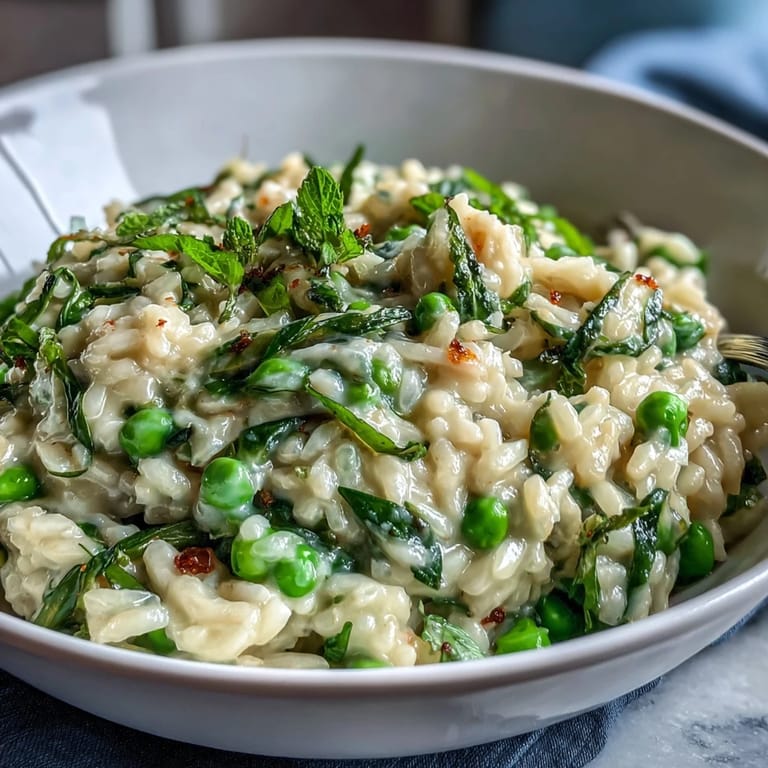
Save There's something about the first warm day of spring that makes you want to cook with green things. I was standing at the farmers market, staring at a pile of the most impossibly bright peas still in their pods, when the vendor mentioned she'd been eating them raw all morning. That's when it clicked—why not build an entire dish around that moment of sweetness? The result was this risotto, which tastes like the exact feeling of sitting outside without a jacket for the first time in months.
I made this for my sister last spring when she was going through one of those phases where she was being careful about what she ate, and I wanted to make something that didn't feel like a compromise. We sat on the back porch with bowls of this, and she ate it in that focused way people do when they're actually enjoying something, not just being polite. She asked for the recipe before she even finished, which is how I knew it was a keeper.
Ingredients
- Fresh or frozen spring peas (1 cup): The sweetness here is non-negotiable; if you find fresh ones, use them, but frozen peas are honestly just as good and sometimes better because they're picked at peak ripeness.
- Small onion, finely chopped: The base of everything flavorful—cook it low and slow so it becomes soft and slightly sweet, not sharp.
- Garlic (2 cloves, minced): A minute is all it needs; any longer and you'll smell the difference in a bad way.
- Fresh mint leaves (2 tablespoons, chopped): Tear these by hand instead of chopping if you have time; it keeps the oils intact and the flavor brighter.
- Lemon zest (from 1 lemon, optional but really not): This is the secret that makes people ask what you did differently.
- Arborio rice (1 1/2 cups): The short, starchy grains are what make risotto creamy; don't try to substitute long-grain rice here.
- Unsalted butter (3 tablespoons total, divided): One portion goes in at the beginning, the rest goes in at the end to make it silky.
- Parmesan cheese (1/2 cup, grated): Grate it fresh if you can; pre-grated has anti-caking agents that keep it from melting quite as smoothly.
- Heavy cream (1/4 cup, optional): This is for when you want it to feel extra luxurious, but honestly it's not required.
- Vegetable broth (4 cups, kept warm): Keep it simmering the whole time; cold broth will shock the rice and slow down the cooking.
- Dry white wine (1/2 cup): Something you'd actually drink; the cheaper stuff can taste a little off in the finished dish.
- Extra-virgin olive oil (2 tablespoons): This goes in at the very beginning with the butter.
- Salt and freshly ground black pepper: Taste as you go because the Parmesan adds salt too.
Tired of Takeout? 🥡
Get 10 meals you can make faster than delivery arrives. Seriously.
One email. No spam. Unsubscribe anytime.
Instructions
- Get your broth warm and keep it that way:
- Pour your vegetable broth into a medium saucepan and let it come to a gentle simmer over low heat. This step matters more than you'd think because the warm liquid helps the rice cook evenly and release its starch, which is what makes the whole thing creamy.
- Build your flavor base:
- In a large, heavy-bottomed skillet over medium heat, warm the olive oil and 2 tablespoons of butter together until they're foaming slightly. Add your finely chopped onion and let it cook undisturbed for about 4 minutes until it softens and becomes translucent at the edges.
- Wake up the garlic:
- Add your minced garlic and stir it around for exactly 1 minute; you'll know it's ready when the kitchen smells almost floral and sweet. Any longer and it starts to turn bitter.
- Toast the rice grains:
- Stir in the Arborio rice and keep stirring constantly for about 2 minutes, making sure every grain gets coated in the butter and oil. You're looking for the edges of the rice to turn slightly translucent while the center stays opaque and chalky-looking.
- Add the wine and let it disappear:
- Pour in your white wine and stir frequently for about 2 minutes until it's mostly absorbed and the smell of alcohol has mellowed out. The wine adds acidity and helps the rice cook more evenly.
- The patient part—add the broth slowly:
- Using a ladle, add one ladleful of warm broth and stir frequently, letting each addition absorb before adding the next. This takes about 18 to 20 minutes and requires a bit of attention, but this is where the magic happens and the rice becomes creamy.
- Add the peas near the end:
- When you have about 5 minutes of cooking time left, stir in your peas and let them heat through gently. If you add them too early, they can get mushy and lose their bright color.
- Finish it like you mean it:
- Remove the pan from heat and stir in the remaining tablespoon of butter, the grated Parmesan, the heavy cream if you're using it, your chopped mint, and the lemon zest. The residual heat will melt everything into something silky and cohesive.
- Taste and season:
- Add salt and pepper to taste, remembering that the Parmesan has already contributed quite a bit of salt. Let the risotto rest for 2 minutes off the heat before serving.
 Save
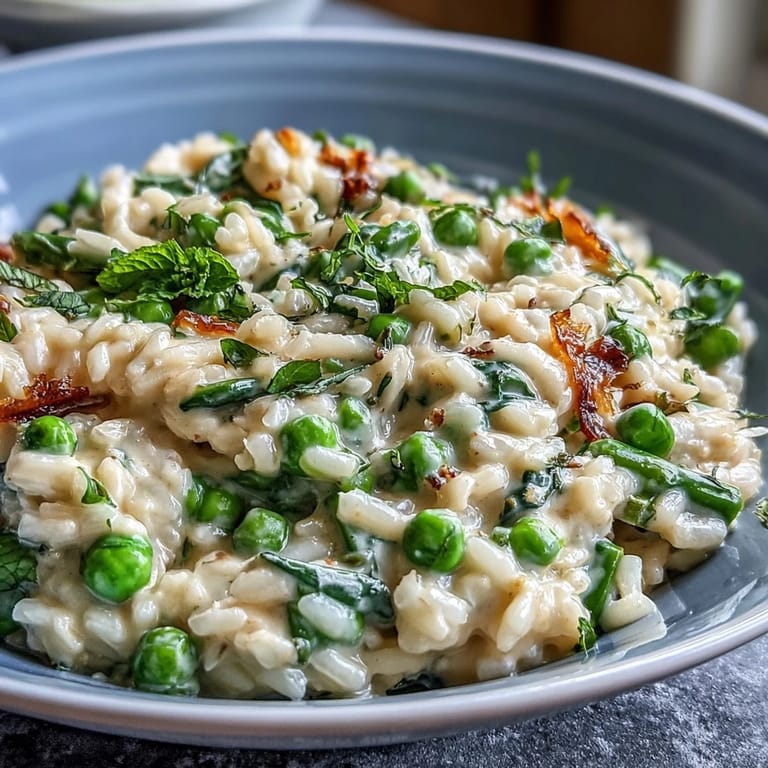
Save Once you make this risotto, you'll understand why people get so particular about their cooking methods. It's not really about the ingredients being fancy or rare; it's about the attention, the constant small adjustments, the way the dish responds when you're actually present while it cooks. That kind of care translates to flavor in a way that feels almost impossible to describe.
The Timing of Spring Ingredients
Spring peas have this incredibly narrow window where they're perfect—sweet and tender and almost floral. If you can't find fresh ones, frozen are genuinely fine and sometimes preferable because they're picked and frozen at their peak. The mint matters too; if you're making this in mid-spring when fresh mint is just starting to show up in markets or yards, use it generously. By summer the mint gets stronger and more aggressive, which changes the whole character of the dish.
What Makes a Risotto Actually Creamy
The texture comes from constant stirring, which breaks down the rice and releases its natural starch into the broth. This isn't the same as using cream to make something thick; it's a fundamental change in how the rice behaves. The moment you understand this, you stop being afraid of making risotto because you realize it's not temperamental—it's just honest cooking that rewards attention.
Variations and Flexibility
This base is flexible enough to change with whatever looks good at the market. Some days I'll add baby spinach in the last minute, other times I'll top it with toasted pine nuts for a little crunch. I've even made it in late spring when peas are gone and used tender asparagus cut into bite-sized pieces instead, and nobody noticed the swap because the mint and lemon carry the same brightness. Here's what you should remember about adjusting this recipe:
- Keep the rice quantity and broth ratio the same; that's non-negotiable.
- Any tender green vegetable works as long as you add it late enough that it doesn't overcook.
- Fresh herbs are your friend here, so don't be shy about adding basil, tarragon, or even a tiny bit of fresh dill if it calls to you.
 Save
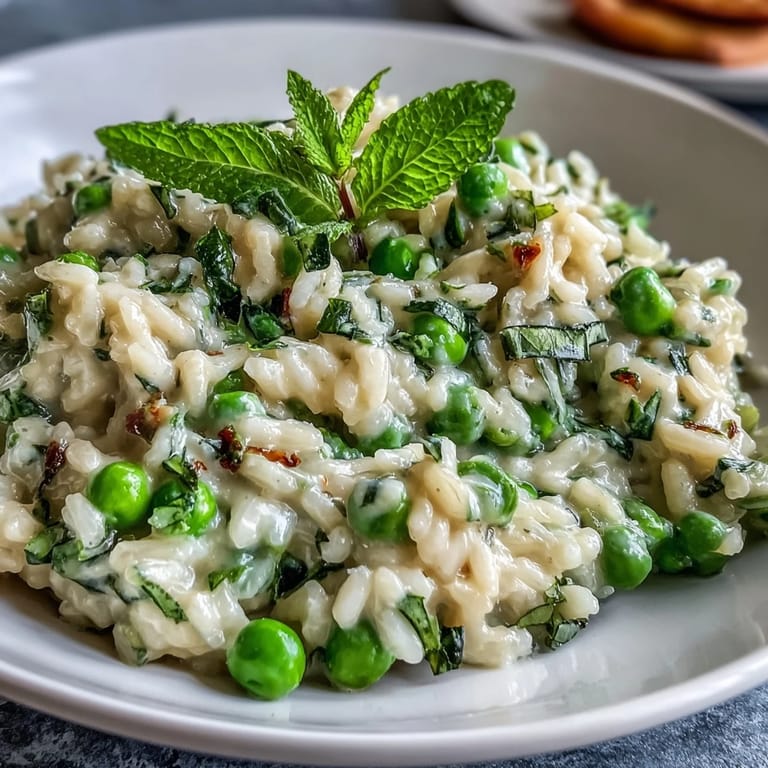
Save This is the kind of meal that makes you feel capable in the kitchen, and that feeling is worth more than the actual dish, though the dish is quite good. Make it for someone you care about or make it for yourself on an evening when you want to slow down and taste spring.
Recipe FAQs
- → How do I achieve a creamy texture in risotto?
Slowly adding warm broth one ladleful at a time while stirring helps release the rice's natural starches, creating a creamy consistency.
- → When should I add the peas to the risotto?
Stir in the peas about 5 minutes before the risotto finishes cooking so they remain tender and retain their vibrant color.
- → Can I substitute the Parmesan cheese?
Yes, alternatives like aged vegan cheese or nutritional yeast can be used for a similar umami flavor if desired.
- → What wine pairs well with this dish?
Light, crisp white wines such as Sauvignon Blanc or Pinot Grigio complement the fresh flavors and richness well.
- → Is the lemon zest necessary?
Optional but recommended, lemon zest adds a bright, fresh note that balances the creamy elements of the dish.