 Save
Save My sister once told me she judged people by their grilled cheese technique, and I laughed until I realized I do the same thing. There's something oddly revealing about how someone approaches melted cheese between bread. This three-cheese version came about on a rainy Tuesday when I had leftover cheese from a charcuterie board and no patience for anything complicated. The combination of mozzarella's stretch, cheddar's sharpness, and provolone's smoothness turned out to be exactly what that gray afternoon needed.
I made this for my nephew during a sleepover, and he declared it better than the fancy grilled cheese food truck downtown. Kids don't lie about cheese. He watched me press the sandwich gently with the spatula and asked why I didn't smash it flat like his dad does. I explained that you want the cheese to melt without squeezing it all out the sides, and he nodded like I'd shared a state secret. Now every time he visits, he requests the three-cheese sandwich and insists on helping with the butter.
Ingredients
- Country-style or sourdough bread: The slight tang and sturdy texture hold up to all that cheese without getting soggy, and the crust crisps beautifully in butter.
- Shredded mozzarella cheese: This is your stretch factor, the cheese that pulls apart in those satisfying strings when you bite into the sandwich.
- Shredded sharp cheddar cheese: It brings the flavor punch and a little sharpness that keeps the sandwich from tasting one-note or too mild.
- Shredded provolone cheese: Provolone melts into a smooth, creamy base that ties the other two cheeses together without competing.
- Unsalted butter, softened: Softened butter spreads evenly and creates that golden, crispy exterior without burning or leaving raw spots.
- Dijon mustard: Just a thin swipe adds a subtle tangy depth that makes people ask what your secret is.
- Black pepper: A small pinch wakes up the richness and adds a hint of warmth without making it spicy.
Tired of Takeout? 🥡
Get 10 meals you can make faster than delivery arrives. Seriously.
One email. No spam. Unsubscribe anytime.
Instructions
- Prep the bread:
- Lay out your bread slices and spread a thin layer of Dijon on two slices if you want that extra flavor kick. This step takes ten seconds and makes a noticeable difference.
- Mix the cheeses:
- Combine all three cheeses in a small bowl so they distribute evenly across the sandwich. This prevents one bite being all mozzarella and the next all cheddar.
- Assemble the sandwiches:
- Divide the cheese mixture between two bread slices, sprinkle with black pepper if using, then top with the remaining bread. Press down lightly so everything holds together.
- Butter the outsides:
- Spread a thin, even layer of softened butter on both the top and bottom of each sandwich. Don't skip the edges or they'll stay pale and soft.
- Heat the skillet:
- Warm a large nonstick skillet or griddle over medium-low heat. Too high and the bread burns before the cheese melts.
- Cook the sandwiches:
- Place the sandwiches in the skillet and cook for 3 to 4 minutes per side, pressing gently with a spatula. You want deep golden brown and fully melted cheese, not just warm shreds.
- Rest and serve:
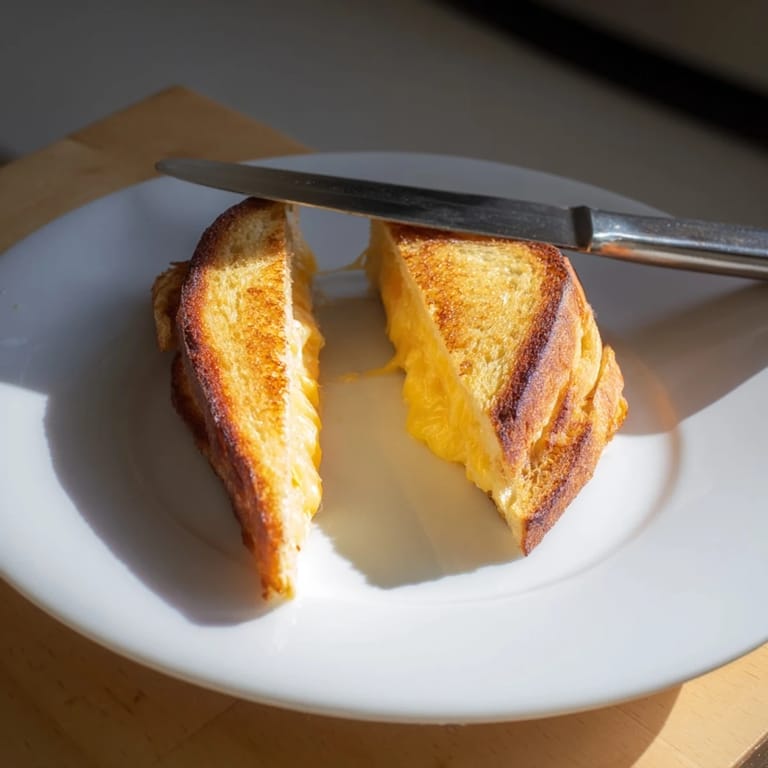
- Remove from the pan and let rest for one minute so the cheese sets slightly and doesn't all spill out when you cut. Slice and serve immediately while it's still steaming.
 Save
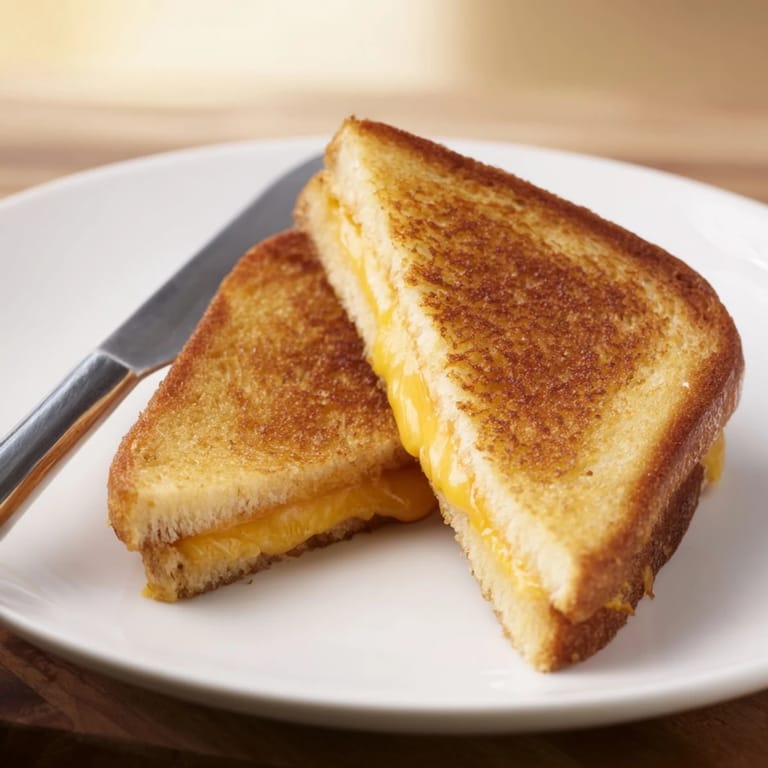
Save The first time I served this at a casual dinner, my friend picked up her half and pulled it apart slowly just to watch the cheese stretch. She didn't say anything, just smiled and took a bite. That moment of silent appreciation felt better than any compliment. Sometimes the best cooking happens when you're not trying to impress anyone, just making something simple taste exactly right.
Choosing Your Bread
Sourdough is my go-to because the tanginess plays well with the richness of three cheeses, and the texture holds up without getting floppy. Country-style bread works beautifully too, especially if it has a thicker crust that crisps up under butter. Avoid anything too soft or pre-sliced sandwich bread unless you're fine with a more delicate, less sturdy result. The bread is half the sandwich, so choose something with enough character to stand up to all that melted cheese.
Making It Your Own
Once you've made the basic version a few times, start experimenting with add-ins that don't overpower the cheese. Thin slices of tomato add brightness and a little acidity that cuts the richness. Caramelized onions bring sweetness and depth without making the sandwich soggy if you let them cool first. A few fresh basil leaves tucked inside before grilling add a surprising burst of flavor that makes it feel a little fancy without any extra effort.
Serving and Pairing
This sandwich is perfect on its own, but it becomes a full meal when you serve it with a bowl of tomato soup for dipping. The acidity of the soup balances the richness of the cheese in a way that feels both nostalgic and completely satisfying. A simple side salad with a sharp vinaigrette also works well if you want something lighter alongside. If you're feeding kids, cut the sandwiches into strips for easier handling and guaranteed smiles.
- Let the sandwich rest for a full minute after cooking so the cheese firms up slightly and doesn't run everywhere when you cut it.
- Use a sharp knife and cut in one smooth motion instead of sawing back and forth to keep the layers intact.
- Serve immediately while the cheese is still gooey and the crust is at its crispiest for the best texture contrast.
 Save
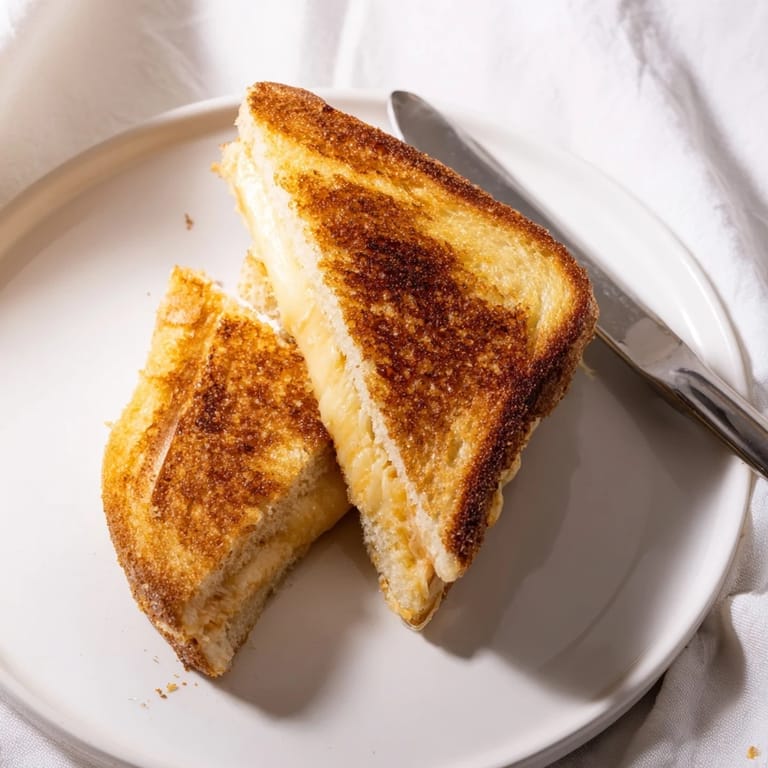
Save There's a reason grilled cheese never goes out of style, and this three-cheese version reminds me why every single time. It's simple, reliable, and exactly what you want when you need something warm and satisfying without any fuss.
Recipe FAQs
- → What temperature should I use to cook the sandwich?
Cook over medium-low heat to ensure the cheese melts thoroughly without burning the bread. This gentle heat allows the exterior to crisp evenly while the inside becomes creamy and gooey.
- → Can I prepare this sandwich ahead of time?
You can assemble the sandwich up to 2 hours before cooking. However, butter it just before placing it in the skillet to prevent the bread from becoming soggy.
- → What type of bread works best?
Country-style or sourdough bread provides excellent structure and flavor. These varieties toast beautifully and hold up well to the melted cheese without falling apart.
- → How do I prevent the cheese from leaking out?
Distribute the cheese mixture evenly between the bread slices and leave a small border around the edges. Press gently with a spatula while cooking rather than pressing hard, which can squeeze out the cheese.
- → Can I use pre-shredded cheese?
Yes, pre-shredded cheese works well. However, freshly shredded cheese melts more smoothly without the anti-caking agents found in pre-packaged varieties, resulting in a creamier texture.
- → What's the best way to achieve a crispy crust?
Spread butter evenly and generously on the exterior of both bread slices. Medium-low heat allows the butter to brown slowly, creating a golden, crispy crust while giving the cheese adequate time to melt throughout.