 Save
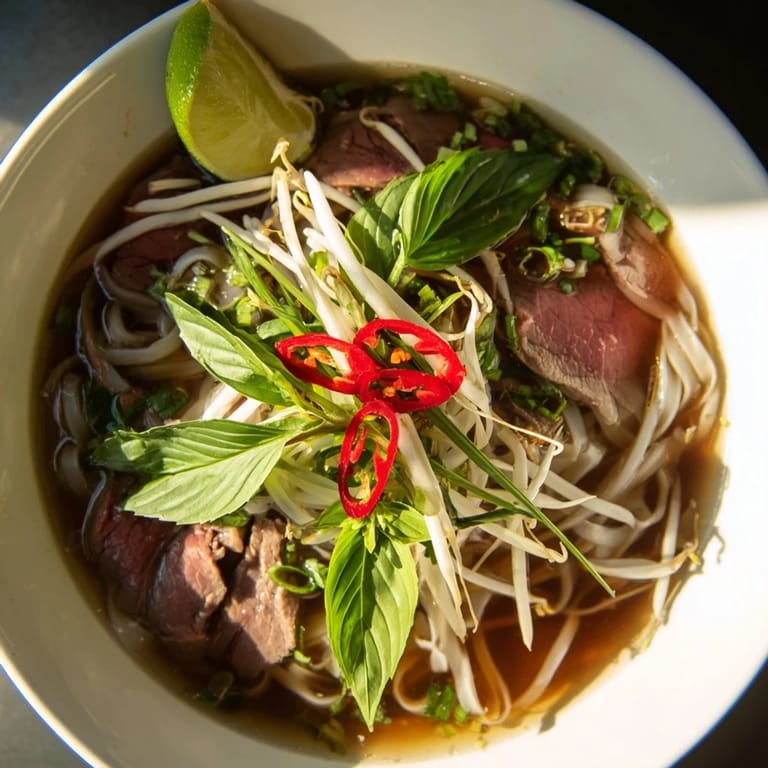
Save The first time I tasted authentic pho was in a cramped Saigon kitchen where an elderly woman worked her magic in a space barely bigger than a closet, and I realized the secret wasn't in fancy equipment but in patience and the right balance of spices. Years later, when life got busier, I wanted to capture that same soul-warming experience without spending hours at the stove, and that's when I discovered you could make genuinely delicious pho in under 40 minutes. This express version doesn't cut corners on flavor—it just respects your time.
I made this for my neighbor one Wednesday evening when she mentioned missing Vietnamese food from her childhood, and watching her close her eyes after that first spoonful reminded me that food is really just time and attention translated into a bowl. She's been asking me to make it ever since.
Ingredients
- Low-sodium beef or chicken broth (8 cups): This is your base, so choose something you'd actually drink—it makes all the difference in the final flavor.
- Onion (1 small, halved) and fresh ginger (2-inch piece, sliced): These two create the aromatics that make pho smell like pho; don't skip them even though the recipe is quick.
- Star anise (3 whole), cinnamon stick (1), and whole cloves (3): These spices are non-negotiable—they're what give pho its distinctive warm, slightly sweet character.
- Fish sauce (1 tablespoon) and soy sauce (1 tablespoon): Fish sauce carries umami that nothing else can replace; don't be intimidated by the smell.
- Sugar (1 teaspoon) and salt to taste: A pinch of sugar balances the savory and aromatic notes, making everything taste more like itself.
- Dried or fresh flat rice noodles (300 g): Fresh noodles cook in seconds and taste silky; dried noodles work too but need closer attention to the package timing.
- Beef sirloin or eye round (300 g, thinly sliced): Slice it as thin as you can manage—the thinner the beef, the more it benefits from the hot broth's instant cooking.
- Bean sprouts (1 cup), Thai basil, cilantro, scallions, red chili, and lime: These fresh garnishes aren't just decoration; they're where the brightness and personality come from.
Tired of Takeout? 🥡
Get 10 meals you can make faster than delivery arrives. Seriously.
One email. No spam. Unsubscribe anytime.
Instructions
- Build your fragrant base:
- Combine the broth with halved onion, ginger, star anise, cinnamon, and cloves in a large pot and bring everything to a boil. Once it hits that rolling boil, drop the heat and let it simmer uncovered for 20 minutes—you'll notice the kitchen filling with this incredible warm, spiced aroma that's honestly half the experience.
- Season and clarify:
- Stir in the fish sauce, soy sauce, sugar, and salt, then simmer for 5 more minutes to let the flavors meld. Strain out all the solids through a fine-mesh strainer, pressing gently on the aromatics to release every bit of flavor, then return the clear, golden broth to the pot and keep it at a gentle simmer.
- Cook your noodles:
- While the broth simmers, cook the rice noodles according to package instructions—taste one at the 3-minute mark because they go from perfect to mushy faster than you'd expect. Drain them well and divide among four large, wide bowls.
- Arrange the beef:
- Lay thin slices of raw beef directly over the warm noodles in each bowl—it might look sparse, but trust the next step. If you're using chicken, you can add it at the same time.
- The magic moment:
- Ladle the steaming hot broth directly over the beef and noodles, watching as the heat gently cooks the meat in real time. This is the whole reason for the thin slicing—you'll see the color change from red to cooked in about 30 seconds.
- Finish with fresh elements:
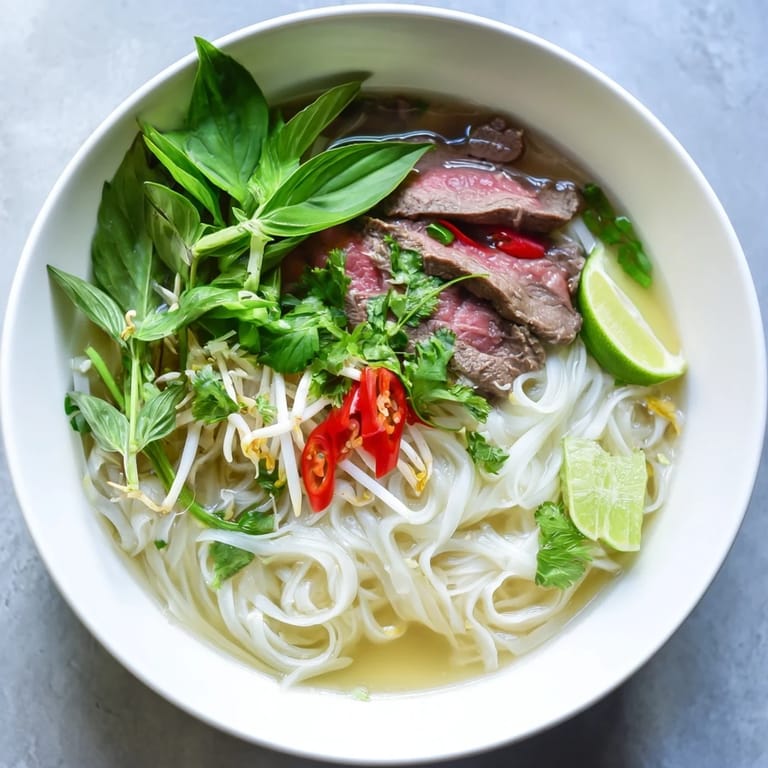
- Top each bowl generously with bean sprouts, basil, cilantro, sliced scallions, and chili if you want heat. Set out lime wedges, hoisin sauce, and sriracha so everyone can adjust the bowl to their taste.
 Save
Save There's something deeply satisfying about handing someone a bowl of pho and watching them realize they can make this at home on a Tuesday night instead of waiting for a special occasion. It's comforting food that actually fits into normal life.
Why Fresh Herbs Change Everything
I used to think the herbs were optional until I made pho without them and realized I'd removed about 80% of what makes it interesting. The basil brings sweetness and a slight peppery note, the cilantro adds brightness and a grassy freshness, and the scallions tie everything together with a gentle onion bite. They're not garnish—they're essential players.
The Broth is the Foundation
The entire dish lives or dies by the broth, which is why I always taste it before ladling it into bowls. A good broth should smell complex and inviting, taste balanced between savory and slightly sweet, and make you want another sip on its own. If it tastes flat, a little more salt usually fixes it; if it tastes off, you might need to add another pinch of sugar to balance the spices.
Customization and Flexibility
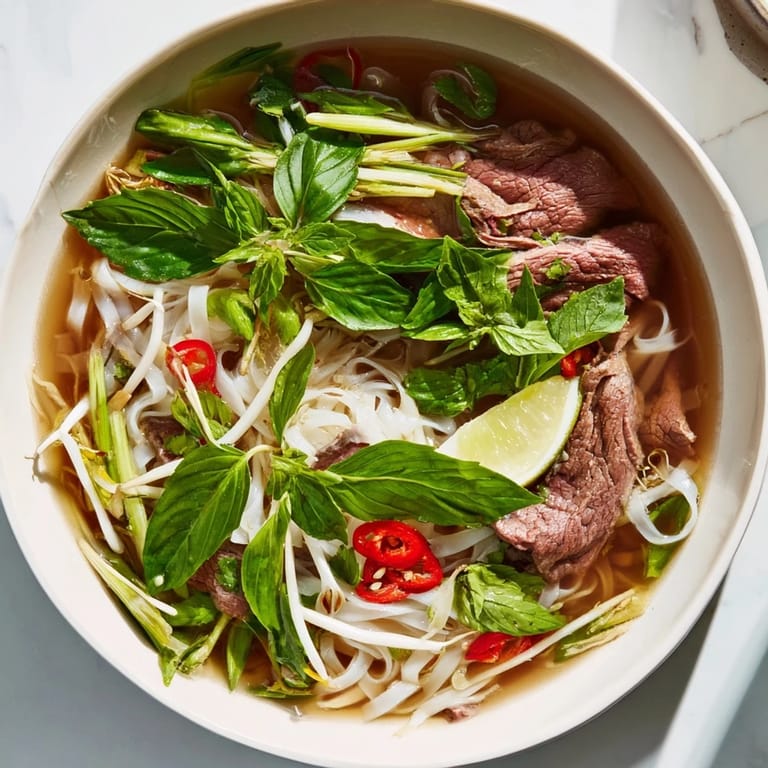
One of the best things about pho is that it's inherently a build-your-own situation—everyone at the table gets to make it exactly how they want it. Some people layer their bowls high with herbs, others barely use them; some go heavy on the sriracha, others skip it entirely. The beauty is that you're building something together, not just eating what someone decided was correct.
- Vegetarians and vegans can use vegetable broth and swap the beef for extra-firm tofu or mushrooms, which soak up all that complex broth flavor.
- If you can't find Thai basil, regular basil works—it's different but still delicious.
- Lime juice squeezed directly into the bowl brightens everything, so don't let anyone skip this step.
 Save
Save This is the kind of recipe that becomes a regular part of your cooking life once you realize how achievable it is. You'll find yourself making it on busy weeknights and impressing people with how much care went into something so quick.
Recipe FAQs
- → How is the broth flavored in this dish?
The broth is infused with aromatic spices such as star anise, cinnamon, cloves, fresh ginger, and onion boiled together to create a light yet flavorful base.
- → What types of meat can be used?
Thinly sliced beef sirloin or eye round is traditional, but chicken breast is also suitable for a lean alternative.
- → How do you cook the noodles properly?
Rice noodles should be prepared according to package instructions, typically soaked or briefly boiled until soft, then drained before serving.
- → What garnishes add freshness and flavor?
Fresh Thai basil, cilantro, scallions, bean sprouts, and optionally sliced red chili contribute vibrant herbs and crunch to each bowl.
- → Can this dish be made vegetarian?
Yes, by substituting vegetable broth for meat broth and using tofu instead of meat, along with adjusting seasonings accordingly.
- → Why add hoisin sauce and Sriracha at serving?
These sauces provide sweet, spicy, and savory notes, allowing each person to customize flavor intensity to their liking.