 Save
Save My grandmother's kitchen always smelled like this soup on cold Sundays, that particular combination of ham hock and beans simmering for hours creating something almost medicinal in its warmth. Years later, I finally asked for her method, expecting some elaborate technique, but found myself delighted by its straightforward simplicity. There's something deeply satisfying about a soup that asks so little of you technically but rewards your patience with so much comfort. This white bean and ham hock soup became my go-to when I wanted to feel looked after, when the weather turned and my bones needed warming from the inside out.
I made this for a group of friends during an unexpected ice storm when we all got stuck at my place, and something magical happened as the hours passed and that soup kept getting better. Everyone gravitated toward the kitchen where the pot was simmering, drawn by the smell and the promise of something substantial. By the time we ladled it into bowls, the conversation had shifted from panicked weather updates to genuine laughter and stories, and the soup became the reason we'd all remember that stranded day fondly instead of with frustration.
Ingredients
- Smoked ham hock (1 large, about 1–1.5 lb): This is your soup's backbone, releasing collagen, marrow, and that irreplaceable smoky depth that no seasoning bottle can replicate; don't skip it or substitute with ham chunks, the bone and skin matter enormously.
- Dried great northern or cannellini beans (1 lb, soaked overnight): Soaking truly matters here because it ensures even cooking and prevents that mealy texture that rushed beans develop.
- Yellow onion, carrots, celery (1 large onion, 2 medium carrots, 2 stalks): This holy trinity creates the aromatic base that makes the broth taste like actual food rather than boiled water with beans.
- Garlic (3 cloves, minced): Add it near the beginning so it mellows into the background rather than staying sharp and overwhelming.
- Bay leaves and thyme (2 bay leaves, 1 tsp dried thyme): These are the herbs that actually belong in this soup, not fancy additions; they anchor the flavor profile in classic Southern territory.
- Smoked paprika (1/2 tsp, optional but encouraged): This deepens the smoke note from the ham hock and adds complexity without making anyone ask what that flavor is.
- Chicken broth (8 cups): Low-sodium is crucial because the ham hock will contribute its own salt, and you want to control the final seasoning rather than fight an already-salty base.
- Fresh parsley (2 tbsp, for garnish): This is more than decoration; the brightness cuts through the richness and reminds your palate that spring exists.
Tired of Takeout? 🥡
Get 10 meals you can make faster than delivery arrives. Seriously.
One email. No spam. Unsubscribe anytime.
Instructions
- Combine everything in one pot:
- In a large Dutch oven or soup pot, layer your soaked beans, ham hock, diced onion, carrots, celery, minced garlic, bay leaves, thyme, black pepper, and smoked paprika together. The beauty here is that nothing needs to be seared or sautéed first; you're building a one-pot meal that trusts time more than technique.
- Add broth and stir:
- Pour in the low-sodium chicken broth and stir everything together until the beans are submerged and the aromatics are evenly distributed. This is the moment where your prep work comes together and looks like actual soup instead of raw ingredients.
- Bring to a boil, then simmer low and slow:
- Crank the heat to high until you see active bubbling, then immediately lower it to a gentle simmer and cover the pot. Those 2 hours of low heat are where the magic happens; the beans soften, the ham hock releases its essence, and everything becomes a cohesive, comforting whole.
- Remove the ham hock and shred the meat:
- After 2 hours, carefully fish out the ham hock (it will be tender and falling apart), let it cool just enough to handle, then shred any meat away from the bone and skin. Return just the shredded meat to the pot, discarding the bone and any tough bits.
- Simmer uncovered to thicken:
- Simmer uncovered for another 30 minutes to let some liquid evaporate and the flavors concentrate further; the beans will continue softening and some will naturally break down, creating a naturally creamy texture. Stir occasionally to prevent sticking and to help break down a few more beans if you like a thicker consistency.
- Season to taste:
- Taste the soup before adding salt because that ham hock has already seasoned it generously; you might only need a pinch or nothing at all, but tasting first saves you from oversalting. This is the moment to adjust for your preference.
- Finish and serve:
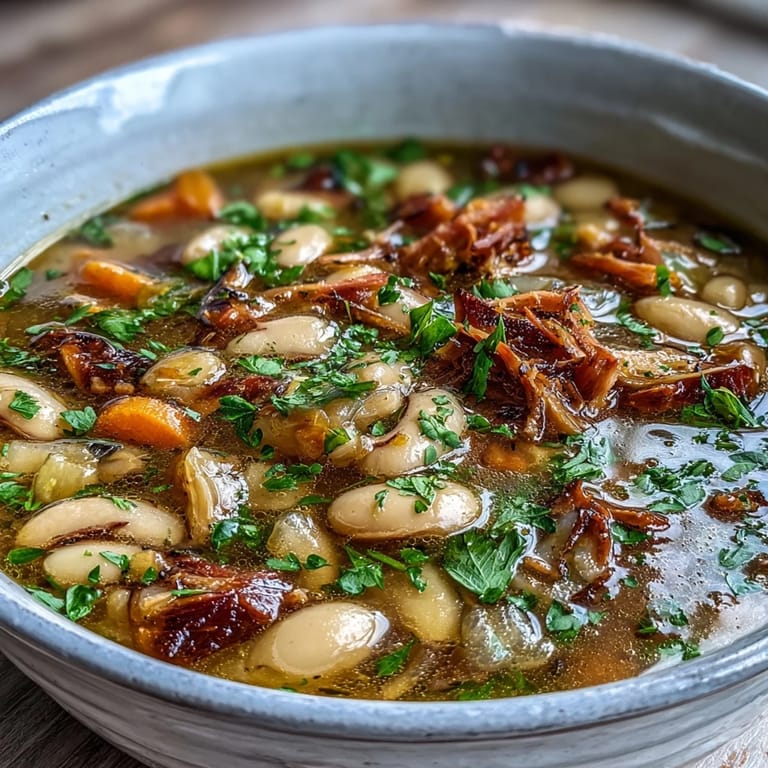
- Remove the bay leaves (they're easy to spot and bitter if bitten), ladle the soup into bowls, and top each serving with a small handful of chopped fresh parsley. The color and freshness completely elevate what could have been a rustic-looking bowl into something you actually want to photograph.
 Save
Save There was a moment last winter when my neighbor brought over his elderly mother who was recovering from surgery and couldn't cook for herself, and I watched her eyes close with relief on the first spoonful of this soup. She didn't say much, just nodded and kept eating, and I realized that comfort food isn't really about flavor alone; it's about being fed by someone who cares. That soup became a gift that made sense without words.
The Secret to Creamy Without Cream
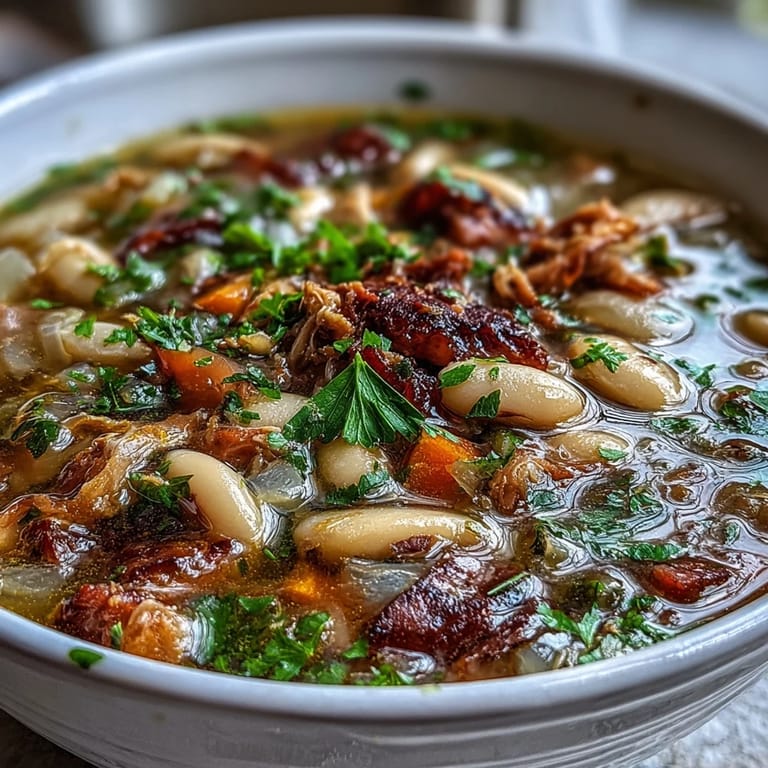
The creaminess people love about this soup comes entirely from the beans themselves, not from any dairy. As the beans soften over those hours, some of them break down naturally, releasing their starches into the broth and creating a silky, thick texture that feels indulgent without being heavy. If you want an even creamier result without adding cream (which would mess with the authentic Southern character of the dish), take a potato masher or the back of a wooden spoon and gently press some beans against the side of the pot during the final 10 minutes of cooking; this releases more starch and creates a soup that clings to your spoon.
Why Soaking the Beans Actually Matters
I made this soup once without soaking the beans because I was impatient, convinced that the long cooking time would make up for it, and ended up with a texture situation I still regret. The beans cooked unevenly, some were mushy while others stayed firm, and the soup felt chaotic rather than composed. Overnight soaking is genuinely non-negotiable here; it allows the beans to absorb water evenly and cook in approximately the same time frame, giving you that uniform, creamy result that makes people ask for the recipe.
What to Serve Alongside and Other Customizations
Cornbread is the obvious traditional partner because its sweetness plays beautifully against the soup's savory depth, and you can make a simple skillet cornbread in about 30 minutes while the soup finishes simmering. Crusty bread works equally well for soaking up every last drop, and some people crumble cornbread directly into their bowls, which is entirely valid and honestly delicious.
- For heat, add a pinch of cayenne or a splash of hot sauce at the table so people can customize their own spice level.
- If you want to add a depth note, a small splash of apple cider vinegar stirred in at the end brightens everything without being obvious.
- Leftovers freeze beautifully for up to 3 months, so make a double batch and future you will be grateful.
 Save
Save This soup is the kind of food that makes you feel capable and generous when you make it, since you can stretch it to feed almost anyone and it only gets better as the hours pass. Once you make it once, you'll find yourself returning to it whenever you need to feed people without fussing.
Recipe FAQs
- → What type of beans work best for this soup?
Great northern or cannellini beans are ideal as they become tender while retaining shape and absorb flavors well.
- → How long should the ham hock be simmered?
Simmer the ham hock for about 2 hours until the meat is tender enough to shred easily.
- → Can I adjust the seasoning to make it spicier?
Yes, adding a pinch of cayenne or a splash of hot sauce can provide a subtle spicy kick.
- → What is the purpose of removing and shredding the ham hock meat?
Shredding the ham hock meat removes bone and skin, allowing the flavorful meat to mix evenly throughout the soup.
- → How can I thicken the soup if it’s too thin?
Mash some of the beans against the pot’s side to release starch, naturally thickening the broth.
- → What garnishes complement this soup?
Fresh chopped parsley brightens the rich flavors and adds a fresh herbal note to each bowl.