 Save
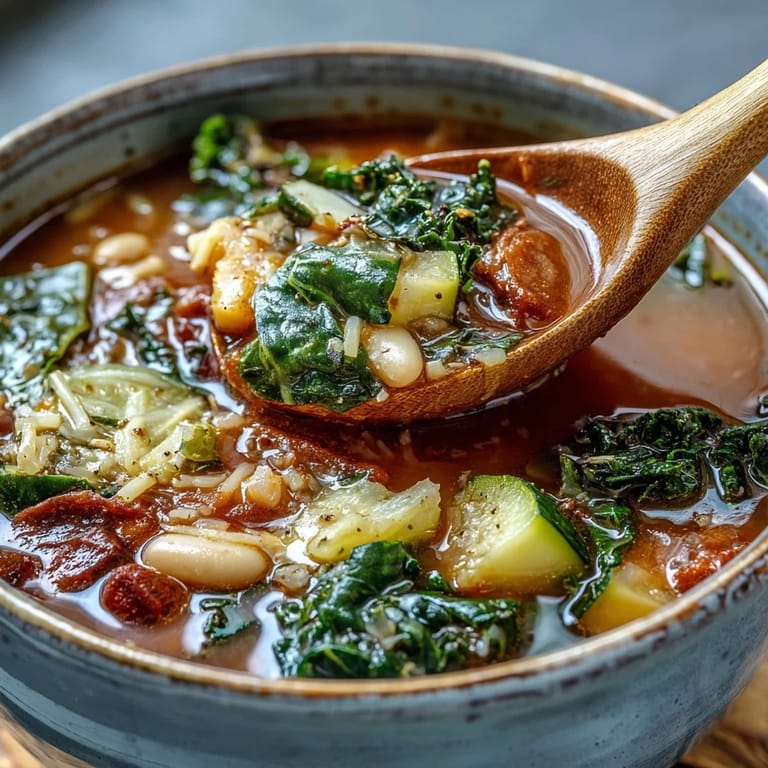
Save There's something about November that makes me crave a soup you can actually sink a spoon into—not the thin broths of summer, but something that sticks to your ribs and makes your kitchen smell like home. My neighbor brought over a pot of minestrone one particularly gray afternoon, and I watched how she let it simmer while we talked by the window, steam fogging the glass. That soup taught me that the best winter meals aren't about fancy technique; they're about layering flavors slowly and letting vegetables tell their own story.
I made this for my partner during the first snow of the season, and he came home to find the whole apartment warm and fragrant with rosemary and thyme. He sat at the kitchen table still wearing his coat, just eating bowl after bowl while I told him about the butternut squash I'd roasted a little too long the day before. By the time he finished, he'd tracked snow across the floor and neither of us cared—that's when you know a meal has done its job.
Ingredients
- Olive oil: Use something you actually like the taste of, because it carries the whole flavor profile—I learned this after using the cheap stuff and wondering why my soup tasted flat.
- Yellow onion: The foundation of everything; don't skip the sautéing step because that's where sweetness develops.
- Carrots and celery: These two are flavor teammates, and together they create a subtle sweetness that balances the earthiness later.
- Garlic cloves: Add these after the softer vegetables so they perfume the oil without burning and turning bitter.
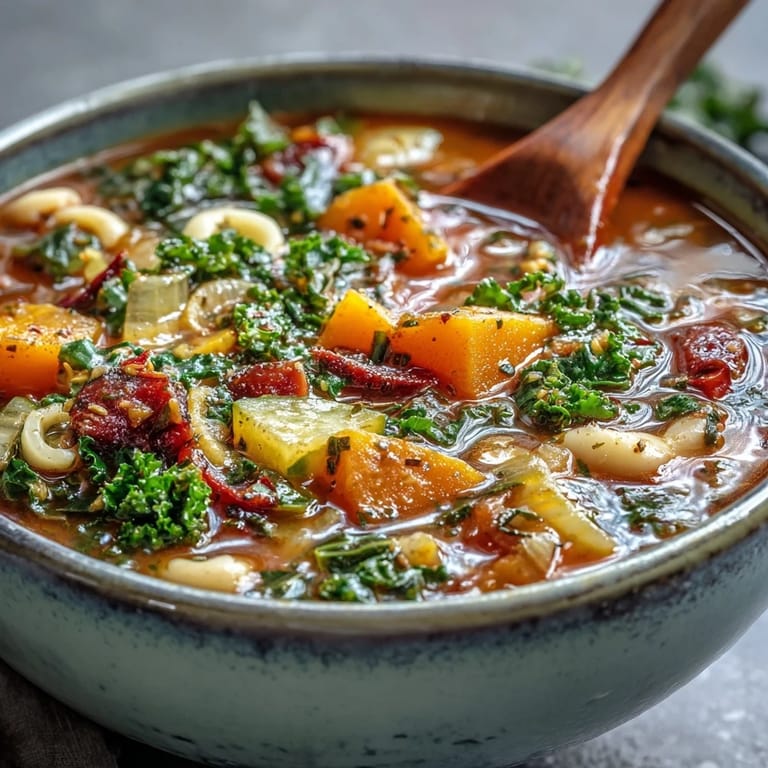
- Butternut squash: Cubed not too small, so pieces hold their shape and give you something satisfying to chew.
- Zucchini: It dissolves into the broth a bit, which is exactly what you want for texture and body.
- Diced tomatoes: The canned version is your friend here; they're picked at peak ripeness and packed with umami.
- Kale: Remove the tough stems completely or they'll stay chewy no matter how long you cook—a hard lesson learned.
- Cannellini beans: Drain and rinse them thoroughly so you're not adding extra starch and sodium to the broth.
- Small pasta: Ditalini or elbow works best because they cook quickly and won't dissolve into mush.
- Vegetable broth: This is where your soup lives or dies, so don't use anything you wouldn't drink on its own.
- Bay leaf, oregano, thyme, rosemary: Dried herbs are perfect here because they need the long simmer to release their oils and blend seamlessly.
- Salt and pepper: Taste as you go; you're seasoning to balance, not overpower.
Tired of Takeout? 🥡
Get 10 meals you can make faster than delivery arrives. Seriously.
One email. No spam. Unsubscribe anytime.
Instructions
- Build your aromatic base:
- Heat olive oil in your pot until it shimmers slightly, then add onion, carrots, and celery. You'll know they're ready when the onion turns translucent and softens enough to press with your spoon—about five minutes, maybe six if your stove runs cool like mine does.
- Wake up the garlic:
- Add minced garlic and stir constantly for just a minute, letting the heat release its perfume into the oil. This is the moment you'll smell why this soup is worth making.
- Layer in the squash and zucchini:
- These vegetables need to soften slightly before the liquid goes in, which helps them release their natural flavors into the pot. Stir occasionally and let them pick up color from the bottom of the pan.
- Introduce the liquid and aromatics:
- Pour in tomatoes, broth, and all the dried herbs at once, then bring everything to a rolling boil. The herbs will slowly unfurl their flavors as the soup simmers, so resist the urge to add fresh herbs this early.
- Simmer until the squash softens:
- Lower the heat, cover the pot, and let it bubble gently for about fifteen minutes. The butternut squash should be tender enough to break with a wooden spoon but not so soft that it falls apart.
- Add beans, pasta, and kale:
- Uncover the pot and stir in beans, pasta, and chopped kale all together. The pasta will cook in about ten to twelve minutes depending on the brand; test it around the ten-minute mark so you catch it at tender but still slightly firm.
- Season and finish:
- Fish out the bay leaf with a spoon, then taste the soup and adjust salt and pepper slowly. Remember that it'll taste more seasoned once it cools slightly.
- Serve with intention:
- Ladle into bowls, and if you're using them, top with fresh Parmesan and parsley just before serving. The bread goes on the side for dunking, which is non-negotiable.
 Save
Save I made a massive batch of this on a Sunday and froze it in portions, which meant that for two weeks I had warmth waiting in my freezer whenever I needed it. On the coldest night of January, I thawed a container at work and ate it straight from the office microwave, and nobody commented on how my desk suddenly smelled amazing.
The Secret Life of Butternut Squash
Butternut squash is the MVP of winter soups because it dissolves just slightly around the edges while holding its shape in the center, creating this wonderful textural contrast. I once tried to speed things up by cutting the cubes tiny, and they basically disappeared by the time the soup was done—larger cubes about three-quarters of an inch are your sweet spot. The natural sweetness of the squash means you don't need to add sugar anywhere, which is one of the things that makes this soup feel nourishing instead of heavy.
Pasta Timing as a Life Lesson
I've learned that pasta in soup is a conversation between the pasta and the liquid, not something you set and forget. Most recipes tell you to add it and walk away, but if you pay attention, you'll notice the exact moment it reaches that perfect tender-but-not-mushy state. The difference between a soup that feels rustic and homey versus one that feels kind of soggy happens in those last three minutes of cooking, which is why I stir it and taste it constantly toward the end.
Kale Choices and How to Own Them
Kale has this reputation for being tough and bitter, but in this soup it becomes gentle and mild because the long broth does the softening for you. I used to massage kale before adding it to soups, thinking I was helping, but I learned that it's unnecessary and slightly counterproductive—the heat and moisture do all the work. The stems really do need to go completely though; even after forty minutes of cooking they'll have a woody texture that breaks up the smooth experience of eating the soup.
- You can swap spinach for kale if you prefer, but add it in the very last minute so it doesn't turn into a dark green slush.
- If you like your greens more substantial, add the kale five minutes before the pasta finishes instead of at the same time.
- Frozen kale works just fine here, and it's honestly easier to chop since it's already softer than fresh.
 Save
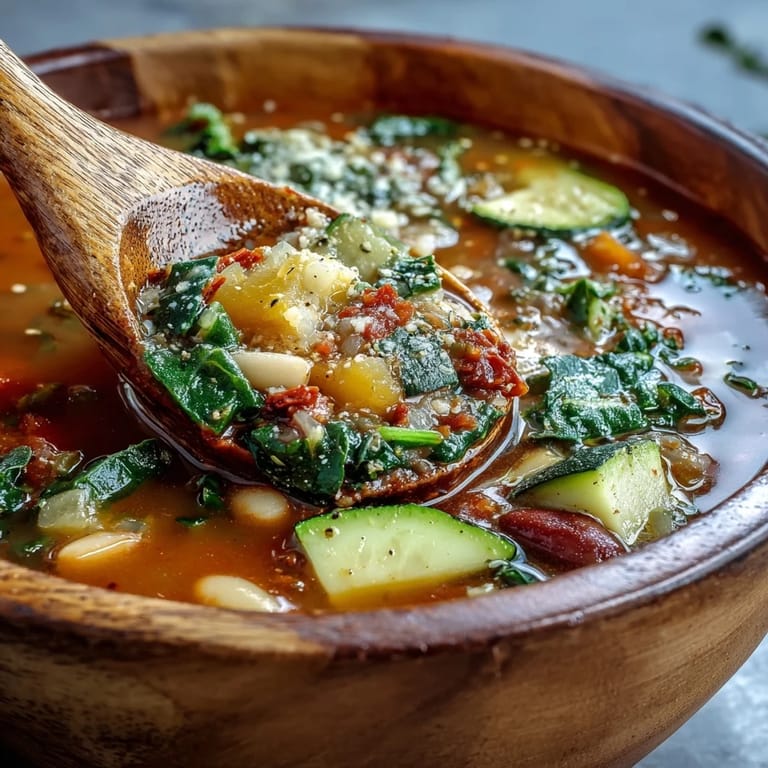
Save This soup became my go-to dish when I wanted to feed people without fussing, and over time it's become the thing friends ask me to bring to winter gatherings. It's the kind of food that lets you take care of yourself and others at the same time.
Recipe FAQs
- → Can I make this soup ahead of time?
Absolutely! This soup actually develops deeper flavors when made ahead. Store it in the refrigerator for up to 4 days. Keep in mind that the pasta will absorb more liquid as it sits, so you may need to add extra broth when reheating.
- → How do I freeze minestrone soup?
For best results, freeze the soup without the pasta. The pasta can become mushy when frozen and reheated. Cook the pasta fresh when serving, or freeze the complete soup if you don't mind softer pasta. Freeze in airtight containers for up to 3 months.
- → What other vegetables can I add?
This soup is very versatile. Try adding diced potatoes, green beans, bell peppers, or Swiss chard. In spring, fresh peas or asparagus work beautifully. The key is to add hearty vegetables early and delicate greens in the last few minutes.
- → Can I use dried beans instead of canned?
Yes, you'll need about 1½ cups cooked beans from approximately ½ cup dried beans. Soak and cook them separately before adding to the soup, or simmer them in the broth until tender (this will extend cooking time significantly).
- → What's the best pasta shape to use?
Small shapes that catch the broth are ideal—ditalini, elbow macaroni, small shells, or orzo all work wonderfully. Avoid long pasta like spaghetti or large shapes that might overwhelm the spoon. For gluten-free options, rice-based small pasta holds up well.
- → How can I add more protein?
Beyond the cannellini beans, you can stir in shredded rotisserie chicken during the last 5 minutes, add Italian sausage browned with the vegetables, or serve with extra Parmesan. Each serving already provides about 8g of protein from the beans and pasta.