 Save
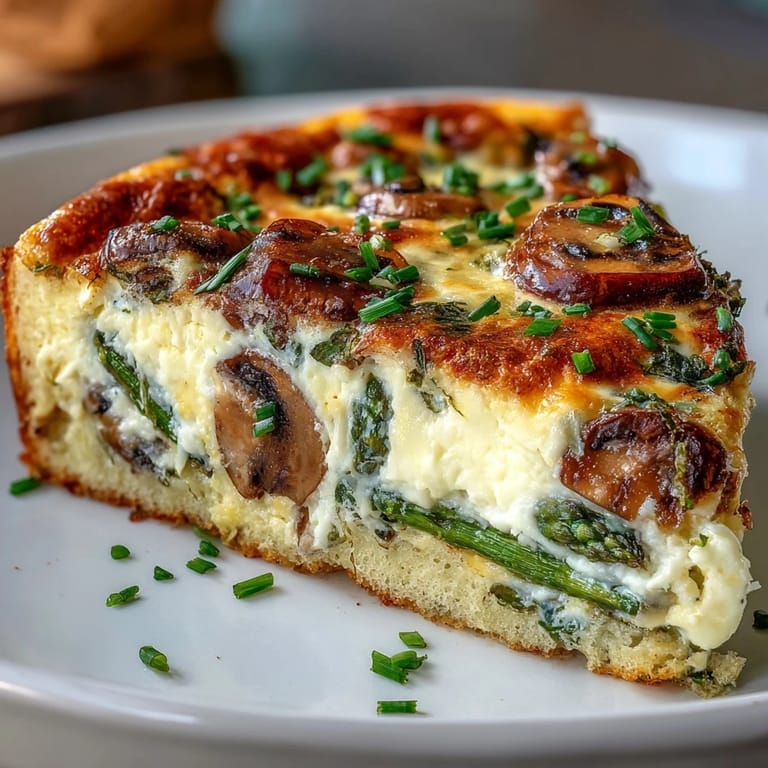
Save Last spring, I stood in my kitchen on a Saturday morning watching asparagus tips emerge from the farmers market bag, and suddenly the menu wrote itself. My neighbor had mentioned she was tired of the same brunch rotation, and that's when I remembered an old Italian trick my roommate showed me years ago—why not build a frittata on a sourdough foundation? The crispy bread base transforms everything above it, adding texture and flavor that a plain dish simply cannot match. What started as an experiment became the dish people actually request now.
The first time I served this to my book club, someone asked for the recipe before dessert even landed on the table. That moment told me something was right about balancing earthiness with brightness, crispy with custardy, familiar with just different enough. Now whenever I make it, I think about how a dish becomes memorable not just from taste but from the story surrounding it—in this case, simple ingredients arranged in an unexpectedly thoughtful way.
Ingredients
- Sourdough bread: Use a sturdy loaf with good crust; it won't turn soggy the way a tender white bread would, and the tangy flavor deepens everything else.
- Unsalted butter: Brush it on the bread before that first bake to create the crisp foundation that makes this special.
- Asparagus: Cut into 1-inch pieces so they cook evenly and distribute throughout; thicker spears hold up better than pencil-thin ones.
- Cremini or button mushrooms: They release their moisture slowly, which means your frittata won't end up watery if you sauté them properly.
- Shallot: One small shallot adds sweetness and fragrance without overwhelming the delicate egg custard.
- Olive oil: Two tablespoons is enough for sautéing; too much and the vegetables start to swim rather than cook.
- Eggs: Eight large eggs create the right density—not too thick, not too loose—for that perfect set frittata.
- Whole milk and heavy cream: The combination creates a richer, more tender texture than milk alone; this is the secret.
- Gruyère and Parmesan: Gruyère melts smoothly and adds nuttiness while Parmesan provides sharp, salty punctuation.
- Fresh chives: Stir these in just before pouring to preserve their bright onion flavor; dried chives disappear into nothing.
Tired of Takeout? 🥡
Get 10 meals you can make faster than delivery arrives. Seriously.
One email. No spam. Unsubscribe anytime.
Instructions
- Set the stage:
- Preheat your oven to 375°F and grease a 9-inch springform pan or deep pie dish so the sourdough bread won't stick. You want everything ready before you start assembling.
- Build the crust:
- Arrange sourdough slices in the pan so they overlap slightly, covering the bottom and climbing up the sides—think of it like shingles on a roof. Brush generously with melted butter and bake for 8 to 10 minutes until you hear it crackle slightly when you tap it.
- Sauté the vegetables:
- Heat olive oil over medium heat, add the shallot first and wait for it to smell sweet and soft, about a minute. Drop in the mushrooms and let them release their liquid, which will evaporate if you're patient—this concentrates their flavor into something rich and earthy.
- Add the asparagus:
- After the mushrooms have softened, add the asparagus pieces and cook just until they turn bright green and have a slight bite to them, about 2 to 3 minutes. You're not looking to fully cook them; they'll finish in the oven.
- Whisk the custard:
- In a large bowl, crack your eggs and whisk them with milk, cream, both cheeses, chives, salt, and pepper until everything is smooth and cohesive. This is your frittata's foundation, so don't rush it.
- Bring it together:
- Spread the warm sautéed vegetables over the sourdough crust, then slowly pour the egg mixture over everything, letting it settle into the gaps. The bread will soak up some of the custard, which is exactly what you want.
- Bake to golden:
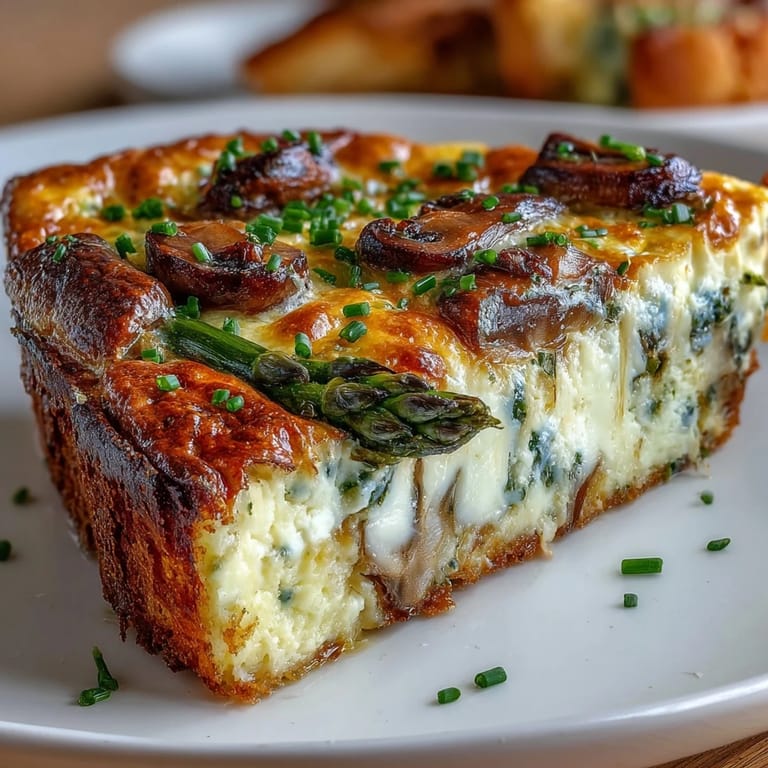
- Bake for 25 to 30 minutes until the top puffs up, turns golden, and the center barely jiggles when you gently shake the pan. Let it cool for 5 minutes before releasing it from the springform, which allows everything to set just enough to slice cleanly.
 Save
Save What strikes me most about this dish is how it sits comfortably between indulgent and wholesome, making it possible to serve it to anyone without apology. It's the kind of recipe that quietly becomes a favorite because it never feels like you're trying too hard.
Why Spring Vegetables Matter Here
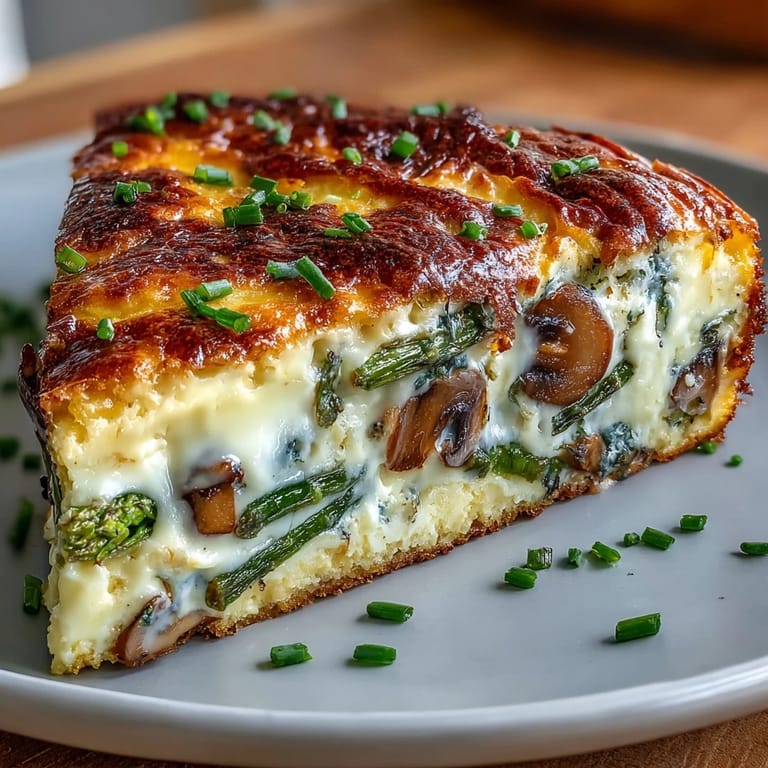
Asparagus and mushrooms aren't just seasonal choices—they're structural choices that affect how the frittata cooks. Asparagus provides a tender bite that contrasts beautifully with the earthy mushrooms, and together they're sturdy enough to hold their shape through baking without turning to mush. The combination also creates a natural flavor balance where neither ingredient dominates; instead, they support each other like good partners in a conversation.
Timing and Temperature Precision
The oven temperature of 375°F is crucial because it allows the egg mixture to set evenly from edge to center without the bottom burning or the top drying out. I learned this the hard way when I cranked it to 400°F once and ended up with a frittata that was somehow simultaneously overcooked on top and slightly underdone in the middle. Lower temperatures cook more gently, giving you that perfect creamy interior while the vegetables and cheese on top turn golden and slightly crispy.
Serving and Storage Wisdom
This frittata is one of those magical dishes that tastes almost better at room temperature than hot, which is why it works for any meal and any occasion. The flavors settle and mellow, and the custard becomes more silky rather than custardy, if that makes sense. Leftovers wrapped in the fridge will keep for three days, and honestly, I often find myself eating cold slices for breakfast before anyone even knows they exist.
- Slice it into wedges or squares depending on your springform pan, and serve with a simple green salad dressed with lemon vinaigrette.
- Pair it with a crisp white wine like Sauvignon Blanc if you're serving it for dinner rather than brunch.
- If you want to make it non-vegetarian, add crumbled pancetta or smoked salmon on top just before serving for a luxury twist.
 Save
Save This recipe feels like a small kitchen triumph every time—the kind where technique and ingredients align to create something greater than the sum of its parts. Serve it proudly, and watch how quickly people ask for seconds.
Recipe FAQs
- → Can I use a different bread for the crust?
Yes, sturdy breads like ciabatta or rye can replace sourdough, but ensure they hold structure when baked.
- → How do I achieve a crisp crust without sogginess?
Pre-baking the bread slices with melted butter helps form a barrier, keeping the crust crisp during baking.
- → What cheeses complement this dish best?
Gruyère and Parmesan provide nutty and sharp flavors that enhance the egg custard’s richness.
- → Can I prepare this ahead of time?
Yes, assemble and refrigerate up to a day before baking; allow some extra baking time if chilled.
- → What sides pair well with this frittata?
A fresh green salad or crisp white wine like Sauvignon Blanc balance the hearty eggs and vegetables nicely.
- → Is it possible to add meat to the dish?
Indeed, additions like cooked pancetta or smoked salmon can add savory depth without overwhelming flavors.