 Save
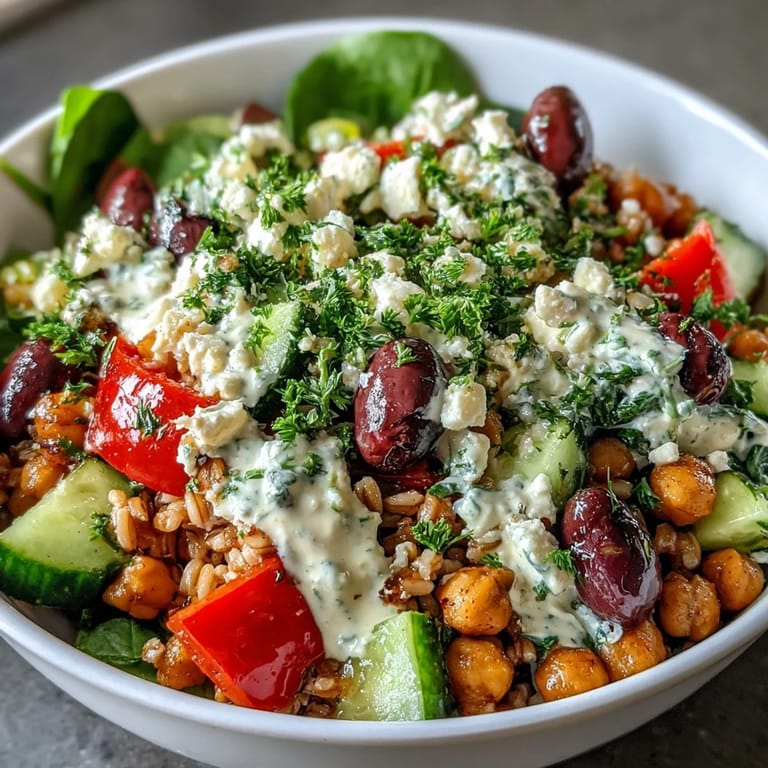
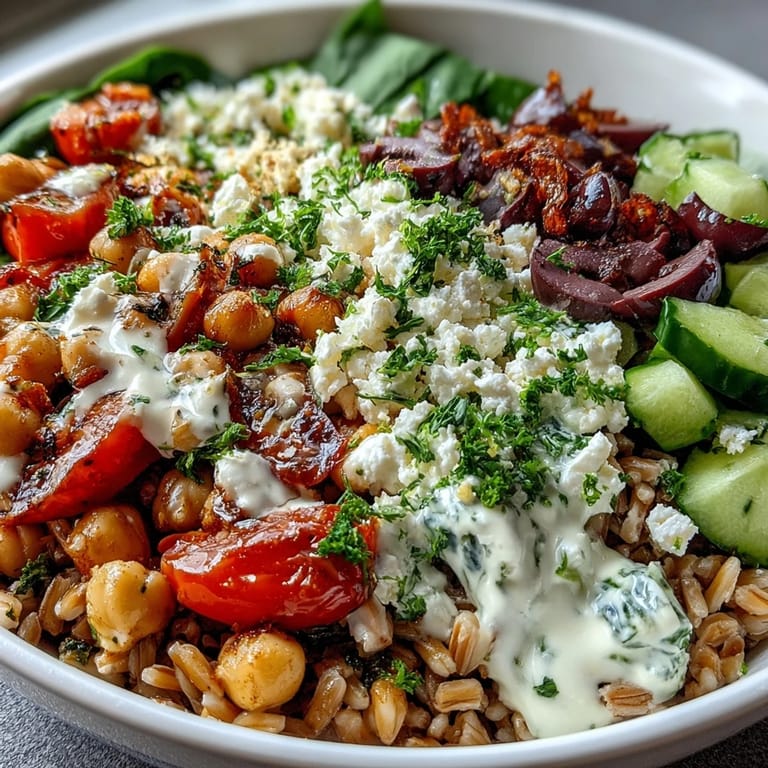
Save Last summer, a friend who'd just returned from Athens handed me a container of farro she'd bought at a local market, insisting I'd understand Mediterranean cooking better once I tasted it properly prepared. I was skeptical at first—farro felt old-fashioned, almost rustic compared to the grains I usually reached for. But when I simmered it in vegetable broth one quiet Tuesday evening, the kitchen filled with this warm, almost nutty aroma that made me pause mid-chop. By the time I'd tossed it with fresh tomatoes, cucumbers, and a silky tahini dressing, I realized she was right. This bowl became my answer to every question about what to make.
I made this for a potluck where everyone was supposed to bring something light, and I watched people circle back to the Mediterranean bowl three times. There was something about the way the cold vegetables contrasted with the warm grain, the briny olives against the sweet tomatoes. Someone asked if it was complicated, genuinely surprised when I said no. That's when I understood—simplicity, when done with intention, feels like generosity.
Ingredients
- Farro: This pearl barley relative has a tender chew that holds up beautifully in grain bowls without turning mushy; rinsing it first prevents any dusty taste and helps it cook evenly.
- Vegetable broth: Use good-quality broth if you can because it seasoning the farro from the inside out, not just keeping it wet.
- Cherry tomatoes: Halving them instead of leaving them whole lets the dressing coat them better and keeps them from rolling around.
- Cucumber: Dice it just before assembly so it stays crisp and doesn't weep liquid into the other vegetables.
- Red bell pepper: The slight sweetness balances the briny olives and tangy dressing in a way that feels intentional.
- Kalamata olives: Slicing them rather than leaving them whole distributes their salty, herbaceous flavor throughout every bite.
- Red onion: Thin slices add sharpness that would disappear if you minced it too fine, and the color is just beautiful against the green spinach.
- Baby spinach: It wilts slightly from the warm farro without becoming mushy, adding earthiness that grounds all the brighter flavors.
- Chickpeas: Whether canned and drained or freshly cooked, they give the bowl substance and make it feel complete as a meal.
- Tahini: This is where the bowl goes from good to unforgettable; toasted sesame paste has a depth that no other dressing ingredient can replicate.
- Lemon juice: It brightens everything and keeps the tahini from feeling too heavy, so don't skip it or reduce the amount.
- Extra-virgin olive oil: Good oil matters here because it's not being heated, so its flavor comes straight through.
- Garlic: Just one small clove minced fine so it doesn't overpower the delicate balance of the dressing.
- Ground cumin: It whispers rather than shouts, adding warmth that ties the whole bowl to its Mediterranean heritage.
- Feta cheese: Crumbled generously, it adds a salty, slightly creamy contrast that makes you want another bite.
- Fresh parsley: A small handful chopped at the last moment brings brightness and reminds your palate that this is a fresh, living dish.
Tired of Takeout? 🥡
Get 10 meals you can make faster than delivery arrives. Seriously.
One email. No spam. Unsubscribe anytime.
Instructions
- Simmer the farro until tender:
- Combine rinsed farro and vegetable broth in a medium saucepan, bring it to a rolling boil, then cover and reduce to a low simmer for 25 to 30 minutes until each grain is tender with just a slight resistance when you bite it. If there's excess liquid remaining when the farro is done, drain it gently and let the grains cool enough to handle.
- Prep your vegetables while the grain cooks:
- This is the perfect time to halve tomatoes, dice cucumber and bell pepper, slice your olives and red onion, and measure out the spinach so nothing is rushing at the last moment. Keeping everything separate until assembly means each ingredient stays vibrant and at its best.
- Whisk the tahini dressing into silky submission:
- In a small bowl, combine tahini, fresh lemon juice, olive oil, water, minced garlic, and cumin, whisking steadily until the mixture becomes pale and creamy rather than thick and pasty. Start with the water measurement given, but add more a teaspoon at a time if needed until you reach a consistency that coats a spoon but still flows.
- Combine everything with gentle intention:
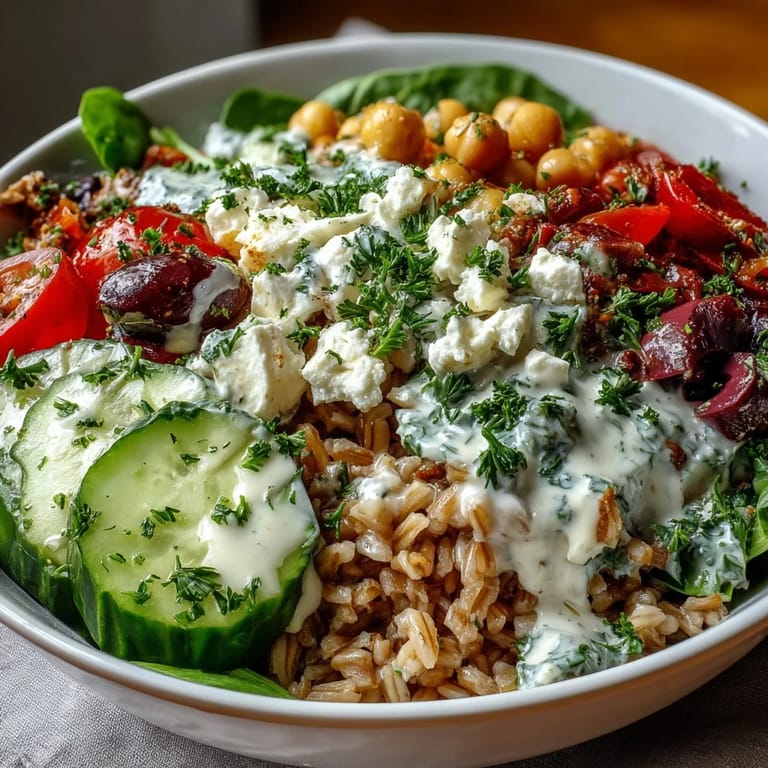
- In a large bowl, add the cooled farro, then arrange all your prepped vegetables, spinach, and chickpeas around it rather than dumping everything in at once, so you can see the colors and textures before they get dressed. This moment of assembly is when the bowl comes alive—you can see what you've created before the dressing binds it all together.
- Dress and toss with a light hand:
- Drizzle the tahini dressing over everything and use two large spoons to toss gently, moving from the bottom of the bowl upward so the dressing coats evenly without crushing the vegetables or breaking apart the chickpeas. Don't over-toss; you want distinct vegetables, not a puree.
- Finish with the final flourishes:
- Divide the dressed bowl among serving vessels, then top each portion with crumbled feta and a scattered handful of fresh parsley just before serving so these garnishes stay bright and crisp.
- Serve or store with care:
- The bowl is most vibrant eaten right away while textures are distinct, but it refrigerates beautifully for up to two days if you keep any dressing separate and drizzle it fresh just before eating so the vegetables don't become waterlogged.
 Save
Save My neighbor watched me assemble one of these bowls in my kitchen on a Saturday morning, and by that afternoon she'd texted asking for the recipe. The next week she made it for her daughter's school lunch, who apparently told everyone it was homemade and cool. It's rare that food creates those small moments of connection, where someone feels seen because you made them something nourishing.
The Magic of Tahini Dressing
The first time I made tahini dressing from scratch, I made it way too thick and ended up with something closer to tahini paste than dressing, which taught me the importance of the water-whisking ratio. The second time, I added the water gradually and whisked continuously, and suddenly it transformed into something silky that clung to every grain of farro. Now I understand that patience and incremental adjustments matter more than exact measurements when working with tahini, because every jar behaves slightly differently.
Why Warm Grain Plus Cold Vegetables Works
There's a moment when the warm farro meets the cold vegetables and the spinach starts to wilt just slightly, and that's when the flavors really begin to marry. The temperature contrast keeps everything interesting texture-wise while allowing flavors to meld. It's the reason I always let the farro cool to just warm rather than serving it piping hot—you want contrast, not temperature-based wilting.
Customizing Your Bowl
The beauty of this bowl is that it adapts to whatever you have on hand or whatever your mood demands on any given day. I've made it with roasted eggplant in the fall, grilled chicken in the summer, and crumbled tofu when I wanted something lighter. The structure stays solid even when ingredients shift, which is why it became my go-to template for cooking.
- Try roasted zucchini or eggplant for depth, adding them warm so they release their flavors into the dressing.
- Grilled shrimp, chicken, or crispy tofu all work beautifully if you want more protein or different flavors.
- Serve alongside warm pita bread or in a wrap if you want to turn the bowl into something more portable for lunch.
 Save
Save This bowl has become my answer to the question of what good food actually means—it's nourishing without being heavy, interesting without being complicated, and generous without requiring hours in the kitchen. Every time I make it, I think of my friend bringing back farro from Athens, of strangers circling back for thirds at potlucks, of that moment when simple ingredients become something worth remembering.
Recipe FAQs
- → Can I make this Mediterranean bowl gluten-free?
Yes, substitute the farro with quinoa, brown rice, or millet. These grains provide similar texture and nutritional benefits while being naturally gluten-free. Adjust cooking time according to your chosen grain package directions.
- → How long does the tahini dressing last?
The tahini dressing keeps well in an airtight container in the refrigerator for up to one week. The dressing may thicken when chilled—simply whisk in a small amount of water to reach desired consistency before using again.
- → Can I prepare the components in advance?
Absolutely. Cook the farro up to 3 days ahead and store refrigerated. Chop vegetables 1-2 days in advance, keeping them in separate containers. The tahini dressing can be made several days ahead. Assemble just before serving for best texture.
- → What proteins work best in this farro bowl?
Chickpeas provide excellent plant-based protein and creamy texture. For alternatives, try grilled chicken breast, pan-seared shrimp, marinated tofu, or even falafel. Each protein pairs beautifully with the Mediterranean flavors and tahini dressing.
- → Is it better to serve this bowl warm or cold?
Both ways work wonderfully. Warm farro creates a comforting meal, while chilled versions make refreshing lunches. The tahini dressing coats grains beautifully at any temperature. Many enjoy it warm initially, then as leftovers for lunch the next day.
- → What vegetables can I add for variety?
Roasted eggplant, zucchini, or red peppers add depth. Fresh additions include radishes, shredded carrots, or artichoke hearts. Grilled vegetables like asparagus or broccoli also complement the nutty farro and creamy tahini dressing perfectly.