 Save
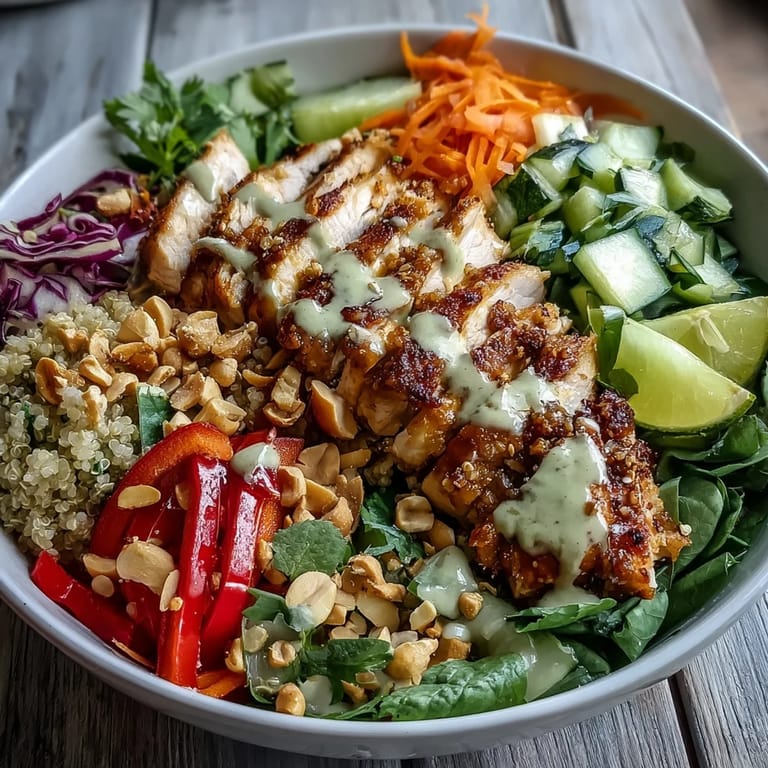
Save Last Tuesday, I was standing in my kitchen at 6 PM with absolutely nothing planned for dinner when I spotted a jar of peanut butter and some chicken in the fridge. What started as creative improvisation turned into something I've made almost weekly since—this vibrant power bowl that somehow tastes like you spent hours on it, even though you didn't. The beauty of it is how forgiving it is: swap the grains, change the vegetables based on what's in season, adjust the sauce heat to your mood. It's become my go-to answer when someone asks what to eat.
I made this for my sister when she was going through a phase of trying to eat healthier, and she stood at the counter watching the sauce come together, genuinely surprised that something this delicious could actually be good for you. She's been making it ever since, and recently told me she tweaked the sriracha amount because her partner prefers less heat. That's when I realized this wasn't just a recipe I loved—it had become something people felt comfortable making their own.
Ingredients
- Boneless, skinless chicken breasts or thighs (500 g / 1.1 lbs): Thighs stay more forgiving if you're slightly over on baking time, but breasts cook faster—choose based on your schedule and what you're in the mood for.
- Olive oil (1 tbsp): Just enough to help the spices coat evenly and keep the chicken from sticking.
- Smoked paprika (1 tsp): This is the secret player that makes the chicken taste like it's been fussed over—don't skip it or swap for regular paprika.
- Garlic powder (1 tsp), ground cumin (½ tsp), salt (½ tsp), black pepper (¼ tsp): Together these create a warm, earthy base that plays beautifully with the nutty sauce.
- Brown rice or quinoa (200 g / 1 cup uncooked): Brown rice has more texture and pairs especially well with the sauce, but quinoa cooks faster if you're in a hurry.
- Water or low-sodium broth (2 cups): Broth adds subtle flavor, but water works perfectly fine.
- Carrot (1 large, julienned or grated): The sweetness balances the savory sauce, and grating makes it blend seamlessly into each bite.
- Red bell pepper (1, thinly sliced): It adds color and a crisp texture that gets softer as you eat, absorbing sauce flavor.
- Cucumber (1 small, thinly sliced): This stays cool and fresh against the warm components—it's what makes each bowl feel refreshing.
- Purple cabbage (100 g / 1 cup shredded): Its slight bitterness and crunch keep the bowl interesting rather than one-note.
- Spring onions (2, sliced): A whisper of onion sharpness that you don't realize you're missing until it's there.
- Baby spinach or mixed greens (50 g / 2 cups): The warm chicken wilts these slightly while keeping them green and nutrient-dense.
- Creamy peanut butter (80 g / 1/3 cup): Use good quality peanut butter with minimal ingredients—you'll taste the difference when it's just peanuts and salt.
- Soy sauce (2 tbsp): Use tamari if you need gluten-free, and measure carefully because it's salty and easily overdone.
- Rice vinegar or lime juice (1 tbsp): Lime juice gives brightness and tartness, vinegar is more mellow—pick based on your preference.
- Honey or maple syrup (1 tbsp): This rounds out the savory-salty-spicy into something balanced and crave-worthy.
- Sriracha or chili sauce (1 tsp, optional): Not for heat-seekers only—even a small amount adds complexity and awakens the palate.
- Warm water (2–3 tbsp): Added gradually to get the sauce to pourable consistency, thicker than dressing but not a dip.
- Roasted peanuts (2 tbsp chopped): A texture contrast and visual reminder that this is about celebrating good ingredients.
- Fresh cilantro or parsley (chopped): Cilantro brings brightness if you're a fan; parsley is subtle and green.
- Lime wedges: Squeeze them over as you eat to brighten everything with each bite.
Tired of Takeout? 🥡
Get 10 meals you can make faster than delivery arrives. Seriously.
One email. No spam. Unsubscribe anytime.
Instructions
- Get your oven ready:
- Preheat to 200°C (400°F) and line a baking sheet with parchment paper so cleanup is one less thing to think about.
- Season the chicken:
- In a bowl, toss chicken with olive oil, smoked paprika, garlic powder, cumin, salt, and black pepper until every piece is evenly coated—use your hands if it helps you feel confident the seasoning is distributed.
- Bake until golden:
- Arrange chicken on the prepared sheet and bake for 20–25 minutes, checking that the internal temperature reaches 74°C (165°F) with a meat thermometer if you have one. Let it rest for 5 minutes before slicing so the juices stay locked in rather than running onto the cutting board.
- Cook your grains:
- Rinse rice or quinoa under cool water, place in a saucepan with water or broth, bring to a boil, then reduce heat, cover, and simmer—brown rice takes about 25 minutes, quinoa about 15. Fluff with a fork when done and it should smell nutty and inviting.
- Prep your vegetables:
- While grains cook, julienne or grate the carrot, slice the pepper and cucumber thinly, shred the cabbage, slice spring onions, and have your greens ready—this is where the bowl becomes beautiful.
- Whisk the peanut sauce:
- In a small bowl, whisk peanut butter with soy sauce, rice vinegar or lime juice, honey, and sriracha if using, adding warm water a tablespoon at a time until you reach a consistency that pours but coats the back of a spoon slightly. Taste it and adjust—it should make you want to lick the spoon.
- Assemble with intention:
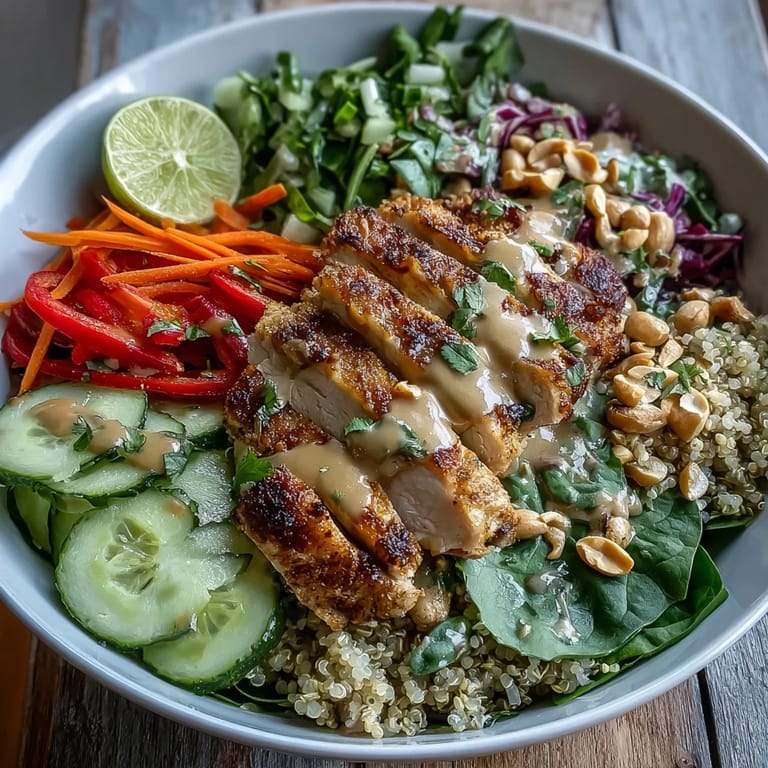
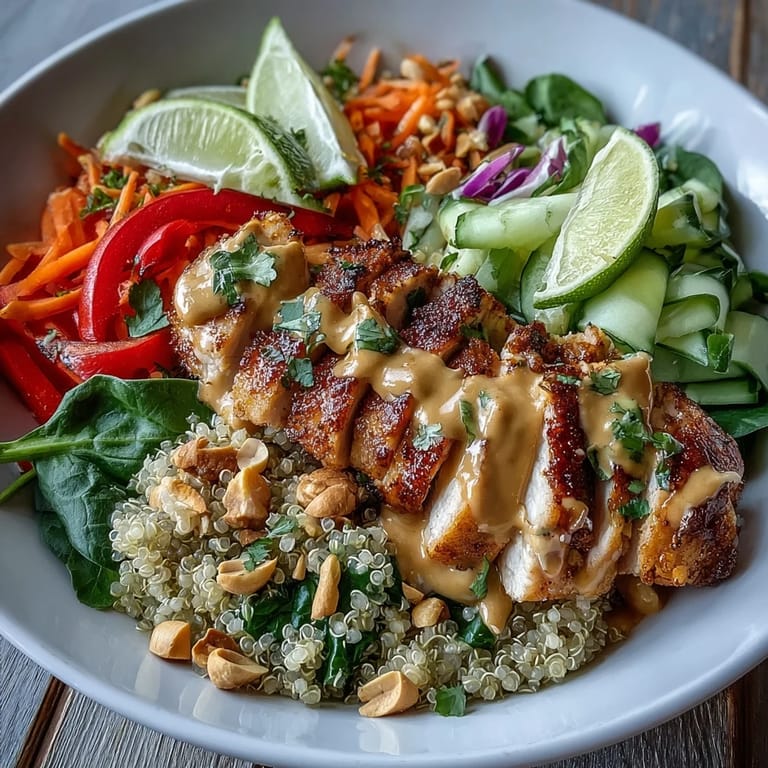
- Divide grains among four bowls, top each with sliced chicken, then arrange vegetables and greens in sections so the bowl is visually appealing and everything gets into each spoonful.
- Finish and serve:
- Drizzle sauce generously over everything, scatter chopped peanuts and cilantro on top, and serve with lime wedges so people can adjust brightness to their taste.
 Save
Save A friend came over on a random Friday and we made this together, and I watched her taste the sauce for the first time and have this moment of recognition—like she was tasting something she didn't know was missing. We ended up sitting on the back porch eating bowls and talking until the sun went down, and she asked if she could take the recipe home. That's when I realized this bowl had somehow become more than dinner; it was a way of saying I'm taking care of myself and inviting someone else to do the same.
Why This Bowl Works as Meal Prep
The genius of this bowl is that almost every component tastes better or stays fresher when made ahead. Bake your chicken on Sunday, cook your grains, prep vegetables, and store everything separately in containers—when you're tired on Wednesday evening, you just assemble and drizzle sauce. The vegetables stay crisp, the grains don't get soggy, and the sauce keeps in a jar for three days. I've found that keeping the sauce separate until serving time is the secret to a bowl that tastes as good on day three as it does fresh.
Customizing Your Bowl
This recipe is forgiving enough to adapt to whatever you have or whatever you're craving that day. I've made it with roasted sweet potato instead of grain when I was out of rice, with baked tofu for vegetarian guests, and even with whatever raw vegetables were lingering in the crisper drawer. Once you understand the structure—protein, grain, vegetables, sauce—you can swap almost anything and it will work. The peanut sauce is the anchor that ties everything together, so as long as you have that, you're free to improvise.
Sauce Secrets and Variations
The peanut sauce is where your personal preferences should shine through, and I've learned that a little experimentation here pays off. Some people love adding a pinch of ginger powder for warmth, others add a dash of sesame oil for nuttiness, and I once made it with almond butter for someone with a peanut allergy and it was equally delicious. The ratio of sweet to savory to spicy is entirely up to you—taste as you build and adjust without hesitation.
- Sesame oil: Just a teaspoon adds depth that feels almost luxurious without overpowering the peanut flavor.
- Fresh ginger: A half teaspoon of grated fresh ginger brings warmth and liveliness to the sauce.
- Coconut milk: A splash makes the sauce creamier and adds subtle sweetness that works especially well with lime juice instead of vinegar.
 Save
Save This bowl has become one of those recipes that feels like it belongs in your regular rotation the moment you make it—not fancy enough to save for special occasions, but satisfying enough to feel like you're treating yourself every time. Make it this week and see if it doesn't end up on your table again soon.
Recipe FAQs
- → Can I make the peanut sauce ahead of time?
Yes, the peanut sauce keeps well in the refrigerator for up to 5 days. Store in an airtight container and whisk in a splash of warm water before serving to restore the creamy consistency.
- → What's the best way to slice the vegetables for this bowl?
Julienne the carrots and cucumber into thin matchsticks for even texture. Slice the bell pepper and cabbage into thin strips. This creates uniform pieces that are easy to eat and absorb the peanut sauce beautifully.
- → Can I use chicken thighs instead of breasts?
Absolutely. Chicken thighs work wonderfully and often stay juicier during baking. Adjust cooking time slightly—thighs may need an extra 5-7 minutes depending on thickness. Always verify the internal temperature reaches 74°C (165°F).
- → How can I make this vegetarian?
Replace the chicken with baked tofu or tempeh. Press and cube the tofu, season with the same spices as the chicken, and bake for 25-30 minutes until golden and crispy. This maintains the protein content and texture.
- → What other grains work well in this bowl?
Brown rice and quinoa are excellent choices, but you can also use farro, bulgur, or even cauliflower rice for a low-carb option. Each grain brings slightly different texture and cooking times, so adjust accordingly.
- → Is the peanut sauce spicy?
The base sauce is mild with a hint of heat from the optional sriracha. Adjust the spice level by adding more or less chili sauce. You can also use garlic chili sauce for a different heat profile or omit entirely for a nutty, sweet flavor.