 Save
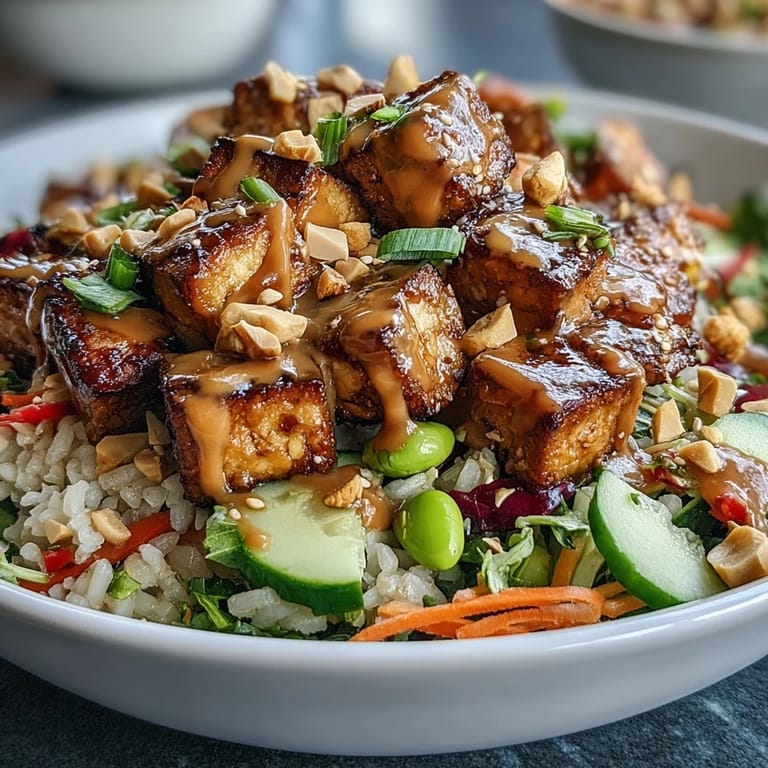
Save I stumbled onto this bowl on a Tuesday afternoon when my fridge was looking pretty bare but my pantry was stocked with possibilities. The idea came while I was staring at a block of tofu and a jar of peanut butter, wondering if they could actually become friends. Turns out, they make a pretty incredible team, especially when you add some color and crunch to the mix. This bowl has become my go-to when I need something that feels indulgent but actually fuels me through the day.
My partner took one bite and looked genuinely surprised, then asked if I was sure I made it myself. That small moment of doubt-turning-to-delight is exactly why I keep coming back to this recipe, because it proves that simple ingredients handled with a little care can absolutely impress.
Ingredients
- Extra-firm tofu (400 g): Press it really well because moisture is the enemy of crispiness, and cornstarch is your secret weapon for that golden, crunchy exterior.
- Cornstarch (2 tbsp): This does the heavy lifting to get your tofu cubes genuinely crispy instead of just soft.
- Brown rice or quinoa (200 g): Choose whatever your body digests better; both work beautifully and bring their own texture to the bowl.
- Carrot (1 medium): Julienne it thin so it stays tender and sweet, not tough.
- Red bell pepper (1): The color is gorgeous, and it adds brightness without being overwhelming.
- Purple cabbage (1 cup): It stays crunchy longer than other veggies, which matters if you're eating this over the next day or two.
- Edamame (1 cup): These little pods pack protein and keep the bowl feeling substantial.
- Cucumber (1 small): Add this just before eating so it stays crisp and cool.
- Creamy peanut butter (60 g): The sauce won't work with chunky or powdered versions, so get the real stuff that actually tastes like peanuts.
- Soy sauce or tamari (2 tbsp): Tamari is the way to go if gluten matters to you, and honestly it tastes better anyway.
- Maple syrup or agave (1 tbsp): Just enough sweetness to balance the salt and acid without making it dessert-like.
- Rice vinegar or lime juice (1 tbsp): Lime juice makes it brighter; rice vinegar keeps it mellow.
- Toasted sesame oil (1 tsp): The toasted version has all the flavor; regular sesame oil will disappoint you.
- Garlic (1 clove) and ginger (1 tsp): Mince them small so they dissolve into the sauce rather than sitting as visible chunks.
Tired of Takeout? 🥡
Get 10 meals you can make faster than delivery arrives. Seriously.
One email. No spam. Unsubscribe anytime.
Instructions
- Start your grain base:
- Get your brown rice or quinoa going first since it takes the longest. I usually use vegetable broth instead of water because it adds flavor without extra effort.
- Prep and press your tofu:
- Wrap your tofu block in a clean kitchen towel and let it sit under something heavy for 10 minutes while you gather your other ingredients. This step makes a real difference in how crispy it gets.
- Coat and crisp the tofu:
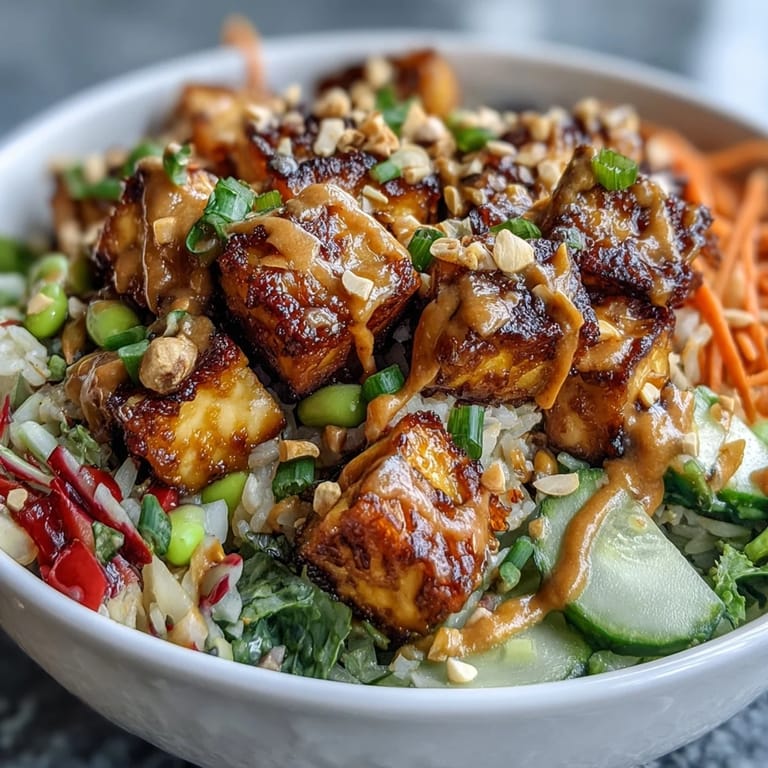
- Toss your pressed cubes with cornstarch and salt until they're evenly dusted, then toss again with olive oil. Spread them on a baking sheet and roast at 200°C for 20-25 minutes, flipping halfway through, until the edges turn golden brown and smell toasty.
- Build your peanut sauce while tofu cooks:
- Whisk together peanut butter, soy sauce, maple syrup, rice vinegar, sesame oil, warm water, minced garlic, and ginger until smooth and pourable. If it's too thick, add water one tablespoon at a time until it coats the back of a spoon but still drips off easily.
- Slice and prepare your vegetables:
- Keep everything colorful and varied in size so the bowl feels interesting to eat. Do the cucumber last so it stays crisp and cool.
- Assemble your bowls:
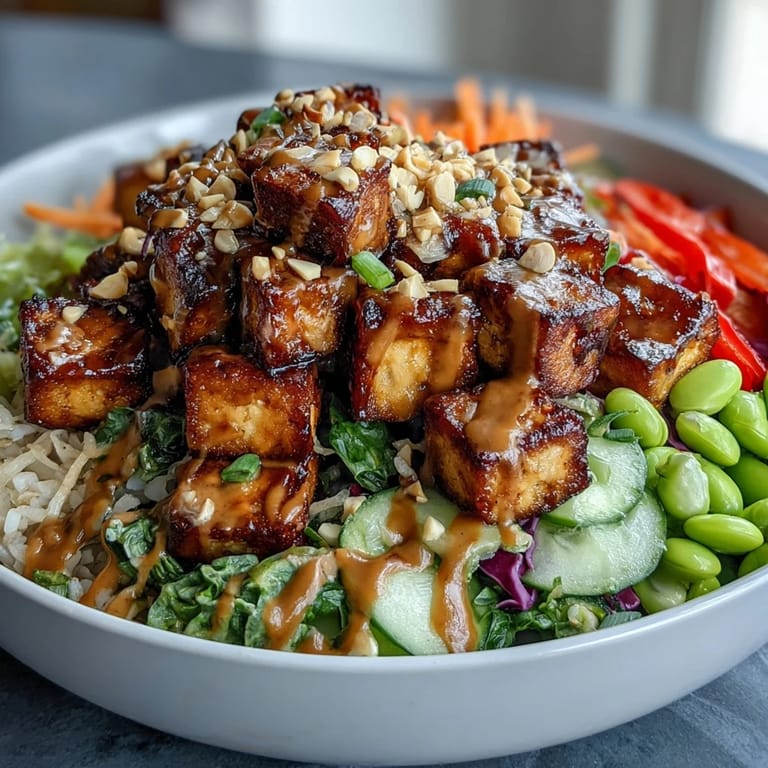
- Divide the cooked grain among four bowls, then arrange your tofu and vegetables in sections so everything stays distinct and beautiful. Drizzle the peanut sauce generously over the top, letting it pool a little in the center.
- Finish with toppings and serve:
- Scatter roasted peanuts, sesame seeds, and fresh cilantro or mint on top, then eat it while the tofu is still warm and the vegetables are still crisp.
 Save
Save There was this one evening when I made this for a group of friends who were all on different diets, and everyone at the table was eating the same meal without any modifications or substitutions. That moment when food just works for everyone made me realize how powerful simplicity and respect for good ingredients can be.
The Secret to Crispy Tofu Every Time
Crispy tofu comes down to three things: dryness, coating, and temperature. Your tofu needs to be as dry as possible, which is why pressing matters more than you'd think. The cornstarch creates a protective layer that fries up golden in the oven, and 200°C is hot enough to get color without burning. I used to think I needed a skillet and oil to get crispiness, but the oven method is actually easier and less messy.
Making the Peanut Sauce Perfect
The sauce is really where you taste your cooking choices. Too much peanut butter and it becomes heavy; too little and it tastes thin. I learned that whisking it together rather than blending gives you more control, and you can taste and adjust as you go. The garlic and ginger should be finely minced so they dissolve into the sauce and create depth without texture, and the sesame oil at the end brings everything together with a warm, nutty note that ties the whole bowl together.
Variations and Add-Ons That Actually Work
I've played around with this bowl enough times to know what makes it better and what just clutters it. Roasted sweet potato wedges add natural sweetness, steamed broccoli brings earthiness, and avocado slices make it feel more luxurious if you have them on hand. The formula stays strong no matter what you add, as long as you keep the proportions of grain, protein, and vegetables balanced so nothing overpowers anything else.
- Sriracha or extra chili flakes in the sauce turn this into something that wakes up your mouth if you're craving heat.
- Swapping brown rice for quinoa makes it higher in protein and gives a slightly different texture that some people prefer.
- Leftover cooked vegetables can go into this bowl, so it's a great way to use up what's in your fridge from earlier in the week.
 Save
Save This bowl stopped being just a meal and started being something I make when I want to feel nourished and cared for, whether I'm cooking it for myself or someone I want to impress. It's proof that eating well doesn't have to be complicated or time-consuming.
Recipe FAQs
- → How do I get crispy tofu?
Press extra-firm tofu to remove excess water, cube evenly, then toss with cornstarch and salt. Bake at 200°C (400°F) for 20–25 minutes, flipping halfway, or pan-fry until golden brown on all sides.
- → Can I make this gluten-free?
Yes. Substitute regular soy sauce with tamari and ensure your other ingredients are certified gluten-free. The bowl is naturally gluten-free otherwise.
- → What grains work best?
Brown rice and quinoa are ideal. For fewer carbs, try cauliflower rice. Cook grains according to package instructions and fluff before assembling.
- → How long does the peanut sauce keep?
Store the sauce in an airtight container in the refrigerator for up to one week. Whisk with a splash of warm water before serving if it thickens.
- → Can I prepare components in advance?
Cook grains and roast tofu up to three days ahead. Slice vegetables and prepare sauce one day prior. Assemble bowls fresh and drizzle with sauce before serving.