 Save
Save There's something about the smell of butternut squash caramelizing in a pot that makes you stop whatever you're doing and just breathe it in. A few winters ago, I was experimenting with leftover vegetables on a particularly gray afternoon, and this soup emerged almost by accident—the kind of happy mistake that happens when you're not overthinking things. The sweetness of the squash against the earthiness of kale and the bright acidity of tomatoes just clicked, and suddenly I understood why minestrone has survived centuries of Italian home cooking. It's not fancy or complicated; it's just honest, warming food that tastes like someone cares.
I made this for my neighbor last January when she was recovering from the flu, and watching her face light up at the first spoonful reminded me that food doesn't need to be complicated to be healing. She asked for the recipe before she'd even finished the bowl, and now I get texts from her whenever the weather turns cold asking if I'm making it again. That's when you know a recipe has become something real—when people start asking for it by name.
Ingredients
- Olive oil: Use a good quality extra virgin oil if you're drizzling it at the end, but a simpler version works fine for the initial sauté since it'll meld into the broth anyway.
- Yellow onion, carrots, and celery: This trio is the flavor foundation of almost every Italian soup—the French call it mirepoix, but Italians know it by heart. Dice them roughly the same size so they cook evenly.
- Garlic cloves: Mince them finely so they disappear into the aromatics and distribute that pungent, sweet flavor throughout the whole pot.
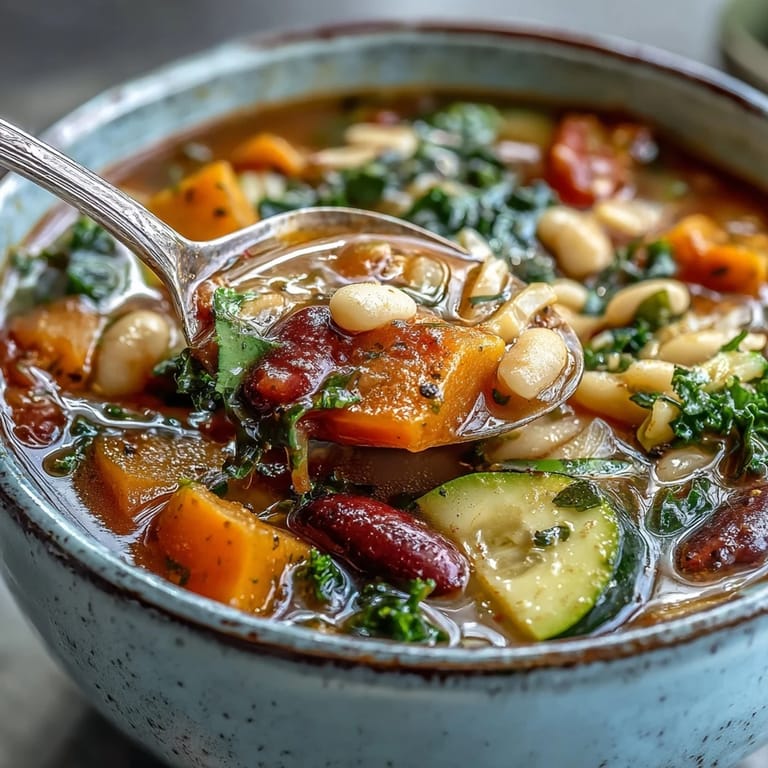
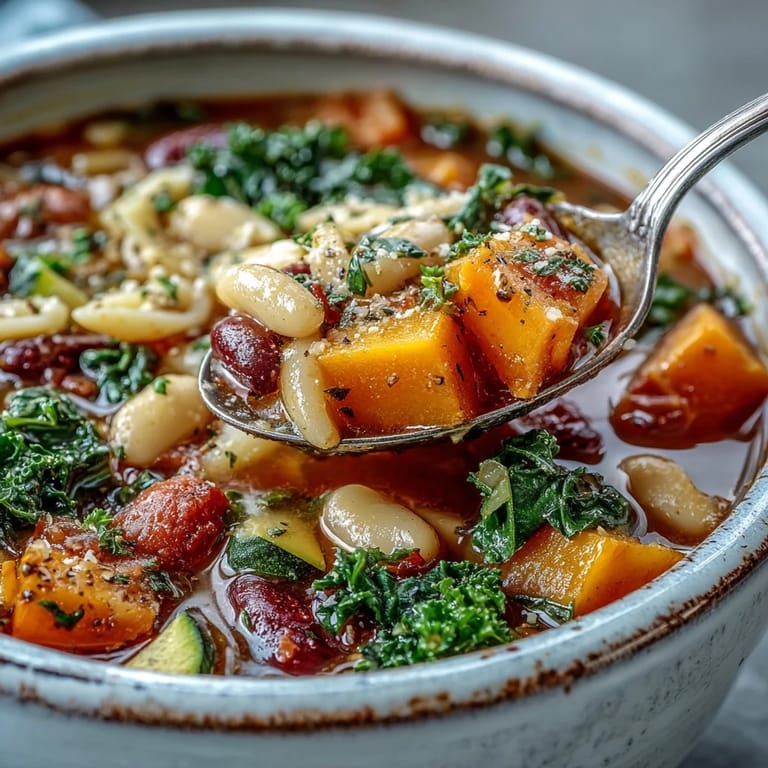
- Butternut squash: The star ingredient that brings natural sweetness and body to the broth. Peel it before cubing—a sharp knife and a steady hand make this easier than you'd think.
- Zucchini: Adds freshness and helps bulk out the soup without overwhelming the delicate balance of flavors; it softens quickly so add it alongside the squash.
- Fresh kale: Remove the tough center stems by hand or with a knife, then chop the leaves into bite-sized pieces. The curly varieties hold their shape better than the flat ones.
- Canned diced tomatoes: San Marzano tomatoes are ideal if you can find them, but any quality canned tomato will work since you're cooking them down into the broth.
- Cannellini beans: Creamy white beans that practically dissolve slightly into the soup, giving it body without being heavy. Drain and rinse them to remove the starchy liquid.
- Small pasta: Ditalini or elbow macaroni work best because they cook quickly and don't get lost in the broth. Add them near the end so they don't turn mushy.
- Vegetable broth and water: Use a low-sodium broth so you can control the salt level; the water helps balance the intensity without diluting the flavors too much.
- Dried oregano, thyme, and rosemary: These three herbs are the backbone of Italian seasoning. Dried herbs are actually better here than fresh because they infuse more evenly into the long simmer.
- Red pepper flakes: Optional, but a tiny pinch at the end wakes up all the other flavors and adds a whisper of heat.
- Fresh parsley: Stir this in right before serving so it stays bright green and herbaceous instead of cooking down to nothing.
- Parmesan cheese: Grate it fresh if you can—it melts slightly on the hot soup and adds umami depth, though it's easily omitted for vegan versions.
Tired of Takeout? 🥡
Get 10 meals you can make faster than delivery arrives. Seriously.
One email. No spam. Unsubscribe anytime.
Instructions
- Build your flavor base:
- Heat the olive oil in a large pot over medium heat, then add the diced onion, carrots, and celery. You'll know they're ready when the edges start to turn translucent and the smell fills your kitchen—about 5 to 6 minutes. This slow start is worth it because you're not just cooking vegetables, you're coaxing out their sweetness.
- Wake up the garlic:
- Stir in the minced garlic and let it cook for just 1 minute until it becomes fragrant but not brown. If you let it burn, it turns bitter, so stay right there and watch it happen.
- Add the squash and zucchini:
- Toss in your diced butternut squash and zucchini, stirring occasionally for 4 to 5 minutes. The squash will start to soften at the edges and release its orange color into the oil—that's exactly what you want.
- Pour in the liquid and tomatoes:
- Add the canned diced tomatoes with their juices, then the vegetable broth and water. Bring everything to a boil, which will take about 5 to 8 minutes depending on your stove.
- Season and simmer:
- Once it's boiling, stir in the oregano, thyme, rosemary, and red pepper flakes if you're using them. Turn the heat down to medium-low and let it simmer uncovered for 15 minutes so the flavors meld together.
- Add beans and pasta:
- Stir in the cannellini beans and your small pasta, then simmer for another 8 to 10 minutes until the pasta is tender and the squash breaks easily with a spoon. The soup will thicken slightly as the pasta releases its starch.
- Finish with kale:
- Add the chopped kale and cook for 2 to 3 minutes until it's wilted and tender. Taste the soup now and adjust the salt and black pepper—remember that Parmesan adds saltiness if you're planning to serve it.
- Final touch:
- Stir in the fresh parsley right before serving so it stays vibrant and herbaceous. If you like, top each bowl with freshly grated Parmesan and maybe a small drizzle of good olive oil.
 Save
Save I learned that day with my neighbor that soup is about more than nourishment—it's about showing up for someone. She still texts me photos of her own minestrone, variations with different vegetables or beans, and it's become this running conversation between us about what we've added or changed. That's the real magic of a recipe like this one.
Why This Soup Works Year-Round
While this is decidedly a winter soup with its warm spices and hearty vegetables, you can absolutely make it in other seasons by swapping out what's seasonal and fresh. In spring, try adding fresh peas or asparagus near the end; in summer, use zucchini as the star and add fresh basil instead of the dried herbs. The structure of the soup stays the same, but it becomes a different dish depending on what you find at the market.
Storage and Reheating
This soup actually tastes better the next day after the flavors have had time to mingle and deepen. Store it in an airtight container in the refrigerator for up to 4 days, or freeze it for up to 2 months (leave a little headspace in the container for expansion). When you reheat it, do it gently over medium heat on the stovetop, stirring occasionally, and add a splash of water or broth if it's gotten too thick.
Serving Suggestions and Variations
Serve this soup alongside a thick slice of crusty bread and a crisp glass of Pinot Grigio or Vermentino—the acidity cuts through the richness of the Parmesan perfectly. For a vegan version, simply omit the cheese or use a cashew-based alternative, and the soup loses nothing in translation. You can also swap the cannellini beans for kidney beans or chickpeas, add a Parmesan rind during simmering for extra umami depth (just remember to fish it out before serving), or stir in a handful of spinach instead of kale if that's what you have on hand.
- Try adding a splash of balsamic vinegar or red wine at the end for additional complexity and depth.
- A dollop of pesto stirred into individual bowls transforms the soup into something entirely new.
- Roasted croutons or crispy pancetta are optional but excellent additions for texture and richness.
 Save
Save This minestrone is the kind of soup that reminds you why cooking matters—not because it's impressive or difficult, but because it nourishes both body and spirit. Make it once and it becomes yours; make it a few times and it becomes a memory.
Recipe FAQs
- → Can I make this winter minestrone in advance?
Absolutely. This soup actually tastes better the next day as flavors have more time to meld. Store in the refrigerator for up to 4 days, adding a splash of water or broth when reheating since the pasta will absorb liquid.
- → What pasta works best in minestrone?
Small shapes like ditalini, elbow macaroni, or small shells are ideal. They cook evenly and fit well on a spoon. If planning to freeze portions, cook pasta separately and add when reheating to prevent it from becoming mushy.
- → How do I make this minestrone vegan?
Simply omit the Parmesan cheese or use a dairy-free alternative. The vegetable broth base is already plant-based, and the soup remains rich and satisfying without any dairy additions.
- → Can I use other vegetables in place of butternut squash?
Yes. Sweet potatoes, delicata squash, or pumpkin work beautifully as substitutes. Root vegetables like parsnips or turnips can also add sweetness and substance to this hearty winter soup.
- → Why add kale at the end of cooking?
Adding kale during the last few minutes prevents it from becoming overcooked and bitter. Brief cooking wilts the leaves perfectly while maintaining their vibrant color and nutritional value.
- → How can I add more depth of flavor?
Simmer a Parmesan rind in the broth during cooking, removing it before serving. A splash of balsamic vinegar or a spoonful of tomato paste can also enhance richness and complexity.